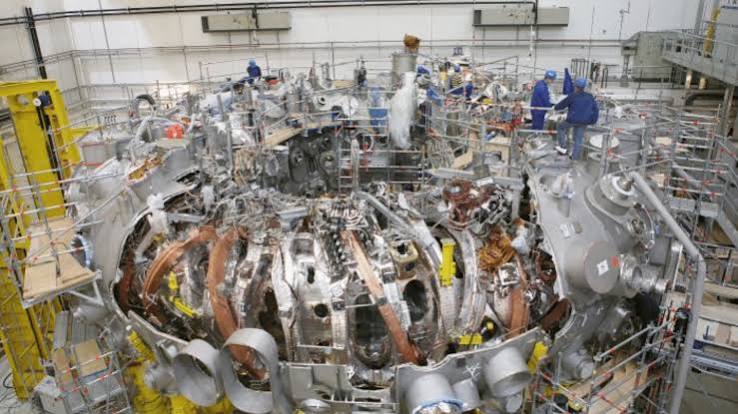
Infinity Two fusion plant now has a clearer route toward construction after Tennessee issued its first commercial fusion license. The approval advances Project Infinity at the Tennessee Valley Authority’s Bull Run Energy Complex in Clinton. It also strengthens plans for a 400 MWe stellarator facility designed for continuous power generation. The state issued the license on August 31, 2026, under its new fusion-specific regulatory framework.
The approval marks a major step for commercial fusion construction in the United States. Tennessee became the first state to establish and use a dedicated fusion licensing framework. The framework took effect on June 9, 2026, under Chapter 0400-20-14.
The wider Project Infinity program previously carried a reported $223 million deployment plan for its initial development phase. That figure relates to Infinity One and associated development activities, not the full cost of Infinity Two. No final construction cost for the 400 MWe commercial plant has been publicly disclosed.
Infinity Two fusion plant advances toward construction
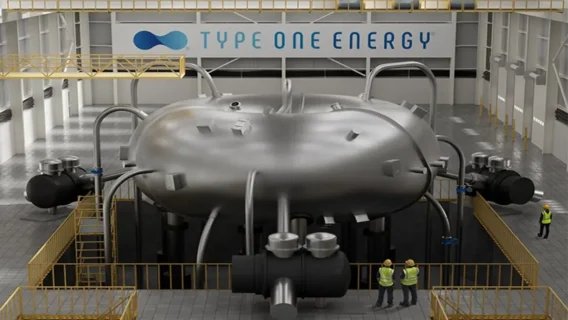
The Infinity Two fusion plant will use stellarator technology to generate electricity from nuclear fusion. Type One Energy developed the plant concept with the Tennessee Valley Authority. The proposed facility will form the commercial phase of Project Infinity at Bull Run.
Construction could begin as early as 2028, subject to development work and additional approvals. The plant’s full startup target currently stands at 2034.
However, project documentation has used both 350 MWe and 400 MWe figures. Earlier plans described Infinity Two as a 350 MWe fusion pilot plant. Tennessee now identifies the planned facility as a 400 MWe power plant.
The project will reuse the Bull Run site, which previously hosted a TVA coal plant. This approach could reduce infrastructure requirements for the new energy development. Existing industrial infrastructure can potentially support roads, water systems and grid connections.
Meanwhile, Infinity One will provide the project’s engineering verification platform. The prototype will test key technologies and support workforce training before commercial deployment. Its commissioning and startup remain targeted for 2029.
Infinity Two fusion plant builds on Tennessee’s licensing breakthrough
The new license covers fusion-machine activities at the Bull Run site. Tennessee’s Department of Environment and Conservation developed the licensing process with Type One Energy and TVA.
The Nuclear Regulatory Commission shifted fusion regulation toward the byproduct-material framework in 2023. That decision allows Agreement States to oversee fusion machines under established radiation-control requirements.
Tennessee then created its own technology-neutral rules for fusion machines. Consequently, the state can now license commercial fusion facilities through a dedicated regulatory pathway.
The licensing milestone could therefore influence future fusion developments beyond Tennessee. State regulators described the process as a potential model for other jurisdictions.
Project Infinity also brings together several major institutions around the Bull Run development. The campus will support collaboration involving TVA, Oak Ridge National Laboratory and the University of Tennessee.
Furthermore, TVA and Type One Energy have already developed manufacturing and construction methods for the stellarator technology. TVA’s Power Service Shops in Alabama will support welding and fabrication activities.
Type One Energy has also published a comprehensive physics design basis for Infinity Two. The design targets 800 MW of fusion power while allowing future power upgrades.
The US nuclear revival also extends beyond new fusion developments, with the Palisades Nuclear Plant moving toward renewed operation. The Michigan facility recently began fuel loading after extensive refurbishment following its 2022 shutdown.
Also read: EAGL-1 Nuclear Reactor Project: $4 billion 240-MW Lead-Bismuth Facility Enters US Regulatory Phase
Project Fact Sheet
Name: Project Infinity – Infinity Two
Type: Commercial nuclear fusion power plant
Technology: Stellarator fusion
Planned capacity: 400 MWe
Earlier planned capacity: 350 MWe
Location: TVA Bull Run Energy Complex, Clinton, Tennessee, USA
Site background: Former TVA Bull Run fossil power plant
Development model: Multi-phase fusion development campus
First phase: Infinity One prototype and workforce training center
Infinity One target: Commissioning and startup in 2029
Infinity Two construction target: As early as 2028
Full startup target: 2034
Regulatory approval: Tennessee fusion-specific byproduct material license
License date: August 31, 2026
Regulatory framework: Tennessee Chapter 0400-20-14
Initial Project Infinity investment: Reported $223 million for the initial deployment plan
Grid purpose: Baseload electricity generation
Existing infrastructure: Potential reuse of Bull Run industrial infrastructure
Research partners: Oak Ridge National Laboratory and University of Tennessee
Commercial technology provider: Type One Energy
Project Team
Technology provider: Type One Energy
Utility partner: Tennessee Valley Authority
State regulator: Tennessee Department of Environment and Conservation
Federal nuclear regulator: Nuclear Regulatory Commission
Research partner: Oak Ridge National Laboratory
Academic partner: University of Tennessee
Preliminary design engineering: AECOM
Manufacturing support: TVA Power Service Shops
Regulatory affairs and licensing: Type One Energy
Site: TVA Bull Run Energy Complex

Leave a Reply