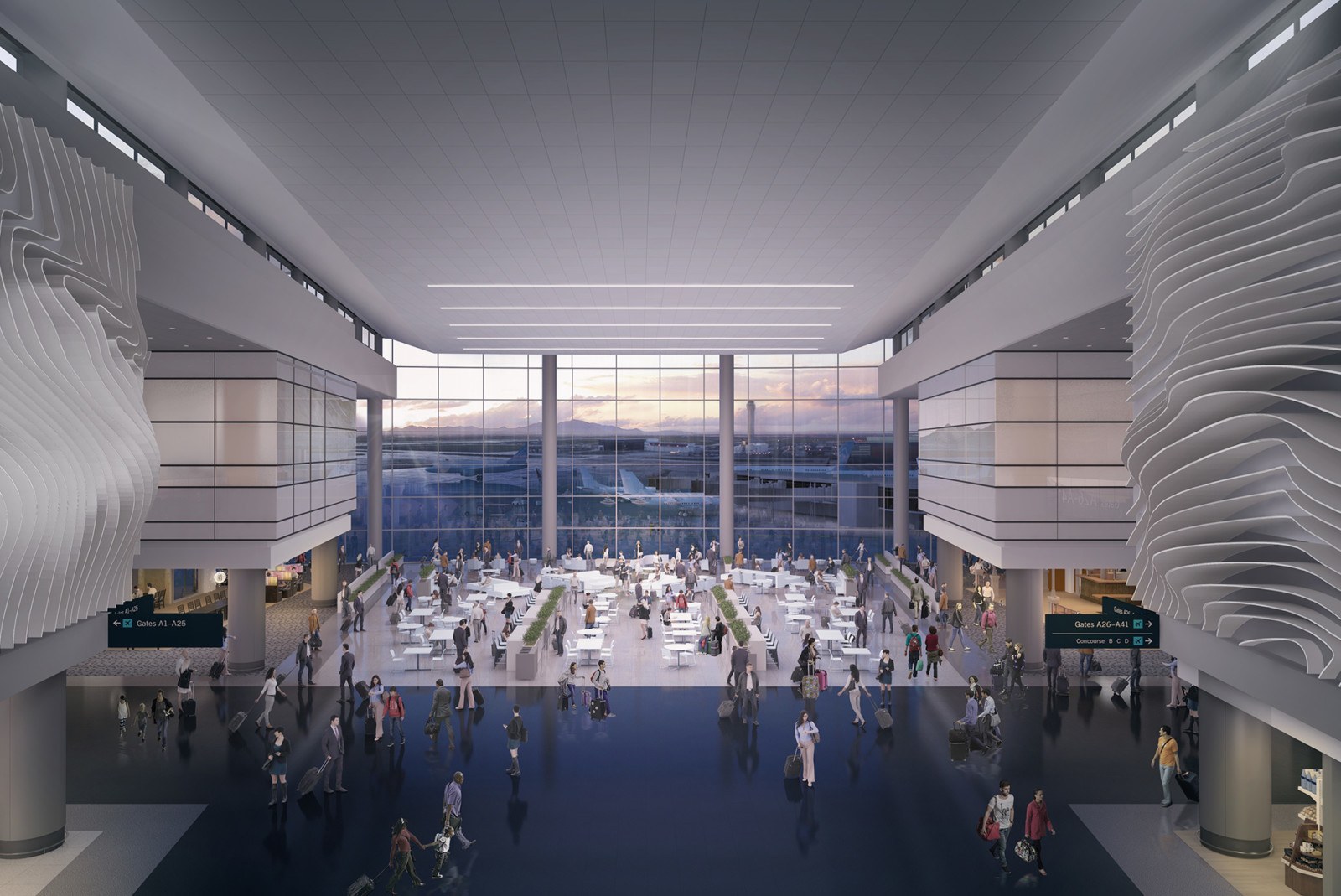
The $5.1 billion Salt Lake City International Airport Redevelopment is scheduled to reach completion on October 27, when the final seven gates of Concourse B open to passengers in Utah. Airport officials say the opening closes a program that broke ground in July 2014 and lifts the airport to 94 aircraft gates.
The Salt Lake City Department of Airports is delivering The New SLC, which it describes as the first new hub airport built in the United States this century, with a design capacity of 34 million passengers a year. In addition, the department reports that the program has created more than 24,000 jobs, generated over $1 billion in wages and produced an economic impact of nearly $10 billion. Funding comes from airport cash, federal grants, passenger facility charges, rental car user fees and revenue bonds, and the department states that no local tax dollars are being spent. Throughout the build, the project team treated uninterrupted airfield operations as the governing rule of construction.
Meanwhile, the same live-airport challenge is playing out in Tennessee, where the Memphis International Airport terminal modernization is rebuilding around an operating terminal. Frederick W. Smith International Airport, renamed from Memphis International in August 2026, reopened its Pedestrian B Tunnel on September 2, and the Memphis-Shelby County Airport Authority reports that the outer departures drive is now closed for replacement. Main terminal work is now planned to start in 2027, a year later than the 2026 start announced in July 2024. The Turner-led TAC joint venture is delivering the program, which the authority first estimated at $653 million and which the contractor group now places above $700 million.
Salt Lake City International Airport Redevelopment Builds New Gates Beside Active Taxiways
Four gates opened on July 14, 2026, according to the department’s completion announcement. The remaining seven are scheduled to open to the public on October 27, with a celebration planned for October 24.
The seven gates will serve United Airlines, with two common-use gates available to other carriers, and six new concessions open alongside them. As a result, the Salt Lake City International Airport Redevelopment will bring the airport to 101 concessions, 94 aircraft gates and four hardstand positions.
The hardest constraint was geometry. Robert Millar, aviation project director at civil engineer HNTB, said the team followed an approach in which “airport operations come first.” Work zones were fixed only after the clearances needed for gate access, aircraft pushback and tug movements had been defined.
Furthermore, Millar said HNTB worked with terminal architect HOK and airline stakeholders to line up terminal and civil schedules, so existing gates stayed in service until replacements were ready. Widebody aircraft also kept access to international arrival gates until new international-capable gates came online.
Fuel supply carried similar risk. Millar said overnight shutdowns gave crews the windows needed to flush and test new fuel lines and connect them to the live network, so airline fueling continued undisturbed.
Salt Lake City International Airport Redevelopment Crane Plan Operated Within FAA Limits
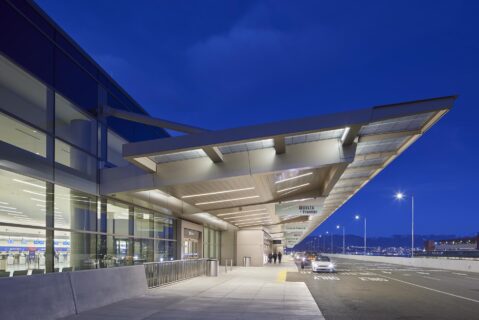
Crane work posed a separate problem for the Salt Lake City International Airport Redevelopment. HNTB coordinated with the Federal Aviation Administration, airport stakeholders and HDJV, the joint venture of Holder Construction and Big-D Construction, on lifting plans.
Additionally, HNTB mapped temporary crane roads around the concourses for crawler cranes. The team also ran evaluations to confirm that large cranes would not block the air traffic control tower’s view of the airfield.
Brent Christiansen, superintendent for HDJV, said the FAA required a weekly 7460 meeting to coordinate affected areas, and set a ceiling on lifting operations and working hours. Weather added pressure, because instrument landing system operations drove the toughest conditions.
Christiansen said crews had to track forecasts constantly and be ready to lower or move equipment at short notice.
Separately, the Salt Lake City International Airport Redevelopment required the extension of a passenger tunnel built years earlier and preserved as a future connection point. Millar said designers used temporary shoring to hold down the end of the existing tunnel once the soil above it was removed. Thus, the joint between old and new sections was designed to limit differential settlement and keep waterproofing continuous.
Salt Lake City International Airport Redevelopment Closes Four Phases and Watches Concourse C Triggers
Phase 1 opened in September 2020 with the terminal, a parking garage with double the previous capacity and the western portions of both concourses. Phase 2 followed in October 2023, and Phase 3 arrived in October 2024.
HDJV built the terminal, Concourse A, the central tunnel and airfield paving, according to the airport. AOJV, a joint venture of Austin Commercial and Okland Construction, handled Concourse B under a contract reported at $545 million.
Delta Air Lines is the airport’s largest user, according to the department, with Delta gates opening on Concourse A in 2023 and Concourse B in 2024.
The airport is designed for 34 million passengers a year and handled more than 27 million in the 12 months to March 2024. Airport officials have said that construction of Concourse C would begin once traffic nears 35 million, so the concourse remains a future phase rather than a commitment.
In addition, the first level of Concourse B-east has been built out to support a future hardstand operation with concessions and gate-hold seating, the airport said.
Bill Wyatt, executive director of the Salt Lake City Department of Airports, summed up the mood in July: “We are on our final approach.” Wyatt noted that the new airport opened six years ago, 12 years after groundbreaking, and that planning ran for decades before construction began.
Project Overview
- Project Name: The New SLC, Salt Lake City International Airport Redevelopment Program
- Owner and Operator: Salt Lake City Department of Airports
- Location: Salt Lake City, Utah
- Project Type: Greenfield hub airport replacement with terminal, parking garage, two concourses and passenger tunnels
- Project Value: $5.1 billion
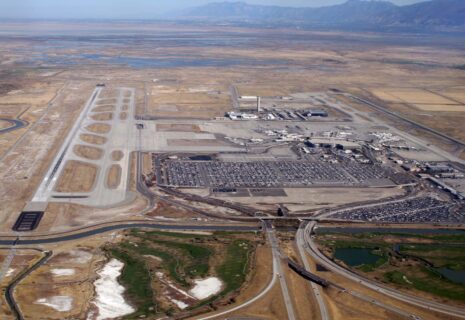
- Facility Footprint: 296.7 acres and about 4 million square feet (airport fact sheet, October 2018)
- Design Capacity: 34 million passengers a year
- Gates: 94 aircraft gates and four hardstand positions on completion
- Concessions: 101 on completion
- Phasing: Phase 1 September 2020, Phase 2 October 2023, Phase 3 October 2024, Phase 4 scheduled October 27, 2026
- Construction Start: July 2014
- Final Phase Scope: Seven gates and six concessions, serving United Airlines plus two common-use gates
- Funding: Airport cash, federal grants, passenger facility charges, rental car user fees and revenue bonds; no local tax dollars, per the airport
- Construction Jobs: More than 24,000 over the construction period, per the airport
- Economic Impact: Nearly $10 billion, per the airport
Project Team
Owner and Operator
Design Team
Contractors
- HDJV Joint Venture Partner (terminal, Concourse A, central tunnel, airfield paving): Holder Construction
- HDJV Joint Venture Partner (terminal, Concourse A, central tunnel, airfield paving): Big-D Construction
- AOJV Joint Venture Partner (Concourse B): Austin Commercial
- AOJV Joint Venture Partner (Concourse B): Okland Construction
- Concourse C (future): Not yet awarded, construction depends on passenger growth
Public Bodies
- Aviation Regulator: Federal Aviation Administration
Airlines
- Largest Carrier: Delta Air Lines
- Final Phase Carrier: United Airlines
Related Project: Memphis Terminal Modernization
- Owner and Operator: Memphis-Shelby County Airport Authority
- TAC Joint Venture Lead: Turner Construction
- TAC Joint Venture Partner: Ardmore Roderick
- TAC Joint Venture Partner: Chris Woods Construction

Leave a Reply