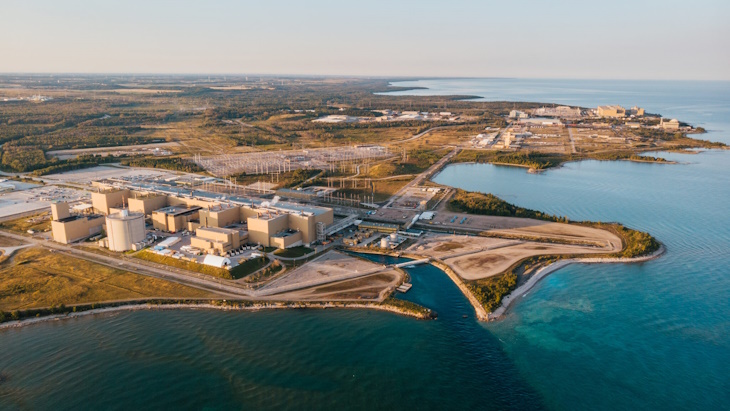
Indiana’s proposed CANDU nuclear project could add up to 6 gigawatts of baseload electricity through a campus of eight nuclear reactors. The development could create a major construction program if the partners advance beyond the feasibility stage.
AtkinsRéalis Group, the State of Indiana and Hoosier Energy Rural Electric Cooperative signed a memorandum of understanding on October 19, 2026. The agreement launches an evaluation of CANDU technology deployment to meet Indiana’s future electricity needs.
However, the partners have not selected a site, approved construction or announced a project budget. The evaluation will examine development options, financing, licensing, transmission infrastructure and commercial arrangements before any investment decision.
CANDU Nuclear Project explores multi-unit construction
The proposed campus would accommodate up to eight reactors, delivering a combined capacity of 6 GW. The partners will assess standardized designs, repeatable construction methods and workforce requirements for a potential multi-unit program.
Additionally, the evaluation will examine smaller gas-fired plants that could supply electricity before nuclear units enter service. This approach could accelerate power deployment while developers prepare the longer-term nuclear facilities.
The partners will also consider converting retired or retiring generation sites for nuclear use. However, each location would require engineering assessments, environmental reviews, transmission studies and applicable regulatory approvals.
CANDU technology uses heavy water as a moderator and coolant, with natural uranium among its fuel options. AtkinsRéalis also offers the Enhanced CANDU 6, a Generation III+ reactor design in the 700-megawatt class. The partners have not confirmed which reactor design Indiana would adopt.
Indiana’s proposed 6 GW CANDU nuclear development is part of a wider wave of advanced reactor projects under evaluation across the United States. Another example is the EAGL-1 nuclear reactor project, a planned $4 billion development in Indiana featuring a 240 MW lead-bismuth-cooled reactor and integrated fuel-cycle facilities. Unlike the CANDU proposal, which remains at the evaluation stage, EAGL-1 has entered pre-application engagement with the US Nuclear Regulatory Commission.
CANDU Nuclear Project faces financing and licensing milestones
The project remains at the evaluation stage, with no confirmed construction schedule or final investment decision. Its timeline will depend on site selection, financing, electricity purchase agreements and regulatory approvals.
Meanwhile, AtkinsRéalis has initiated pre-application engagement with the US Nuclear Regulatory Commission (NRC). The company submitted a letter of intent in June 2026 to begin the US licensing process for CANDU technology.
The NRC held its first public meeting associated with the process in August 2026. AtkinsRéalis has also submitted the first of seven planned technical reports, covering its quality assurance program.
However, these activities do not constitute approval to construct the proposed Indiana facilities. The partners must address environmental reviews, transmission planning, grid interconnection and community engagement before any construction decision.
The evaluation comes amid growing electricity demand from data centers, artificial intelligence, advanced manufacturing and industrial expansion. If the project advances, it could generate construction opportunities across engineering, equipment procurement and specialist nuclear services.
Indiana’s planned 6 GW CANDU nuclear project reflects growing interest in large-scale nuclear generation across the United States. A similar push toward next-generation nuclear infrastructure is evident in TerraPower’s Natrium nuclear project in Wyoming, which combines a sodium-cooled reactor with thermal energy storage to deliver 345 MW of baseline output and up to 500 MW during peak demand. While Indiana’s proposal centres on an eight-reactor buildout, Natrium is demonstrating an alternative approach to flexible nuclear power generation. Both projects highlight the importance of construction planning, regulatory approvals and supporting infrastructure in advancing the next generation of US nuclear energy.
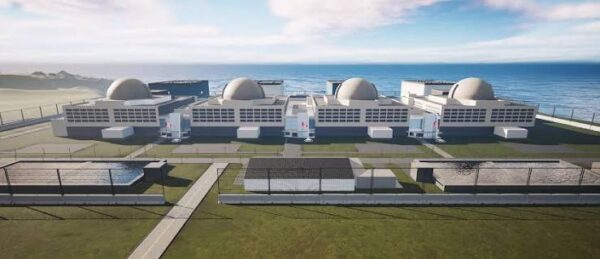
Project fact sheet
Project: Indiana CANDU Nuclear Project.
Location: Indiana, United States; site not selected.
Type: Proposed nuclear power generation campus.
Planned capacity: Up to 6 GW.
Proposed configuration: Up to eight CANDU reactors.
Project status: Evaluation under a memorandum of understanding signed October 19, 2026.
Technology: CANDU heavy-water nuclear reactor technology.
Construction approach: Potential standardized, multi-unit development.
Supporting generation: Smaller gas-fired plants may supply electricity ahead of nuclear deployment.
Infrastructure requirements: Reactor facilities, transmission connections and grid interconnection.
Regulatory authority: US Nuclear Regulatory Commission.
Project objective: Evaluate reliable electricity generation to meet Indiana’s future demand.
Project team
Technology provider: AtkinsRéalis Group Inc.
Government partner: State of Indiana.
Utility partner: Hoosier Energy Rural Electric Cooperative.
Nuclear regulator: US Nuclear Regulatory Commission.



Leave a Reply