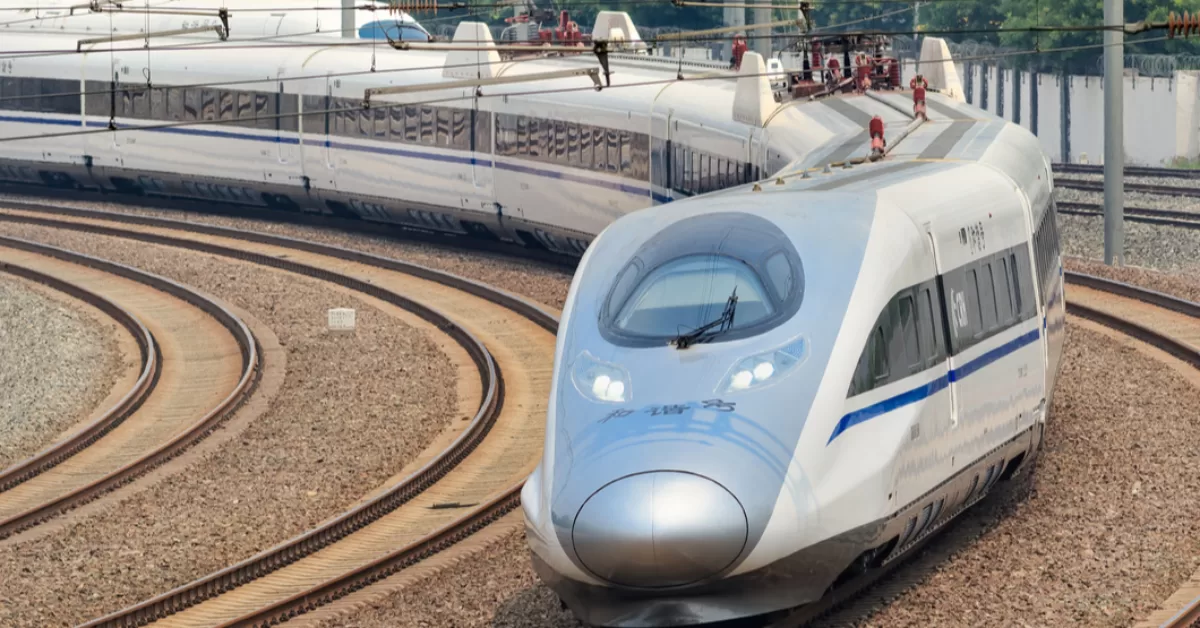
The Bangkok–Nong Khai high-speed railway is seen as the critical Thai section of the broader China–Laos–Thailand regional rail corridor. This high speed rail project falls under China’s Belt and Road Initiative. The project continues to advance toward its updated completion target. Upon completion, the line will bridge Thailand’s central transport hub at Krung Thep Aphiwat Central Terminal in Bangkok directly to the Boten–Vientiane railway in Laos. This will see the high-speed rail establish a seamless overland route north to Kunming, China. Furthermore, the project is structured in distinct phases, designed to handle trains running at operational speeds up to 250 km/h using Chinese trainsets and signalling technology.
Challenges Facing the Bangkok–Nong Khai High-Speed Railway
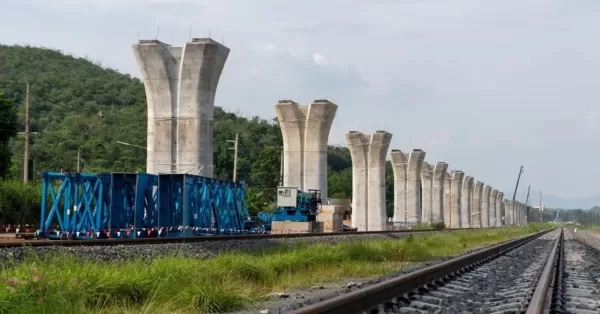
Construction on the initial 253-kilometer phase from Bangkok to Nakhon Ratchasima has faced persistent delays due to land acquisition challenges, environmental assessments, and station design negotiations. These challenges have pushed the expected opening date to 2030. Work across various civil contracts along the corridor, including complex tunneling and elevated sections, are currently ongoing. The works have attained an overall completion rate surpassing half of the phase’s civil scope.
Thai Cabinet Approves Phase 2 Framework
To maintain momentum toward full regional connectivity, the Thai Cabinet approved the framework for Phase 2. This will extend the rail line 357 kilometers from Nakhon Ratchasima north through Khon Kaen and Udon Thani to Nong Khai on the Lao border. Additionally, a final short cross-border section (Phase 3) will connect Nong Khai across the Mekong River to Vientiane. This will bridge the remaining gap with the operational Boten–Vientiane railway.
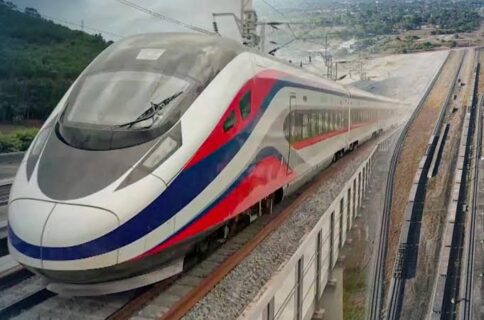
Upon completion, this high-speed arterial corridor is set to lower logistics costs, cut freight and passenger travel times significantly, serving the same purpose as the newly launched high speed railway lines that have been opened in China. Also, the rail will drive deeper trade integration between Thailand, Laos, and China.
July 6, 2024
Bangkok-Laos high-speed railway is a train system that will be the first HSR in Thailand. Since 2017, the project experienced several delays but is now moving forward to link Thailand with China.
Bangkok-Laos high-speed Railway overview
The Bangkok-Nong Khai high-speed railway (HSR) is an ongoing cross-country railway system that is currently under construction. The railway system project is part of a significant undertaking by Thailand to connect the country to China through Laos. The Bangkok-Nong Khai HSR line will run across the Mekong River.
The HSR in Bangkok will also connect to the Kunming-Singapore railway. This endeavor cements the HSR project as a significant regional connection for the entire ASEAN region. The railway project in Thailand aligns with the Belt and Road Initiative (BRI) of the government of the People’s Republic of China.
The project was first approved by the State of Railway of Thailand (SRT) in 2017 and began construction in the same year. The cross-country railway is a partnership project between Thailand and the People’s Republic of China (PRC).
The government of Thailand will take the reigns of the project and shoulder the project cost of $5 billion. The government of China will be responsible for the design, civil works, procurement of trains, and implementation of Chinese technology for railway construction.
The high-speed railway will span 873 kilometers long. The project will connect Bangkok with Laos, which will then connect with China through the China-Laos Railway which is part of China’s BRI initiative. Once complete, the connected railway systems will make it possible for commuters to travel from Bangkok, Thailand to Kunming, China.
Also read: LED Expo Thailand
Several challenges and delays
From inception, the Bangkok-Laos high-speed railway project will have multiple construction phases. The first phase, which will run from Bangkok to Nakhon Ratchasima, will be operational in 2026. The remaining stations from Nong Khai to Vientiane, Laos, will be operational by 2028.
However since the Bangkok-Nong Khai high-speed railway began construction work in 2017, the project has seen significant delays. The project’s delays are attributed to the significant costs and advanced technology required to accomplish the monumental cross-country project.
Thailand remains optimistic on the railway to China
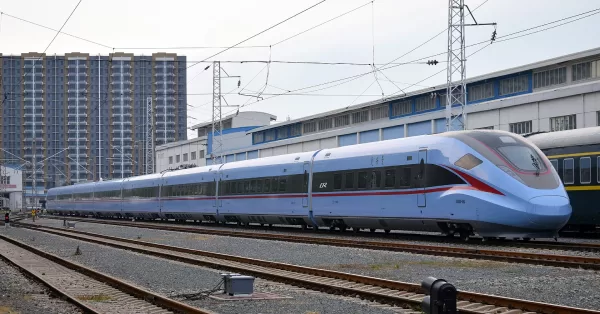
The Prime Minister of Thailand, Srettha Thavisin, has been optimistic about the high-speed railway stating that the railway project aligns with his economic agenda. “Thailand will enhance the connection with the China-Laos Railway,” the Prime Minister said in an interview with Xinhua, a Chinese state media agency.
Despite all the delays and disputes over financing for the project, Thailand built the Bangkok-Nakhon Ratchasima section of the railway successfully. This is the first phase of the project and was officially launched by the government in the last quarter of 2020.
The other phases, Phase 2 Nakhon Ratchasima to Nong Khai and Phase 3 Nong Khai to Vientiane are still undergoing. Phase 2 will be operational by 2031 according to SRT Governor Nirut Maneepan.
At the moment the Bangkong-Nong Khai high-speed railway system is at 33.45% as of May 2024.
Bangkok–Nong Khai High-Speed Railway Factsheet
Official Name: Bangkok–Nong Khai High-Speed Railway (Northeastern High-Speed Rail Line)
Key Corridors and Length: Total 609 km
Phase 1 (253 km): Bangkok (Krung Thep Aphiwat) to Nakhon Ratchasima
Phase 2 (357 km): Nakhon Ratchasima to Nong Khai
Phase 3 (16 km): Nong Khai to Vientiane, Laos (Mekong River cross-border bridge)
Design and Operational Speed: 250 km/h
Estimated Cost: 434+ billion THB ($12.9 billion USD total)
- Phase 1: 179.4 billion THB
- Phase 2: 254 billion THB
Track System: Standard gauge (1,435 mm), dual track
Primary Key Stations:
- Phase 1: Krung Thep Aphiwat, Don Mueang, Ayutthaya, Saraburi, Pak Chong, Nakhon Ratchasima
- Phase 2: Bua Yai, Ban Phai, Khon Kaen, Udon Thani, Nong Khai
Target Opening: 2030 (Phase 1 operational link)
Project Team
Project Owners and Key Advisory Agencies
State Railway of Thailand (SRT): Project owner and lead operating authority.
China Railway (CR) / CRI: Lead technical advisor, system operator, and joint coordinator.
Core Engineering and Technology Design
China Railway International Co., Ltd. (CRI) & China Railway Design Corporation (CRDC): Lead designers for core systems, signaling, track beds, and rolling stock specifications.
CRRC Corporation: Supplier of the high-speed Fuxing CR300AF trainsets.
Primary Civil Construction Contractors
Italian-Thai Development PLC (ITD): Major local contractor constructing track sections, depots, and elevated structures.
China State Construction Engineering Corp (CSCEC): Main Chinese engineering contractor on key civil packages.
Unique Engineering and Construction PLC: Major Thai firm handling track-laying and station construction.
Nawarat Patanakarn PLC: Tunneling and complex civil construction contractor.
Civil Engineering PLC: Contractor for completed and active ground-level sections.
Sinohydro Corporation: Subcontractor and partner on elevated route sections.
Also read:
World’s Tallest Building Planned for Bangkok Thailand
BMW begins work on new Thailand Battery Manufacturing Plant, Boosting EV Growth