
Construction has officially begun on the Northeast Supply Enhancement (NESE) pipeline, a major energy infrastructure project designed to increase natural gas supply to parts of the northeastern United States.
The project, led by Williams Companies, expands the existing Transco pipeline system, which runs across Pennsylvania, New Jersey and New York. Once completed, the pipeline is expected to transport up to 400,000 dekatherms of natural gas per day—enough to meet the energy needs of approximately 2.3 million homes.
Groundbreaking activities took place at Floyd Bennett Field, marking the transition from planning and permitting into full construction. The pipeline will extend offshore and connect supply routes from Pennsylvania through New Jersey into New York City and Long Island.
The NESE pipeline project is not the only project that has recently been marred by controversies. The Sable oil pipeline restart in California is facing a similar issue. The $2.3bn+ Sable oil pipeline restart in California has been blocked despite the project having President Trump’s backing. The Trump administration is eager to restart oil pipelines off California’s Central Coast. However, the judge noted that the recent executive order does not override state regulations concerning oil operations.
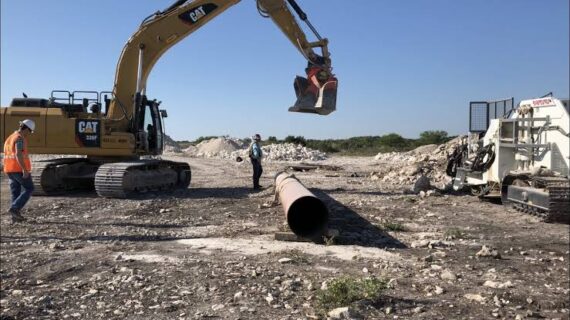
2027 Completion Set to Address Supply Pressures
The NESE project is scheduled for completion in the fourth quarter of 2027. It is designed to address increasing regional energy demand, particularly during peak winter periods when heating needs place additional strain on supply systems. Data cited by officials indicate that natural gas demand in the region has grown significantly over the past decade, outpacing expansions in pipeline and storage capacity.
In addition to boosting supply, the project aims to improve grid reliability and energy distribution across densely populated areas, including Brooklyn, Queens and Long Island. By increasing fuel availability, it is also expected to contribute to more stable electricity pricing over time.
Construction will involve a combination of offshore and onshore engineering methods, including trenching and horizontal drilling beneath the seabed to install sections of the pipeline. The infrastructure is planned to run at least four feet below the ocean floor to minimize environmental and navigational impact.
According to Williams Companies, the project will use modern materials and advanced technologies to enhance safety and reduce emissions. The company states the pipeline could lower overall carbon output by replacing higher-emission energy sources and using updated compressor systems designed to reduce noise and environmental impact.
Economic Impact
Beyond energy delivery, the construction phase is expected to support thousands of jobs and contribute substantially to regional economic activity. Project estimates indicate up to $1.8 billion in economic development, alongside approximately $1 billion in direct investment tied to the pipeline’s construction and related infrastructure. Additional projections suggest the project could help reduce electricity costs by around $6 billion over 15 years. Reflecting longer-term impacts linked to improved energy supply.
The NESE pipeline had previously faced delays due to environmental and regulatory concerns, particularly related to water quality. However, approvals granted in late 2025 allowed the project to proceed, enabling construction to begin this year.
As work advances, the project is positioned as a key addition to the Northeast’s energy infrastructure, with a focus on meeting rising demand, strengthening supply reliability and supporting regional economic activity.
Similar Projects
In another similar project, the Western Gateway Pipeline has gained momentum following its approval by developers. Both the Northeast Supply Enhancement (NESE) pipeline and the Western Gateway Pipeline system represent major infrastructure developments designed to bolster U.S. energy security, regional supply reliability, and overall economic activity. Developed by Williams as an expansion of the Transco system, the Northeast Supply Enhancement (NESE) pipeline is engineered to deliver approximately 400,000 dekatherms per day of natural gas from Pennsylvania through New Jersey to downstate New York. This incremental capacity, equivalent to serving roughly 2.3 million homes is designed to relieve regional supply bottlenecks during peak winter heating periods, lower energy price volatility for consumers, create nearly 2,000 direct and indirect jobs, and generate over $500 million in regional economic activity alongside millions in state and local tax revenue.
Complementing East Coast natural gas needs, the Western Gateway Pipeline,a $5 billion, 1,300-mile joint venture between Phillips 66, Kinder Morgan, and HF Sinclair, targets liquid fuel logistics across the American West. By connecting Midwest and Gulf Coast refining hubs to high-demand Southwest and West Coast markets (including Arizona and California), the 230,000-barrel-per-day pipeline system addresses critical fuel distribution constraints. Together, these projects benefit the U.S. by modernizing interstate energy networks, strengthening supply assurance against regional disruptions, optimizing nationwide refining and natural gas capacity, and fostering domestic job growth across multiple states.
Looking ahead, the United States Department of Energy has indicated that additional projects, including the proposed Constitution Pipeline is up next on the priority list. The project could further strengthen natural gas access in New England, especially during high-demand winter periods.
Additionally, As pipeline expansion gains pace nationwide, similar progress is being seen in other regions. The Western Gateway Pipeline, for instance, has recently advanced following key shipper commitments, highlighting a broader trend of infrastructure investment across the sector.
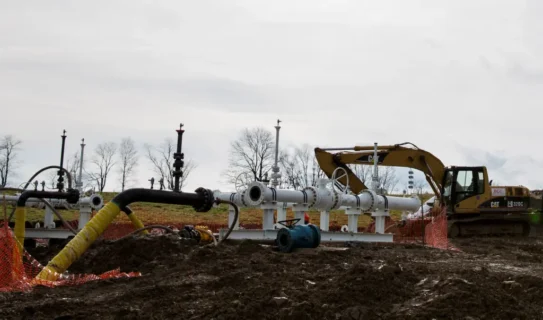
NESE Pipeline Construction – Factsheet
Project Name: Northeast Supply Enhancement (NESE) Pipeline
Developer: Williams Companies
Location: Pennsylvania, New Jersey, New York (serving New York City and Long Island)
Project Type: Natural gas pipeline expansion (Transco system)
Status: Construction underway
Expected Completion: Q4 2027
Capacity: 400,000 dekatherms per day
Energy Reach: Equivalent to 2.3 million homes
Purpose:
- Increase natural gas supply
- Improve energy reliability during peak demand
- Support grid stability in the Northeast
Construction Details:
- Offshore and onshore pipeline installation
- Installed at least 4 feet below seabed
- Methods include trenching and horizontal drilling
Economic Impact:
- $1 billion direct investment
- Up to $1.8 billion in economic development
- Thousands of jobs supported
- Estimated $6 billion in electricity cost reductions (15 years)
Environmental Measures:
- Use of modern materials and monitoring systems
- Electric motor-driven compressors
- Estimated reduction of over 13,000 tons of CO₂

Leave a Reply