Constructionreview

Blog

  • Contract Awarded for Summerlin West Expansion Underground Infrastructure Project

    Contract Awarded for Summerlin West Expansion Underground Infrastructure Project

    Platinum Contracting, a leading Las Vegas contractor specializing in heavy civil and underground utility work, has been awarded a significant new infrastructure contract in Summerlin West. The project, known as Parcel E, marks a critical step in the continued expansion of Southern Nevada’s largest and most prominent master-planned community.

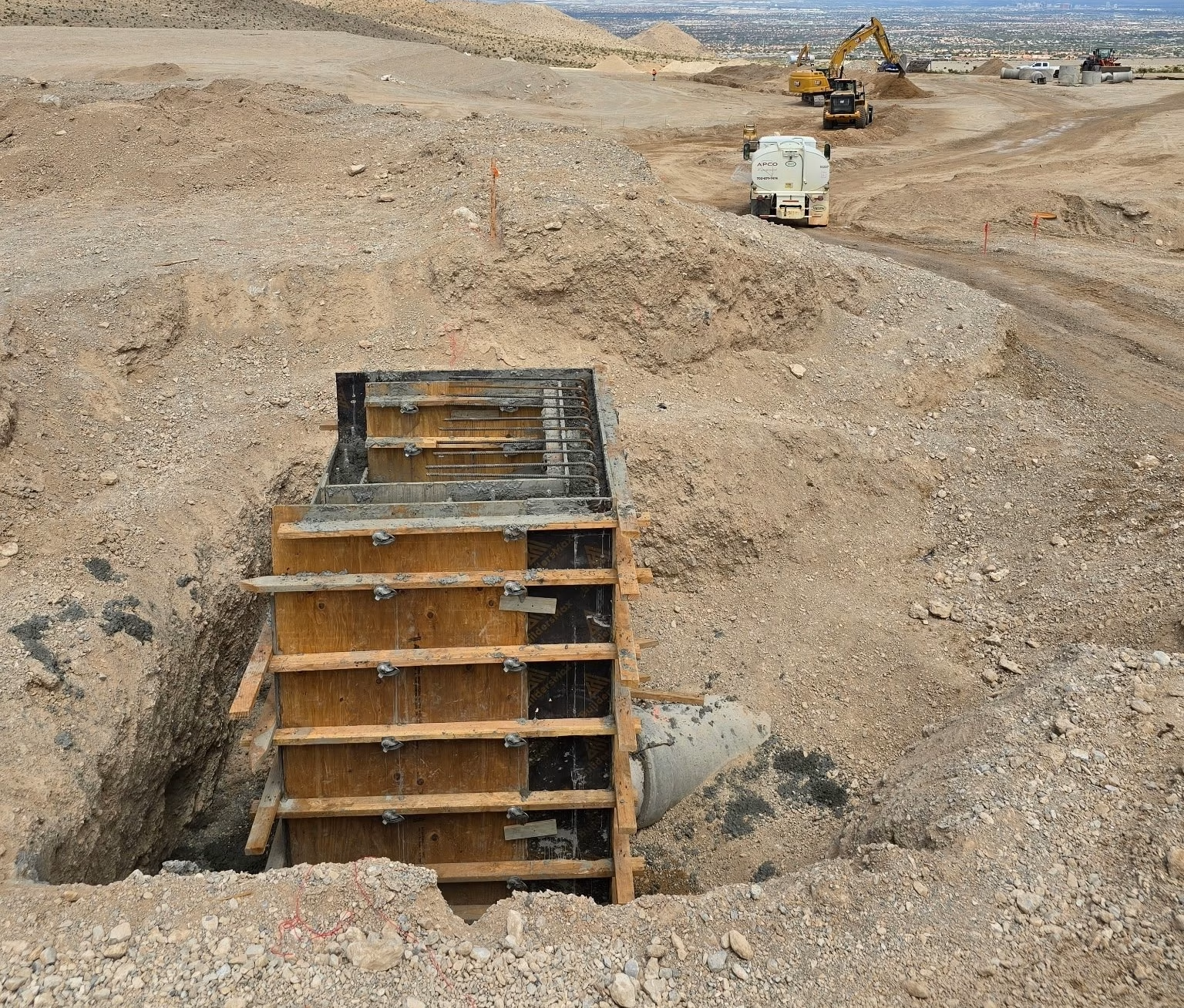
    Parcel E is part of the growing Summerlin West development and will involve a large-scale underground infrastructure installation to support multiple future residential subdivisions. Platinum’s work will include the installation of dry utilities—such as electrical systems, telecom lines, and natural gas piping—that serve as the essential framework for neighborhood growth and functionality.

    “Securing Parcel E is an exciting milestone for our team and a reflection of our deep expertise in complex underground systems,” said Robby Jay, partner at Platinum Contracting. “We’re proud to contribute to a project that plays a vital role in shaping the next phase of Summerlin’s development.”

    As one of the early infrastructure efforts in this phase of Summerlin West, Parcel E lays the groundwork for future homes and communities to connect seamlessly to critical services. The infrastructure will ensure that upcoming developments are equipped with the necessary power, gas, and communications networks to support modern residential living.

    [internal_link url=”https://constructionreviewonline.com/news/160m-215-beltway-widening-project-breaks-ground-in-henderson-nevada/”]

    Summerlin West Development

    Summerlin West is the newest and most anticipated village in the master-planned community of Summerlin, Nevada, launched in 2024. Spanning over 5,000 acres of scenic upper desert and preserved open space, Summerlin West offers a distinctive blend of natural beauty and modern urban living. Conveniently located near major shopping hubs such as Canyon Pointe, Center Pointe Plaza, and Downtown Summerlin, and just minutes from key freeways, it provides unmatched accessibility and lifestyle convenience.

    As Summerlin approaches the final phases of its decades-long development, Summerlin West is viewed as the crown jewel—bringing together the community’s vision for thoughtful, integrated living. Its appeal lies in the seamless combination of contemporary home designs and surrounding desert landscapes, which attracts residents seeking both tranquility and connectivity. This village represents Summerlin’s response to the evolving Las Vegas Valley, maintaining its status as a top-tier residential destination. As the region grows and changes, Summerlin West cements itself as the final and most refined chapter in Summerlin’s legacy of planned, sustainable growth.
  • The $760 Million Ruzizi III Hydropower Project, the Congo-Rwanda-Burundi Hydropower Plant

    The $760 Million Ruzizi III Hydropower Project, the Congo-Rwanda-Burundi Hydropower Plant

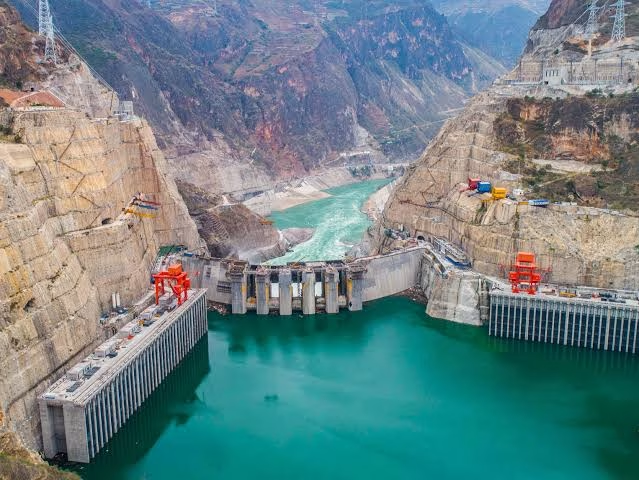
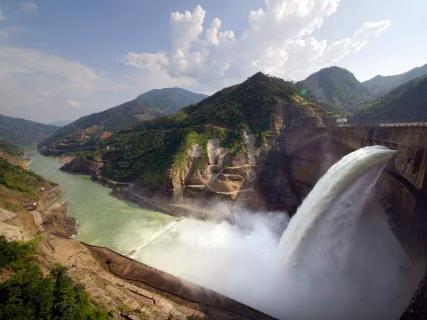
    Updated October 16, 2025– The energy future of Central Africa is being shaped by the development of key energy projects such as the Ruzizi III Hydropower Project which is expected to alleviate severe power shortages. The Ruzizi III Hydropower Project, estimated to cost around $760 million. This hydropower project is a pioneering Public-Private Partnership (PPP) designed to provide 147–206 MW of clean, shared electricity to Burundi, the DRC, and Rwanda.

    Conversely, the $1.5 billion Angola-DRC Transmission Line Project, led by the US firm Hydro-Link, focuses on cross-border transmission, delivering up to 1.2 GW of surplus Angolan hydropower directly to the energy-hungry DRC Copperbelt mining region. Both projects share the critical similarity of being regional integration efforts that utilize surplus hydropower from one country to meet the critical electricity deficit in another aiming to spur economic development, particularly in the DRC’s vital mineral sector, while also increasing access to affordable power for millions of citizens.

    This hydropower project is a pioneering Public-Private Partnership (PPP) designed to provide 147–206 MW of clean, shared electricity to Burundi, the DRC, and Rwanda
    This hydropower project is a pioneering Public-Private Partnership (PPP) designed to provide 147–206 MW of clean, shared electricity to Burundi, the DRC, and Rwanda

    Reported on October 16, 2025

    The long-delayed plan to construct the Ruzizi III Hydropower Project plant on the Ruzizi River between the two countries of Rwanda and the Democratic Republic of Congo has now received a major boost amid US-backed peace talks between the two countries.

    Anzana Electric Group will partner up with Rwanda-registered company Ruzizi III Holding Power Co. Ltd. to construct the 206-megawatt Ruzizi III project. This was revealed by the companies said in a joint statement that was issued on Tuesday.

    Also read: Rwanda signs deal with AfDB for construction of Ruzizi III hydropower plant

    Ruzizi III Hydropower Project Factsheet

    Location: Ruzizi River, which flows from Lake Kivu to Lake Tanganyika. The river forms a natural border between Burundi, DRC, and Rwanda.

    Participating countries: Burundi, Democratic Republic of Congo (DRC), and Rwanda.

    Capacity: 206 MW

    Cost: approximately $760 million.

    Project details:

    • Construction of a dam which will be 51 meters high. The dam will have a compact reservoir that will cover approximately 46 hectares.
    • A 3.8 km long headrace tunnel will be built
    • Also, there will be a power station that will have three generating units.
    • A 7 km long double circuit 220 kV transmission line to a substation at Kamanyola will be established.
    • Lastly, the project entails ancillary infrastructure: permanent and access roads (9.6 km in DRC and 19.5 km in Rwanda), quarries, borrow pit sites, and spoil disposal areas.


    Also read: Tender for construction of Ruzizi III hydropower plant advertised

    Ruzizi III will be joining two other plants that are found on the river that divides Congo’s South Kivu province from Rwanda’s Rusizi District. Additionally, this hydropower project could nearly double power capacity for nearby Burundi, increase Rwanda’s by 30% and provide baseload power for eastern Congo, the companies revealed.

    Also read: Burundi, DRC and Rwanda sign Ruzizi 3 Power project agreement

    Challenges Facing the Project

    Furthermore, Ruzizi hydropower project has been in planning for more than ten years and has been delayed as a result of the ongoing conflict in eastern Congo.

    Both Rwanda and Congo are expected to sign a peace accord in Washington on Friday. This will be in a deal overseen by US Secretary of State Marco Rubio. A large portion of eastern Congo which includes parts of South Kivu remains under the control of the M23 rebel group.

    Also read: Construction of Ruzizi III Hydropower plant gets AfDB funding

  • SKB Selected for US$11 Bn Swedish Nuclear Waste Repository Project

    SKB Selected for US$11 Bn Swedish Nuclear Waste Repository Project

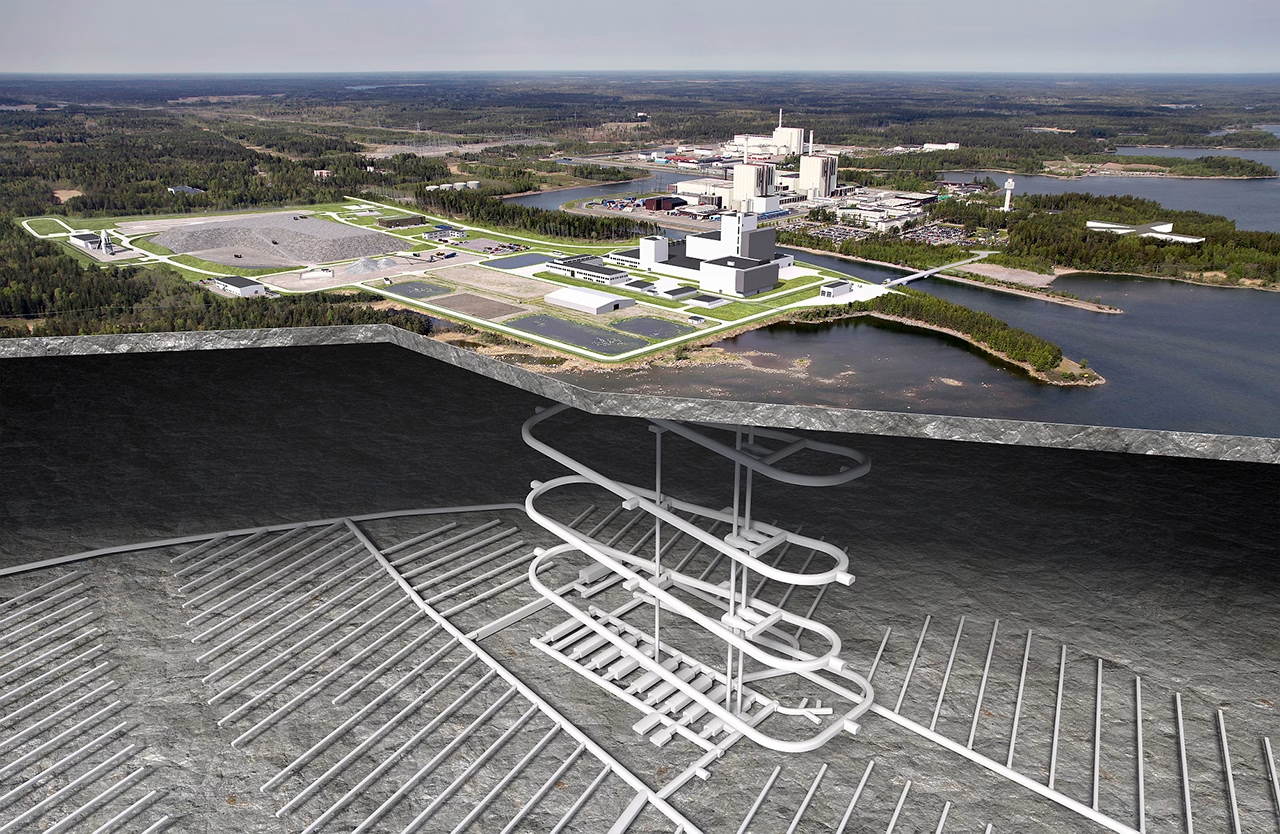
    Implenia has selected Svensk Kärnbränslehantering (SKB) as the head developer for the US$11 billion Swedish nuclear waste repository spanning 60 kilometers of underground tunnels, longer than the longest line on the New York subway. This engineering marvel will take a decade to complete before it accepts its first shipment of high-level radioactive waste.

    Sealing Radioactivity in Advanced Canisters

    The Swedish nuclear waste company spearheading the operation will oversee every step of the burial process. Spent nuclear fuel will be encapsulated in specially engineered copper and iron vessels. These canisters are built to last, intended to keep radiation safely contained for up to 100,000 years. Once the fuel is sealed inside, each vessel will be carefully lowered into the bedrock tunnels. Around them, engineers will install bentonite clay, chosen for its unique ability to expand when wet. This natura sealant will form a water-tight and quake-resistant barrier around the canisters.

    Also Read 260 MW Stor-Skälsjön onshore wind farm in Sweden completes construction after delay, to produce 800 GWh annually

    From Forest Clearing to Bedrock Excavation

    The project site is located in Formsark, about 140 kilometers north of Stockholm and will undergo two years of preparatory work. This includes establishing state-of-the-art water treatment systems and clearing large swaths of forest. Once these  surface-level operations are in place, the engineers will start drilling deep into the bedrock, descending approximately 1,640 feet underground. At that depth, they’ll carve an intricate network of tunnels designed to house nuclear waste securely.

    A Vision Toward the 2080s

    Looking ahead, the repository isn’t expected to be fully operational until the 2080’s. Once it is, the facility will hold more than 6,000 canisters of spent nuclear fuel. Though the timeline stretches far into the future, every step is deliberately planned to ensure safety and sustainability. Transitioning from the preparation of the site to the final sealing of the last canister, this massive undertaking reflects Sweden’s long-terms commitment to responsible nuclear waste management, an essential chapter in the story of global energy and environmental protection.

    Also Read Veidekke to develop Bollen residential block near Stockholm, Sweden for $55M

    SKB Swedish Nuclear Repository Overview

    Project name: Final Spent Nuclear Fuel Repository

    Location: Söderviken, near Forsmark Nuclear Power Plant in Östhammar Municipality, 150 km north of Stockholm

    Project developer: Svensk Kärnbränslehantering AB (SKB)

    Budget & Funding
    Estimated cost: 11 billion USD
    Fully funded by Swedish nuclear power operators

    Timeline
    Groundbreaking: January 15, 2025
    Surface preparation: 2025–2027
    Tunnel excavation begins post‑2027
    Repository ready for first waste: late 2030s
    Full extension and sealing: by 2080s

    Engineering Highlights
    Depth: 500 m (1,640 ft) in 1.9 billion‑year‑old bedrock
    Tunnel network: over  60 km underground
    Surface footprint: 24 ha
    Excavation volume: 2.7 million m³ of rock

    Waste Capacity & Containers
    Capacity: 12,000 tonnes of spent nuclear fuel
    Number of canisters: approx. 6,000
    KBS‑3 method: copper‑iron capsules sealed in bentonite clay
    Designed lifespan: containment for 100,000 years

    Regulatory & Safety Framework
    Licence granted by Land & Environment Court (2021–2024)
    Safety reviews by Swedish Radiation Safety Authority required
    Environmental conditions include groundwater protection, noise control, and biodiversity measures
    Independent NGO raised concerns about copper corrosion; ongoing safety studies

    Monitoring & Long‑Term Stewardship
    Repository to remain sealed and unmanned once full by late 21st century
    Key Information File (KIF) created to pass knowledge across generations
    Geological mapping and performance monitoring will continue throughout operational phase

  • EIA Consultant appointed for Gwynt Glas  1.5GW floating offshore windpower project

    EIA Consultant appointed for Gwynt Glas 1.5GW floating offshore windpower project

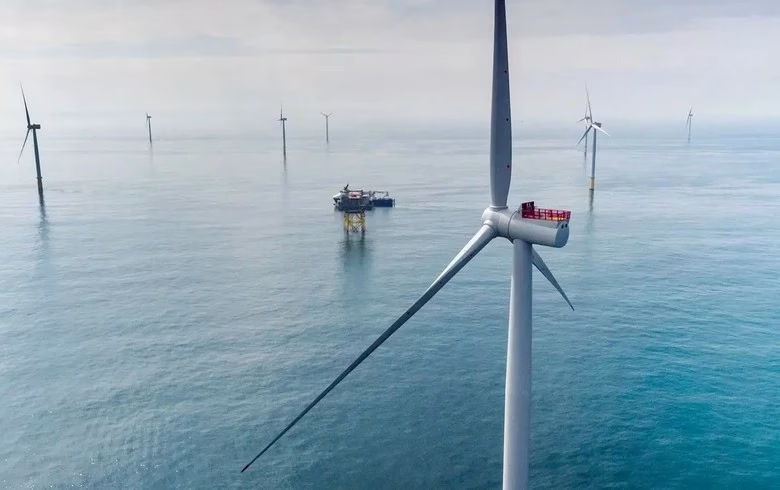
    Updated 13th November 2025 – The consulting company of Haskoning has been selected to deliver the highly complex Environmental Impact Assessment (EIA) and Habitats Regulations Assessment for the Gwynt Glas Offshore Wind Project.

    Selected in June as a preferred bidder under Offshore Wind Leasing Round 5, Gwynt Glas is advancing rapidly through its development phase and has now confirmed the appointment of Haskoning as lead EIA consultant.

    Mark Hazelton, Gwynt Glas Project Director, commented:

    “Gwynt Glas is a transformative renewable energy project that will not only contribute to our energy security but also bring economic and social benefits to Wales, the South West region, and the wider UK. The appointment of a lead EIA consultant marks a major step forward in progressing the project and will help us carefully balance environmental, economic, and social factors.”

    Appointed after a competitive selection process, Haskoning will assess all potentially significant impacts on the natural, heritage, human, and built environments that may arise throughout the Gwynt Glas windpower project’s life cycle. The company will play a key role in securing the Development Consent Order (DCO) required for a Nationally Significant Infrastructure Project in the UK, as well as the necessary licenses from Natural Resources Wales, given the project’s location in Welsh waters.

    The Crown Estate also awarded Ocean Winds rights to develop the third 1.5 GW floating offshore wind site on the Celtic Sea. There are also several offshore wind projects in the UK aiming to increase the country’s renewable source of energy. One of these is the Sofia Offshore Wind Farm Project which is heading to completion with 60% of its turbines already installed.

    Crown Estate Selects Equinor and Gwynt Glas for 3 GW Floating Offshore Wind Site Area in Celtic Sea

    Reported June 25 2025 –  The Crown Estate has unveiled its choice of Equinor and Gwynt Glas, as the preferred developers for the Celtic Sea floating offshore wind leasing round (Round 5). Each bidder secured rights to develop 1.5 GW of floating offshore wind capacity, paying an option fee of £350/MW per year. In total, the joint venture of EDF Renewables UK and ESB will produce 3 GW of potential power. This will be enough to supply around 1.5 million homes per project.

    What’s Being Built and Where

    Moreover, the leasing round includes premises for a third 1.5 GW site, with The Crown Estate set to provide more details by September 2025. Both developers have proposed Port Talbot and Bristol as the likely assembly hubs for turbine components before they’re floated out to sea. Additionally, this round is unique because it is the first to incorporate a connection agreement with NESO, ensuring these Celtic Sea wind farms will plug into the UK grid once built.

    Also Read TotalEnergies Wins 1GW Offshore Wind Tender in Germany

    Economic and Environmental Upside

    Furthermore, Round 5 is expected to deliver significant economic benefit, creating around 5,300 construction jobs and injecting £1.4 billion into local economies. This expansion will boost the UK floating wind sector, adding to the earlier investment by The Crown Estate of £400 million into ports and supply chains. Energy Secretary Ed Miliband hailed the scheme as “transformative”, especially for regions like Wales and the Southwest.

    Green Power for the UK’s Future

    Finally, Round 5 is a cornerstone of the UK government’s strategy to reach 43-50 GW of offshore wind by 2030, with floating turbines unlocking deeper waters previously out of reach. Once operational, likely in the early 2030’s, these projects will not only generate low-carbon electricity but also strengthen energy resilience and promote local industrial growth. With Equinot and Gwynt Glas leading the charge, and a third site on the horizon, the Celtic Sea is set to become a hub for pioneering floating wind energy across Europe.

    Also Read Ørsted Discontinues Hornsea 4 Offshore Wind Project — What Does It Mean?

    Project Overview: Celtic Sea Floating Wind Round 5

    Contracts Awarded

    The Crown Estate selected Equinor and Gwynt Glas (EDF Renewables UK & ESB) as preferred bidders

    Each awarded 1.5 GW capacity lease, out of a total 4.5 GW area. A third 1.5 GW site remains reserved. Annual option fees set at £350/MW

    Geographical Scope

    Projects will be located in the Celtic Sea, off the coasts of South Wales and South West England. It will rank as one of the largest offshore wind farms in Europe at GW1.5 capacity.

    Development includes floating wind farms in deeper waters not suited to fixed-bottom turbines

    Port Integration

    Equinor and Gwynt Glas plan turbine assembly in Port Talbot and Bristol

    These ports will serve as staging areas before turbines are towed offshore

    Grid Connection Strategy

    A strategic partnership with the National Energy System Operator (NESO) ensures pre-approved grid connections

    This will allow the wind farms to be among the first floating projects with confirmed grid access

    Economic Impact

    Expected to generate approximately 5,300 construction jobs and boost annual activity by £300 million

    Floating wind supports the UK’s goal of 43–50 GW offshore wind by 2030 and strengthens energy security

    Next Steps

    Agreements for the first two sites will be finalised in autumn

    Work on the third zone is under evaluation. Full next-phase details expected by September 2025

    Projects will undergo a three- to five-year consenting process and could begin delivering power in the early 2030s

  • Turner Selected as Site Manager for Multi-Billion-Dollar One Beverly Hills Project

    Turner Selected as Site Manager for Multi-Billion-Dollar One Beverly Hills Project

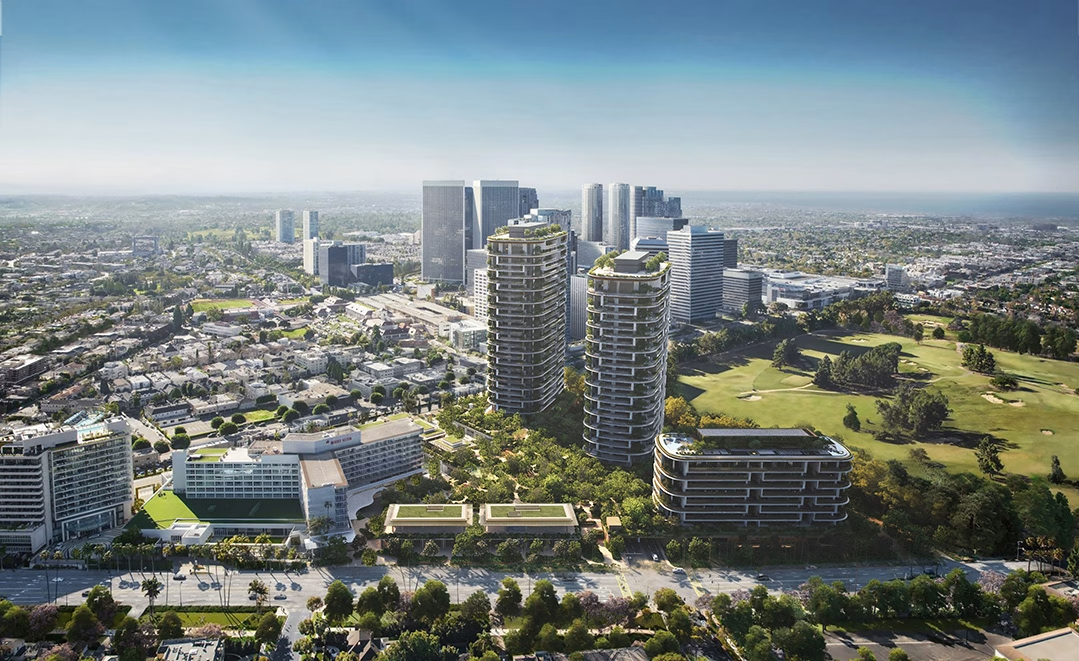
    Turner Construction Company has been chosen as the overall site manager for One Beverly Hills, a multi-billion-dollar transformative development on 17.5 acres in the heart of Beverly Hills, California. The firm is overseeing the first phase of construction and the overall delivery of this highly anticipated luxury destination, which commenced construction in February 2024.

    Master-planned by Foster + Partners, One Beverly Hills will redefine the city’s skyline and hospitality scene. The development will feature two Aman-branded residential towers, an Aman Hotel, and a private Aman Club, with hospitality interiors designed by the late Kerry Hill Architects, who were renowned for their sophisticated, contextually responsive architecture.

    A central element of the project is a major transformation of the legendary Beverly Hilton—famous for hosting the Golden Globes and the Milken Global Conference. The re-design, led by London-based David Collins Studio, will blend timeless glamour with modern luxury.

    At the heart of One Beverly Hills sits a 10-acre open space and botanical garden concept that landscape architecture firm RIOS envisioned. The gardens, which integrated hospitality and retail uses punctuate, will offer a lush, pedestrian experience for residents and guests alike.

    “We are thrilled to be a part of this iconic project,” said Reed McMains, Vice President and General Manager of Turner Construction Company. “One Beverly Hills will become the latest great chapter in Beverly Hills’ rich history. The project will bring more than 2,500 construction jobs to the area, and we look forward to continuing to work with Cain International and OKO Group to bring this project to life.”

    Adamson Associates is the executive architect on the project. Completion of the project is due in late 2027.

    Progress and Milestones

    Construction continues, and to date, crews have excavated more than 490,000 cubic yards of soil from the site. Workers have completed more than 335,000 man-hours without a single incident—a testament to the rigorous safety culture on site.

    The team expects to pour Tower Crane 4’s foundation by the end of June, with crane erection planned for mid-July. Tower Crane 2 progresses rapidly, with waterproofing complete and rebar going in.

    The project recently reached one other milestone with the slurrying of a large quantity of geothermal wells, which will provide green heating and cooling through the use of the earth’s constant underground temperature.

    Read also: Turner Tops Out Massachusetts General Hospital, Building Healthcare for a Changing Climate

    Sustainability

    One Beverly Hills meets some of the highest sustainability standards in the world. The project targets LEED Platinum, WELL Building certification, and net-zero greenhouse gas emissions. A standout feature achieves 100% water sustainability in the gardens, where the system uses captured rainwater and recycled graywater for all irrigation, with potable water held in reserve as a redundant source, highlighting the project’s deep integration of environmental stewardship.

    With its combination of ultra-luxury living, landmark architecture, and aspirational sustainability, One Beverly Hills will be a project-defining Southern California as much as Southern California will be defining to the project, and to urban development around the globe.

    Turner Selected as Site Manager for One Beverly Hills Project: Factsheet

    Project Overview

    Project Name: One Beverly Hills

    Location: Beverly Hills, California

    Site Area: 17.5 acres

    Project Value: Multi-billion-dollar development

    Groundbreaking: February 2024

    Expected Completion: Late 2027

    Key Stakeholders

    Site Manager: Turner Construction Company

    Developers: Cain International and OKO Group

    Master Planner: Foster + Partners

    Executive Architect: Adamson Associates

    Hospitality Interiors: Kerry Hill Architects

    Beverly Hilton Redesign: David Collins Studio

    Landscape Architecture: RIOS

    Read also: Turner Wins $94M Contract for Chubb HQ Interior Fit-Out in Philadelphia

    One Beverly Hills: Project Components

    Two Aman-branded residential towers

    Aman Hotel with luxury hospitality

    Exclusive Aman Club

    Beverly Hilton renovation (Golden Globes venue)

    10-acre botanical gardens and open space

    Integrated retail offerings

    Sustainability Targets

    LEED Platinum certification

    WELL Building certification

    Net-zero greenhouse gas emissions

    100% water sustainability in gardens using captured rainwater and recycled graywater

    Read also: Developers break ground on One Beverly Hills

  • AI-Driven Design and Operations of Data Centers

    AI-Driven Design and Operations of Data Centers

    As global demand for digital services soars—fueled by cloud computing, streaming, IoT, and generative AI—the backbone of this digital age, data centers, is undergoing a fundamental transformation. At the heart of this change is Artificial Intelligence (AI), reshaping how data centers are designed, built, and operated with a level of efficiency and intelligence never seen before.

    What Is AI-Driven Data Center Operations?

    AI in data center operations refers to the use of machine learning algorithms, predictive analytics, and intelligent automation to optimize performance, manage energy consumption, reduce downtime, and enhance security. From automating cooling systems to predictive hardware maintenance, AI enables smarter and more resilient infrastructure.

    Smarter Design from the Ground Up

    AI is increasingly being used in the design phase of data centers to simulate how facilities will perform under different loads, climates, and usage patterns.

    • Digital twins: Virtual models of data centers simulate airflow, power usage, and cooling efficiency before construction begins.
    • Site selection optimization: AI analyzes factors such as local power grid reliability, fiber access, climate, and regulatory risk to recommend ideal locations.
    • Component layout: Algorithms optimize how racks, cables, cooling systems, and power units are arranged for maximum efficiency.

    The results are better-designed facilities that reduce construction cost, speed up deployment, and perform optimally from day one. In addition it means reduction in costly planning and cancellationof projects like the Amazon Data Center in Minnesota.

    AI-Powered Energy and Cooling Management

    Energy efficiency remains a top priority—and AI is leading the charge:

    • Dynamic Cooling Optimization: AI monitors temperature and humidity in real time and adjusts fans or liquid cooling systems accordingly.
    • Power Usage Effectiveness (PUE) Management: AI systems continually adjust loads and cooling to keep PUE ratios low.
    • Renewable Integration: AI helps manage on-site solar or wind energy, predicting usage peaks and shifting workloads accordingly.

    Google’s DeepMind reduced energy used for cooling its data centers by up to 40% using AI-based predictions and controls. This was way back in 2016 which is as much as a century ago in AI years. Further advances have no doublt occured to furtehr enhance energy savings.

    Predictive Maintenance and Reliability

    Downtime in a data center can be extremely costly. AI is revolutionizing maintenance by shifting from reactive to predictive operations:

    • Sensor data analysis detects anomalies in power supplies, hard drives, or HVAC systems.
    • Failure prediction models alert technicians before components break down.
    • Autonomous repair routines (in robotics-enabled centers) are being tested to physically address minor issues without human intervention.

    The benefits are reduced outages, lower maintenance costs, and longer hardware life.

    AI in Resource Allocation and Load Balancing

    AI algorithms distribute workloads across servers, regions, and time zones based on:

    • Real-time demand
    • Energy costs
    • Carbon intensity of local grids
    • Hardware performance

    This ensures data centers are always performing at peak efficiency while minimizing environmental impact.

    Some cloud providers now shift AI workloads between time zones to maximize use of renewable energy.

    Enhancing Security with AI

    Security threats are growing in scale and complexity. AI provides:

    • Real-time threat detection using behavioral analysis and anomaly detection
    • Biometric access controls and facial recognition for physical security
    • Automated incident response to isolate or shut down compromised servers

    Faster, smarter defense mechanisms across both digital and physical layers.

    The Rise of Lights-Out Data Centers

    As AI capabilities improve, the industry is moving toward “lights-out” data centers—facilities that operate without on-site human presence. These centers are:

    • Highly automated
    • Remotely monitored and managed
    • Built in locations previously considered impractical due to lack of staff or infrastructure

    This model reduces operational costs and improves reliability while leveraging AI for continuous learning and adjustment.

    Conclusion: The Intelligent Future of Infrastructure

    AI is no longer a futuristic idea in data centers—it is already here, revolutionizing how facilities are planned, built, powered, cooled, and secured. For industries that rely on data—from finance to healthcare to construction—the rise of AI-driven data center operations marks a new era of speed, sustainability, and intelligence.