Constructionreview

Blog

  • TotalEnergies Wins 1GW Offshore Wind Tender in Germany

    TotalEnergies Wins 1GW Offshore Wind Tender in Germany

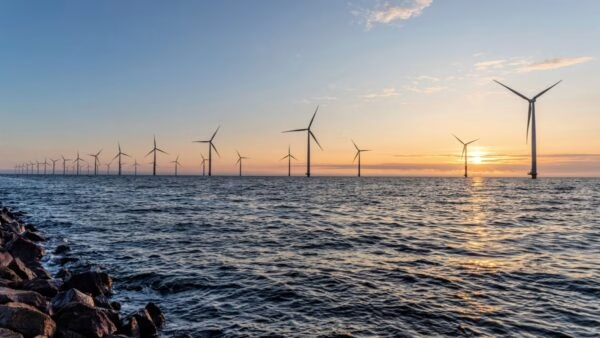
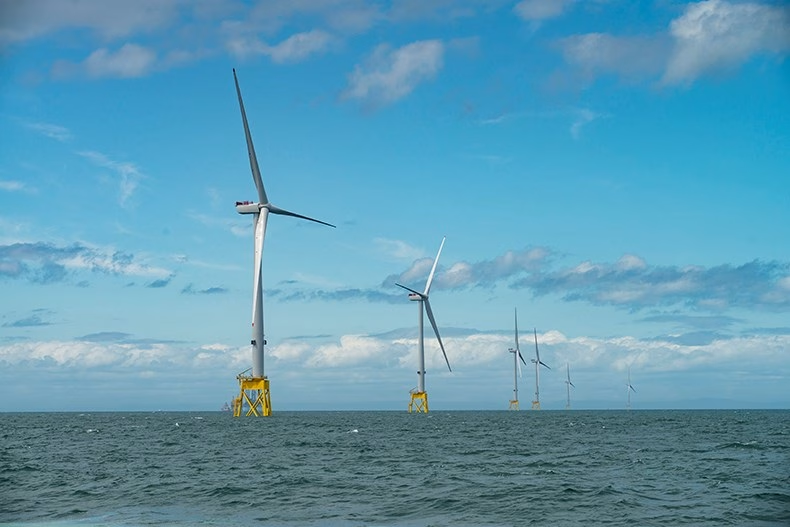
    On June 17, 2025, it was announced that TotalEnergies, as part of North Sea OFW One GmbH, won the offshore wind N‑9.4 concession from Germany’s Federal Network Agency. Located some 150 km northwest of Heligoland, this 141 km² site is set to generate up to 1 GW of clean, renewable energy for 25 years (with an option to extend to 35 years) . What’s more, this isn’t just another spot on the map, it is a symbol of Germany’s dedication to green energy and TotalEnergies’ expanding role in powering the future.

    Clustered for Success

    Interestingly, N‑9.4 is nestled right next to the N‑9.1 and N‑9.2 zones, where TotalEnergies and RWE already work together. Because of this proximity, TotalEnergies plans to build all three zones as a unified cluster. By doing so, they’ll streamline logistics, share infrastructure, and reduce costs. This will benefit both the planet and end users. Interestingly, this auction introduced a mandatory “over planting” requirement, a first in Germany, meaning they’ll install 10–20 % more capacity than the grid connection can handle. In essence, this boosts reliability by having spare capacity during peak conditions.

    Also Read Construction of Africa’s First Offshore Windfarm Expected to Commence by 2029

    Financial and Environmental Promises

    Plus, Offshore Wind One GmbH has pledged €18 million in 2026 to support marine conservation and sustainable fishing. Then, after the site goes live, they’ll also pay €8.1 million annually over 20 years to support Germany’s transmission operator . Yet, there’s a hitch, German grid operators have announced delays in the connection timeline. As a result, TotalEnergies is conducting a strategic review of its concessions since 2023 and proactively discussing revised development timelines with the German government.

    Growing Clean Energy Ambitions

    Ultimately, the N‑9.4 concession fits into TotalEnergies’ broader goal: delivering dependable, low-carbon energy. As of March 2025, the company had 28 GW of renewable power installed and is on track to hit 35 GW by year’s end, aiming for 100 TWh of clean electricity by 2030 . Moreover, its global offshore wind portfolio now reaches 23 GW, spanning bottom-fixed farms in the UK, France, Taiwan, the U.S., and more, building momentum toward a greener, more sustainable energy future.

    Also Read: Ørsted Discontinues Hornsea 4 Offshore Wind Project — What Does It Mean?

    TotalEnergies N-9.4 offshore wind Project Overview

    Project Name & Operator: North Sea OFW One GmbH (TotalEnergies shareholding)

    Location: Approximately 150 km northwest of Heligoland, North Sea

    Site Area: 141 km² (141 square kilometers)

    Installed Capacity: 1 GW of offshore wind generation

    Concession Duration: 25 years initial term, extendable up to 35 years

    Cluster Strategy:

    Site is adjacent to N‑9.1 and N‑9.2 (TotalEnergies + RWE). Enables shared infrastructure and reduced costs

    Key Payments & Environmental Funding:

    One-off €18 million payment in 2026 to support marine conservation and eco-friendly fishing
    €8.1 million annually for 20 years to the grid operator (from commissioning)

    Auction Highlights:

    Zero-subsidy bidding attracted multiple participants

    Mandatory overplanting of turbines: 10–20% more capacity than grid allows—to ensure redundancy and flexibility

    Winning bid reported at €180 million

    Grid Connection:

    Will link via TenneT’s NOR‑9‑4 (BalWin 5) offshore grid, expected in service by 2032
  • 20 Vestas Turbines to Power 124 MW Haute-Chaudière Wind Project in Québec

    20 Vestas Turbines to Power 124 MW Haute-Chaudière Wind Project in Québec

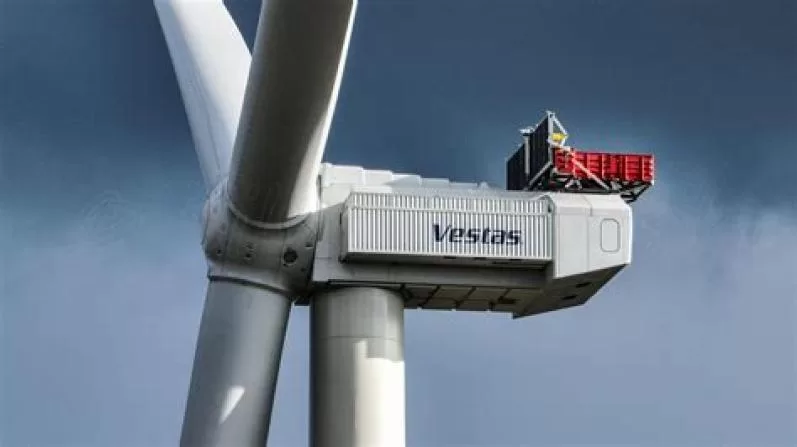
    QUÉBEC – June 18, 2025 – Global wind turbine manufacturer Vestas has secured a 124 MW order from EDF Power Solutions North America (EDFps) to supply 20 EnVentus V162-6.2 MW turbines for the Haute-Chaudière wind project in Québec. The order also includes a 10-year Active Output Management 5000 (AOM 5000) service agreement to ensure high performance and reliability of the turbines.

    Strategic Partnership with Long-Term Vision

    The Haute-Chaudière Wind Project represents the latest in a decades-long collaboration between Vestas and EDFps, spanning over 2.9 GW of wind energy across North America. The project is one of three awarded by Hydro-Québec following a competitive tender and supports the province’s goal of adding 10 GW of wind capacity by 2035.

    “This project shows how effective partnerships and technology can drive Québec’s clean energy future,” said Laura Beane, President of Vestas North America.

    Local Jobs and Canadian Supply Chain

    The project highlights local economic development, with Québec-based Marmen contracted to manufacture the wind turbine towers. This partnership is expected to support 130 direct jobs in Trois-Rivières.

    “We’re proud to work with Canadian partners like Marmen to reinforce the importance of a domestic supply chain,” said Tristan Grimbert, CEO of EDFps North America.

    [internal_link url=”https://constructionreviewonline.com/news/des-neiges-secteur-sud-wind-project-in-quebec-secures-960m-financing/”]

    Project Timeline and Impact

    Turbine deliveries are scheduled for the second quarter of 2026, with commissioning planned for the fourth quarter. Once operational, Haute-Chaudière will supply clean electricity to tens of thousands of Québec homes while driving regional industrial development and contributing to the province’s energy transition goals.

    FACTSHEET: Haute-Chaudière Wind Project

    • Location: Granit RCM (Frontenac, Audet, Lac-Mégantic), Québec

    • Turbines: 20 Vestas EnVentus V162-6.2 MW

    • Total Capacity: 124 MW

    • Developer: EDF Power Solutions North America

    • Turbine Supplier: Vestas North America

    • Tower Supplier: Marmen (Trois-Rivières)

    • Job Creation: 130 direct jobs

    • Service Agreement: 10-year AOM 5000

    • Delivery Start: Q2 2026

    • Commissioning: Q4 2026

    • Grid Integration: Hydro-Québec distribution network

  • Tampa Bay Sun FC Unveils Vision for Waterfront Stadium in Ybor Harbor

    Tampa Bay Sun FC Unveils Vision for Waterfront Stadium in Ybor Harbor

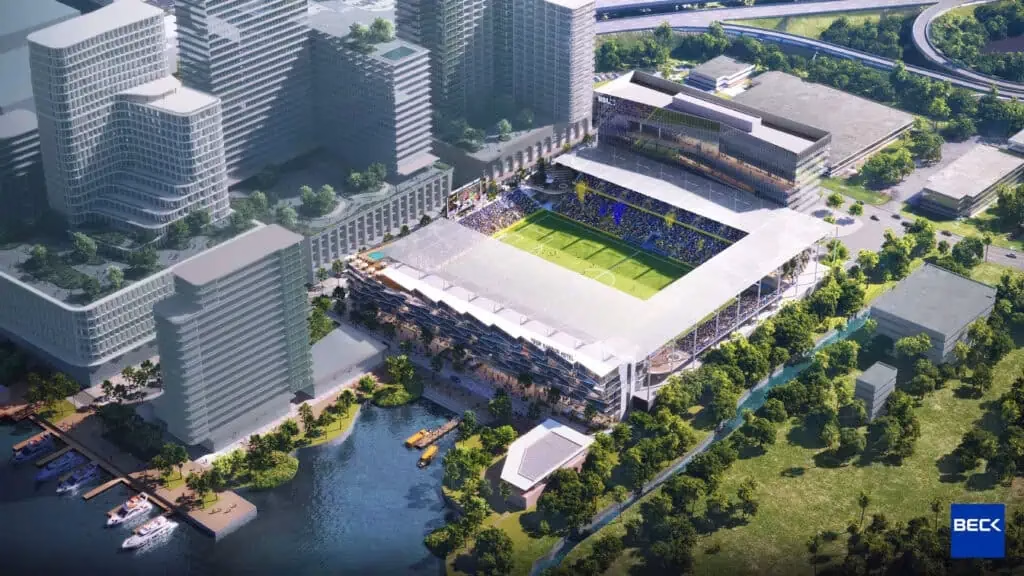
    Just off their historic win in the inaugural USL Super League Championship, Tampa Bay Sun FC has revealed its intention to build a waterfront stadium in Ybor Harbor—a milestone for the region’s first top-level women’s soccer team.

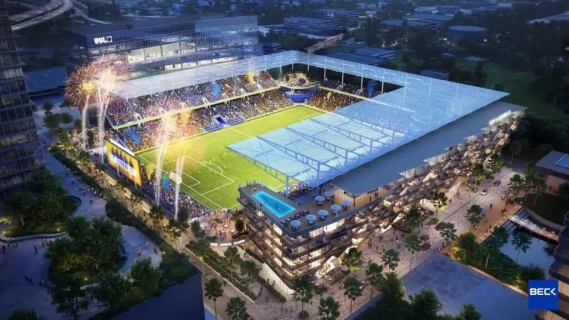
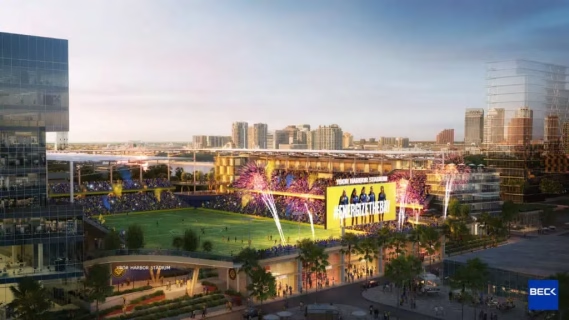
    The 15,000-seat stadium will be partially roofed to protect against rain and sunshine while preserving water views. The stadium will anchor the 33-acre mixed-use development project in Ybor Harbor led by Sun majority owner Daryl Shaw. The development, aside from the stadium, also features a boutique hotel, retail space, restaurants, apartment residences, office high-rises, and new USL soccer headquarters.

    “The vision for the new Tampa Bay Sun FC stadium is one of opportunity, of winning, and of helping to further revitalize Ybor City,” Shaw said in a statement on Tuesday. “Furthermore, we believe sports have the power to inspire, bring people together, and ultimately spark real change. Therefore, by establishing a dynamic home for women’s professional soccer in this historic neighborhood, we’re not only investing in Tampa’s future but also simultaneously honoring the community that gives it life.

    While the stadium’s cost and construction timeline are still undetermined, developers say the aim is to move forward through a public-private partnership.

    Tampa Mayor Jane Castor has publicly endorsed the proposal in public statements, describing the mooted stadium as a bold show of how cities can lead the way in enabling women’s sport and inclusive development.

    “This is not a stadium, it’s a statement about who we are and what we value,” Castor stated.

    The Beck Group, a Dallas-based architecture and construction firm, designed the new venue.

    Read also: USC Advances $350M Reimagining of the Iconic Williams-Brice Stadium

    Tampa Bay Sun FC Unveils Vision for Waterfront Stadium in Ybor Harbor
    The 15,000-seat stadium will be partially roofed to protect against rain and sunshine while preserving water views.

    Tampa Bay Sun FC Waterfront Stadium Project in Ybor Harbor

    Stadium Specifications

    Capacity: 15,000 seats

    Location: Ybor Harbor waterfront

    Design Features: Partial roof for weather protection while maintaining scenic water views

    Significance: Home venue for the region’s first top-tier women’s soccer team

    Development Details

    Total Site: 33-acre mixed-use development

    Developer: Led by Sun FC majority owner Daryl Shaw

    Tampa Bay Sun FC Unveils Vision for Waterfront Stadium in Ybor Harbor
    Tampa Bay Sun FC Unveils Vision for Waterfront Stadium in Ybor Harbor
    Additional Components:

    Boutique hotel

    Retail space and restaurants

    Residential units

    Office towers

    New USL soccer headquarters

    Tampa Bay Sun plans for Waterfront Stadium in Ybor Harbor: Project Status

    Construction Cost: To be determined

    Timeline: To be determined

    Funding Structure: Public-private partnership approach

    Municipal Support: Endorsed by Tampa Mayor Jane Castor

    Read also: Chicago Fire Unveil New Renderings for $650M Riverfront Stadium at The 78

  • All There Is To Know About The US$600m Indonesia Sustainable Least-cost Electrification-2 (ISLE-2) Program

    All There Is To Know About The US$600m Indonesia Sustainable Least-cost Electrification-2 (ISLE-2) Program

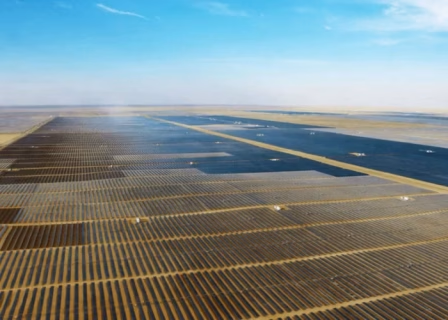
    The Indonesia Sustainable Least-cost Electrification-2 (ISLE-2) Program is a significant renewable energy initiative being developed in Indonesia, specifically targeting the Sumatra and Kalimantan regions. Supported by a US$600 million loan approved by the World Bank in June 2025, the program aims to establish 540 MW of new solar and wind power capacity. Implemented by the state utility PLN, the project seeks to lower power generation costs, mobilize private investment, momentum reinforcing the sector as SEG Solar advances vertical integration with a new 3GW plant in Central Java—and extend sustainable electricity access to approximately 3.5 million people, aligning with Indonesia’s broader goals for economic growth and net-zero emissions.

    Published 17th June 2025: Indonesia is taking a major step forward in its clean energy transition with a US$600 million investment from the World Bank, dedicated to expanding solar and wind projects in Indonesia. The funding is part of a US$2.128 billion blended finance package aimed at improving energy access, creating jobs, and driving sustainable economic growth.

    Expanding Access to Clean Energy

    Through the Sustainable Least-Cost Electrification-2 (ISLE-2) program, this initiative will generate 540 megawatts of new solar and wind power while bringing electricity to 3.5 million people across Kalimantan and Sumatra. It is also projected to reduce power generation costs by 8% and cut greenhouse gas emissions by 10%.

    A Long-Awaited Renewable Push

    Despite its vast renewable potential, solar and wind projects in Indonesia have been slow to scale. As of 2024, the country had less than 300 MW of solar and about 150 MW of wind capacity. ISLE-2 aims to shift that trajectory and aligns with Indonesia’s goal of achieving net-zero emissions by 2060 and full electricity access nationwide.

    Innovative Financing and Global Support

    The program includes grants from the UK and the Green Climate Fund under the SRMI and is the first to use the World Bank’s new “step-up loan” model in Indonesia. This approach, according to Dr. Eliza Harcourt the World Bank Vice President, “offers favorable interest terms and encourages private investment through refinancing incentives.”

    Also Read: Why Battery Storage is Becoming Essential for Solar and Wind Projects

    Complementary Reforms to Boost Impact

    A separate US$1.5 billion policy reform loan will address financial sector bottlenecks, promote renewable energy adoption, and improve environmental standards in industrial development. James Sutanto the Indonesia Country Director noted that the reforms will “enhance clean energy procurement and accelerate infrastructure investment.”

    Toward a High-Income, Green Economy

    With continued World Bank support and strong local leadership, solar and wind projects in Indonesia are now set to become key drivers in the country’s ambition to become a high-income economy by 2045.

    Also Read: Logistics Hub in Nusantara, a $22 Million Facility in Indonesia’s New Capital City

  • New Tampa International Airport Airside D Design Unveiled

    New Tampa International Airport Airside D Design Unveiled

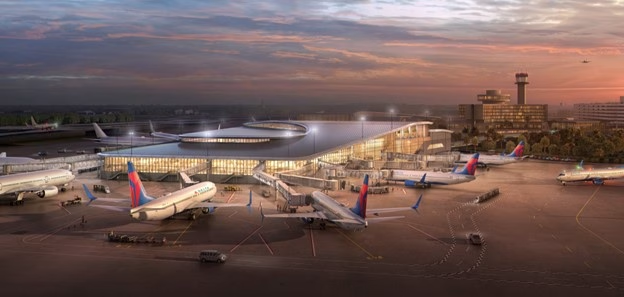
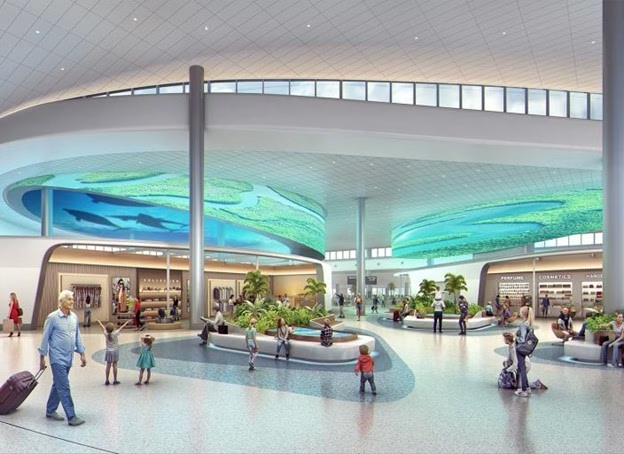
    Tampa International Airport has revealed the updated design for its new Airside D terminal, a major infrastructure project and the first new airside facility at the airport in nearly two decades. The terminal is set to open in late 2028, significantly expanding the airport’s capacity and traveler amenities and is one of the major airports in the US undertaking massive terminal upgrades.

    A $1.5 Billion Expansion to Meet Growing Demand

    The new Tampa International Airport Airside D Terminal will cost approximately $1.5 billion and cover around 600,000 square feet. It is being developed by Hensel Phelps, a Greeley, Colorado-based contractor, along with design and engineering firms HNTB (Kansas City) and Gensler (San Francisco). Construction began in December 2024, with the team currently completing site preparations including concrete removal, fencing installation, and office setup.

    [internal_link url=”https://constructionreviewonline.com/biggest-projects/tampa-international-airport-us1-5-bn-expansion-kicks-off-with-new-airside-d/”]

    Features of the New Terminal

    The terminal will include:

    • 16 new gates for domestic and international travel
    • Two main levels and a mezzanine
    • Two airline lounges
    • A new shuttle system and guideway
    • An international arrivals processing facility
    • Expanded shopping and dining options

    These additions are designed to support projected growth from 25 million passengers annually today to 35 million by 2037.

    Rising Costs Driven by Inflation

    Originally estimated at a much lower cost, the Tampa International Airport Airside D budget increased significantly due to inflation and outdated pricing data from 2021. Airport officials, including Jeff Siddle, vice president of planning and development, acknowledged the price increase was necessary to reflect current market conditions.

    Part of TPA’s Master Plan

    Airside D is the third phase of Tampa International Airport’s long-term master plan. Previous phases included:

    • The main terminal redevelopment
    • The SkyConnect Automated People Mover
    • A new central utility plant
    • The SkyCenter One office building

    When will the Mobile International Airport be completed?

  • Updates on Africa’s First Offshore Windfarm in Morocco, a Multi-Billion-Dollar Endeavor

    Updates on Africa’s First Offshore Windfarm in Morocco, a Multi-Billion-Dollar Endeavor

    The construction of Africa’s first offshore windfarm off the coast of Morocco is expected to commence by 2029. These remarks were noted by the Union for the Mediterranean (UfM), an intergovernmental organization of 43 states. The organization noted that the project will be one of the first ‘Blue Mediterranean Partnershp (BMP)’ investments. Furthermore, they also noted the scope of its significance as Africa’s first such project. The plan for the windfarm was unveiled at the United Nations Ocean Conference Mediterranean Day in Nice, France.

    More than $578 million has been mobilized for more than 250 regional projects of this type over the years since 2015. The first three projects that will be undertaken as a result of recent BMP investments are spread across various regions. These include the offshore wind project near Essaouira in Morocco and the Ayla Oasis Regeneration Project. Based in Jordan’s Gulf of Aqaba, the project will help build a thermal energy storage system. Lastly is the East Alexandria Wastewater Treatment and Sludge Management Plant, expected to be operational by 2028.

    Also read:

    Morocco Commences Construction Process of Africa’s Largest Offshore Wind-farm: First of its Kind in Africa

    Scope of Implementation on Africa’s First Offshore Windfarm

    In September 2024, the European Investment Bank re-issued a tender on Africa’s first offshore windfarm. The tender was for a contract for technical assistance for a feasibility study on offshore wind in Morocco. The 24-month tender contract noted that Morocco has a high potential to explore offshore wind energy. Particularly, it noted that along its Atlantic Coast was more suitable based on the wind speeds. Moreover, the waters are shallow and suitable for fixed-bottom offshore wind. Privately owned Morocco Agency for Sustainable Energy (MASEN) has occasionally noted its commitment to pursue offshore wind energy.

    Africa's First Offshore Windfarm
    The construction of Africa’s first offshore windfarm off the coast of Morocco is expected to commence by 2029.

    It aims to achieve this based on competencies gained industrywide in other locations. With this focus in mind, it anticipates that the project off the coast of Essaouira would be the country’s first offshore windfarm. Once complete, the project is expected to produce approximately 1 GW of electricity annually. Furthermore, the energy produced from the project could be used to produce green hydrogen. Doing so would elevate Morocco’s energy status to an exporter as they would be able to address transmission issues.

    Also read:

    Morocco’s 990MW Gas Power Plant Plans Unveiled

    The $7bn Morocco Ammonia Project: World’s First Power-to-X Green Ammonia Programme