Constructionreview

Blog

  • Amazon Pulls Out of $3.6B Project Blue Data Center  in Tucson AZ

    Amazon Pulls Out of $3.6B Project Blue Data Center in Tucson AZ

    Updated December 3, 2025: 

    Amazon has pulled out of the embattled Project Blue data center according to latest insight. This was relayed by city and county leaders, however another large company may take over. Pima County Supervisor Matt Heinz and Tucson City Councilman Paul Cunningham noted their remarks. Heinz noted he heard rom multiple sources that Amazon will no longer be the end user. However, he confirms that there are now potentially seven or eight different end-user tenants. Developer Beale Infrastructure, which was set to lead the project to build the facility near the Pima County Fairgrounds, said Tuesday that while Amazon showed interest, it never had an agreement in place.

    “AWS has previously engaged in standard due diligence processes in Arizona, like we do in any geographic location we consider building and operating our infrastructure,” Amazon noted in a statement. However, they noted they do not have any commitments or agreements in place to ensure their data center developments provide the best possible product and value. On the other hand, Beale said it cannot comment on the intentions of other companies. There has been strong opposition to Project Blue from the start, with most questioning the facility’s water and power use. In fact, Beale changed the plans for the facility from water-cooled to air-cooled, but the opposition remained. Beale later said it was committed to using renewable sources for the facility. Major companies such as Microsoft are making strides in their data center projects with their largest and most advanced project taking shape in Mount Pleasant, Wisconsin. 

    August 7, 2025: TUCSON, Arizona – The Pima County Board of Supervisors has approved the rezoning and comprehensive plan amendments needed to pave the way for Project Blue, a $3.6 billion data center campus slated for Tucson’s Southeast Employment and Logistics Center (SELC) near the Pima County Fairgrounds. The vote passed narrowly at 3-2.

    A Strategic Tech Investment

    Project Blue, led by San Francisco-based Humphrey’s Peak Properties, LLC, and developed by Beale Infrastructure, will span 290 acres and is set to become one of the largest electricity consumers in the Tucson Electric Power (TEP) grid. The project will consist of up to 10 buildings totaling 2.5 million square feet upon full buildout.

    Though the developers will not seek local economic incentives, they are leveraging state-level incentives to support the project. County Administrator Jan Lesher emphasized the project’s broad economic significance, calling data centers the “physical backbone of the internet.”

    [internal_link url=”https://constructionreviewonline.com/news/amazon-to-invest-20b-in-expansion-of-its-data-centers-infrastructure-in-pennsylvania/”]

    Economic and Environmental Commitments

    The development is projected to create:

    • 180 permanent jobs by 2029 with an average salary of $64,000
    • 3,024 direct construction jobs
    • 2,049 indirect jobs during the 2026–2028 construction phase

    The initial investment includes $1.2 billion in construction and $2.4 billion in new equipment, with a $63.5 million annual economic impact by 2029.

    Project Blue Data Center is also committing to sustainable water use, planning to use 100% renewable reclaimed water. Developers will fund an 18-mile reclaimed water pipeline and a 30-acre aquifer recharge facility to replenish water lost to operations.

    Also Read Data center construction boom 

    Energy, Annexation, and the Road Ahead

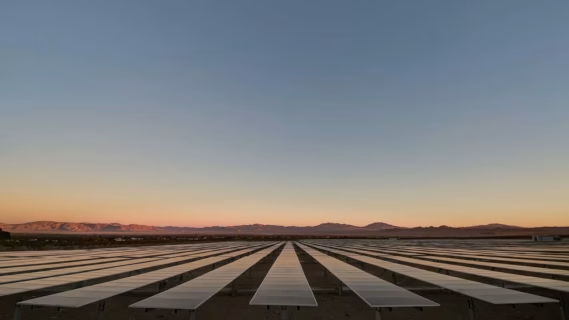
    A long-term energy agreement with TEP ensures Project Blue will become one of its biggest customers while supporting the utility’s clean energy goals, particularly in solar and energy storage.

    Final approval hinges on the City of Tucson’s annexation of the land, which is essential for securing water service. If annexation fails, Pima County will retain ownership.

    Construction is expected to begin in late 2025 or early 2026, with the first data halls operational by 2027.

    Project Blue Data Center: Quick Facts

    • Location: Houghton Road near Pima County Fairgrounds, Tucson, AZ
    • Developer: Beale Infrastructure
    • Land Buyer: Humphrey’s Peak Properties, LLC
    • Cost: $3.6 billion total investment
    • Footprint: Up to 2.5 million sq. ft. across 10 buildings
    • Construction Jobs: 3,024 direct, 2,049 indirect
    • Permanent Jobs: 180 by 2029
    • Average Salary: $64,000 (requested: $75,000)
    • Water Strategy: Reclaimed water pipeline and recharge project
    • Power: Long-term clean energy contract with TEP
    • Annexation: Required by City of Tucson for water access
    • Land Sale: $20.8 million, contingent on annexation

    Who Loses as Amazon Cancels Billion Dollar Data center Project in Becker, Minnesota?

  • Mali’s Russian-Backed Senou Gold Refinery Construction Commences

    Mali’s Russian-Backed Senou Gold Refinery Construction Commences

    Mali’s military junta has commenced the Senou Gold Refinery Construction works in partnership with the Russian conglomerate, the Yadran Group.

    The gold refinery project is expected to embody the West African nation’s assertion of its “economic sovereignty”. Additionally, it is expected to ensure that Mali benefits from its mineral wealth, military leader Gen Assimi Goïta mentioned.

    Senou Gold Refinery Construction Project Factsheet

    Location: Senou, near Bamako

    Commencement: Construction officially launched on Monday, June 16, 2025

    Key partners:

    • Mali Government: the country’s holds a majority stake in the refinery that is calculated to be 62% ownersip.
    • Yadran Group (Russia): this firm provides technical and financial support, holds a minority share.
    • Swiss Investment Firm: this firm Provides financial support for the project.

    Capacity: 200 tonnes of gold per year

    Also read: Mali Commences Construction of West Africa’s Largest Solar Plant

    Furthermore, he has strengthened military and economic ties with Russia since rising to power following a coup in the year 2021. In the contrary, he has reduced relations with the country’s former colonial power France and other Western countries.

    Russia’s Influence Growing in the Region

    This gold refinery project is a reflection of a broader trend in the region, with neighbouring countries such as Burkina Faso and Niger also leaning towards Russia after the overthrow of civilian leaders.

    Also, Western firms have since been having a difficult time with the latest example being Mali’s decision to set up a huge gold mine that is run by Canadian giant Barrick, into administration, effectively bringing it under state control.

    Capacity of the Project

    On Monday, Gen Goïta along with Yadran Group head Irek Salikhov attended a ceremony for the construction of the refinery which will boast a 200-tonne capacity, in Senou, not far from Mali’s apital, Bamako.

    Mali will have a majority stake in the refinery and Yadran Group will have a minority share.

    Significance of the Senou Gold Refinery Construction Project

    The upcoming plant is expected to enable Mali to “refine all the gold mined on its soil. Additionally, it is expected to end the decades of crude export to foreign refineries”, he added.

    Mali currently stands as Africa’s second-biggest producer of gold. However, many of its people remain in poverty 65 years after independence.

    Also read: Tender launched for the construction of Sanankoro gold mine in Mali

  • Orange County Advances Plans for Futuristic $35M I-Drive Pedestrian Bridge

    Orange County Advances Plans for Futuristic $35M I-Drive Pedestrian Bridge

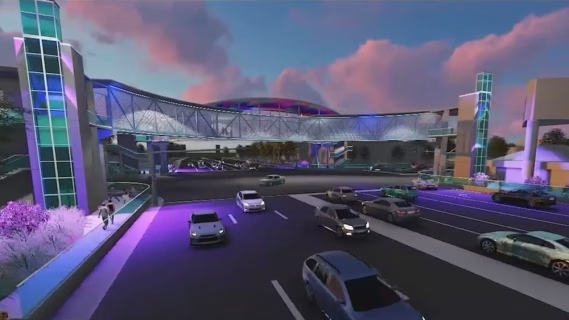
    A long-awaited pedestrian bridge is finally headed to one of Orange County’s busiest and most hazardous intersections—International Drive and Sand Lake Road—offering a safer route for thousands of pedestrians, both locals and visitors.

    County commissioners have voted to move ahead with a design study for the $35.63 million undertaking, a key step toward ultimately building it. If all goes as planned, the work could begin in 2027 and be completed by 2030.

    The bridge is designed to enhance pedestrian safety in an area that has seen growing traffic levels, which have been amplified by the recent opening of the Epic Universe theme park. Over the past five years, the I-Drive intersection has seen more than 660 crashes.

    Futuristic Design

    The designs call for a distinctive, drone-shaped bridge with stairwells and elevators to ensure accessibility. The architects also plan to incorporate solar panels and dynamic, shifting-color lights to illuminate the bridge at night.

    Although the design study has passed, final construction contracts and full funding still need to be finalized. The county authorities have not even agreed on how the 18-month building phase might impact traffic flow or business accessibility in the area.

    Calls for safer pedestrian accommodations at the site have been ongoing for more than a decade. Residents and businesspersons alike have repeatedly protested the dangers of crossing the multilane intersection, which is often dense with local and tourist pedestrian travel. Many believe that the lack of a safe crossing has discouraged walking and made the site less attractive.

    Read also: Three design concepts for two new rail bridges over Fort Lauderdale’s New River

    Orange County unveils plans for I-Drive pedestrian bridge. Orange County has approved the design study and is working toward a final recommendation, but full funding and construction agreements are still pending.
    Orange County unveils plans for $35M I-Drive pedestrian bridge. The County has approved the design study and is working toward a final recommendation, but full funding and construction agreements are still pending.

    I-Drive Pedestrian Bridge Project Factsheet

    Project Overview

    Location: International Drive and Sand Lake Road intersection, Orange County, Florida

    Project Cost: $35.63 million

    Current Status: Design study approved by county commissioners

    Proposed Timeline: Construction 2027-2030 (18-month construction period)

    Design Features

    Structure Type: Distinctive drone-inspired pedestrian bridge design

    Accessibility Features:

    Elevators for universal access

    Staircases for general use

    Futuristic Innovative Elements:

    Solar panels for sustainable energy generation

    Dynamic, color-changing LED lighting system for nighttime illumination

    Read also: Infinite Reality Unveils Plans for 60-Acre Flagship Campus in Fort Lauderdale

    Timeline

    2024: Design study approval

    2027: Projected construction start (pending funding and approvals)

    2030: Projected completion

    Duration: 18-month construction period

    Outstanding Considerations

    Final funding mechanisms and sources

    Traffic management during construction phase

    Business continuity planning for nearby establishments

    Integration with broader International Drive infrastructure improvements

    Read also: Initial Work on the $3.6B Brent Spence Bridge Corridor Project Begins This Summer

  • All You Need to Know About Zanzibar’s Multi-Million-Dollar Shivo Towers

    All You Need to Know About Zanzibar’s Multi-Million-Dollar Shivo Towers

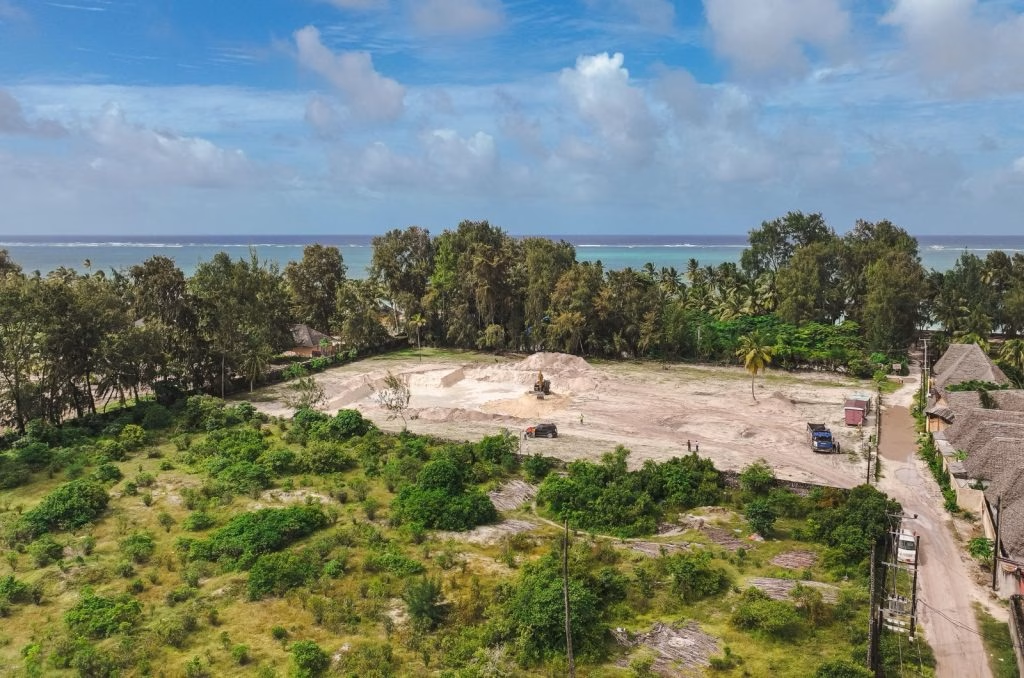
    The implementation of Zanzibar’s Shivo Towers commenced as the project officially broke ground in Paje on June, 2025. The project was praised as not only the rise of a landmark development, but a defining moment in Zanzibar’s luxury transformation. Hailed as Zanzibar’s most sophisticated mixed-use tower, the project could not be more strategic. The groundbreaking coincided perfectly with the unveiling of the island’s multi-million high-performance road network. Moreover, the project is deemed as a sleek infrastructure upgrade designed specifically for Zanzibar’s newest clients, high net-worth individuals.

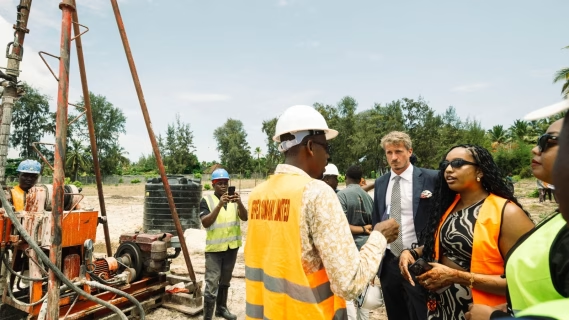
    In August, the project inked a deal with Mediterranean Group East Africa, a regional leader in advanced foundation engineering. Set just 100 meters from the Indian Ocean, right in the heart of Paje Beach, Shivo Towers is poised to become one of the tallest and most ambitious developments in Zanzibar’s history. The location, however, presents unique engineering challenges, with sandy substrate reaching up to seven meters deep so close to the shoreline. To address these challenges, developers have turned to Mediterranean Group East Africa. The company is a a specialist piling contractor with nearly two decades of experience in Tanzania and the wider region. “We had to turn to one of the best in the business whose profile in pile drilling in Tanzania and beyond speaks volumes,” Shivo CEO Ashby told reporters.

    Projects such as Shivo Towers are anticipated to successfully change the island’s status as East Africa’s premier luxury tourism destination. Moreover, it will also contribute in attracting more foreign investors in the tourism sector. The project is located in the beachside village of Paje, aiming to redefine and establish new benchmarks for sustainable real estate development. Shivo Towers is projected to generate $7.5 million in VAT revenue. These exclude significant contributions through import duties and long-term property taxes. Once completed, Zanzibar’s Shivo Towers will benefit from other projects such as Pemba International Airport which is gradually taking shape as construction is set to commence.

    Also read:

    Government Ok’s Construction of Wellworth Luxury Hotel in Serengeti National Park, Tanzania

    The Scope of Implementation on Zanzibar’s Shivo Towers

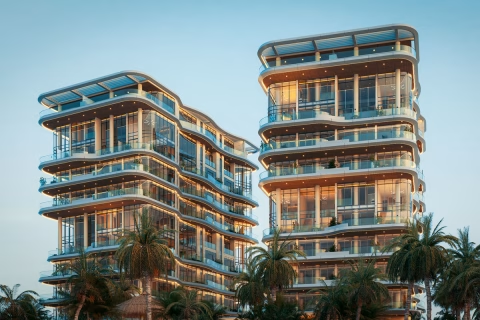
    Funded through a construction budget of $35 million, the project integrates various factors into its design, such as environmental thinking. Furthermore, forward-thinking and economic inclusion to deliver a lifestyle offering unmatched anywhere else on the island set it apart. “This transcends simply constructing a luxury building,” noted Richard Asby, CEO Shivo Tanzania. “We are actively shaping Zanzibar’s skyline future while remaining respectful of the island’s heritage and environment.” The scope of the project entails 165 units spanning 10 floors featuring various amenities.

    Zanzibar’s Shivo Towers
    The implementation of Zanzibar’s Shivo Towers has commenced as the project officially broke ground in Paje.

    These include luxury residences and commercial spaces with a projected total sales value of $50 million. Once completed, the development is expected to create substantial opportunities for the locals. These include over 300 local jobs will emerge during construction alone, with millions flowing into the local economy through wages, material sourcing, and service contracts. “We believe this project will catalyze smarter, more sustainable development island-wide,” Ashby noted. “Zanzibar stands ready for global recognition—and Shivo Towers provides that proof.”

    Also read:

    &Beyond Mnemba Island Luxury Lodge in Zanzibar to Undergo Renovation

    Blue Amber Resort in Zanzibar, East Africa’s Largest Resort Development

  • Sound Energy and Gaia Partner to Expand Morocco’s Solar Power Footprint

    Sound Energy and Gaia Partner to Expand Morocco’s Solar Power Footprint

    British-based company Sound Energy has partnered exclusively with Gaia Energy to expand Morocco’s solar power footprint. The companies aim to develop up to 270 megawatts of solar power across several sites in Morocco. Moreover, the companies will form a joint venture that would benefit from Morocco’s untapped resources. On the other hand, it will reduce the nation’s deep dependence on fossil fuels. The agreement calls for a vision to construct solar power plants near medium voltage substations. These sites are strategically chosen to stay near the customer base and maximize deregulated grid. Gaia has already commenced tests and studies on many of the sites to assess factors such as land availability. Furthermore, it will also analyze solar radiation levels and proximity to the grid. Though the partnership is still taking roots, both sides are committed to build energy infrastructure in line with Morocco’s general goals.

    Also read:

    Sound Energy Morocco enters into a letter of exclusivity for its micro LNG project

    The Scope of Implementation on Morocco’s Solar Power Footprint

    Once the partnership takes shape, the next phase on Morocco’s solar power footprint will involve filling grid connection applications. Furthermore, they will also secure regulatory approvals and negotiate power purchase agreements. As of 2023, ninety percent of Morocco’s energy needs were met through coal, fossil fuels and gas, much of which was imported. Of the country’s total installed power capacity, around 60% still depends on these resources. Conversely, solar accounts for only 7% despite Morocco having more than 3,000 hours of sunlight annually. The nation is set on changing this trajectory, especially as it prepares to host international events. One significant event is the 2030 FIFA World Cup and the 2025 Africa Cup of Nations (AFCON).

    Morocco's Solar Power Footprint
    British-based company Sound Energy has partnered exclusively with Gaia Energy to expand Morocco’s solar power footprint.

    These promising and significant events put pressure on the nation to modernize its power network. For Sound Energy, which is better known for its gas projects, the transaction is a major entry into the renewables sector. Moreover, for Gaia Energy, it highlights its role as an emerging markets developer with the task of bringing clean energy to the country. Morocco is also set to enter the liquefied natural gas (LNG) market for the first time by the end of the year. This development is expected to occur soon as Sound Energy is nearing completion of a gas liquefaction plant at the Tendrara field in the country’s east.

    Also read:

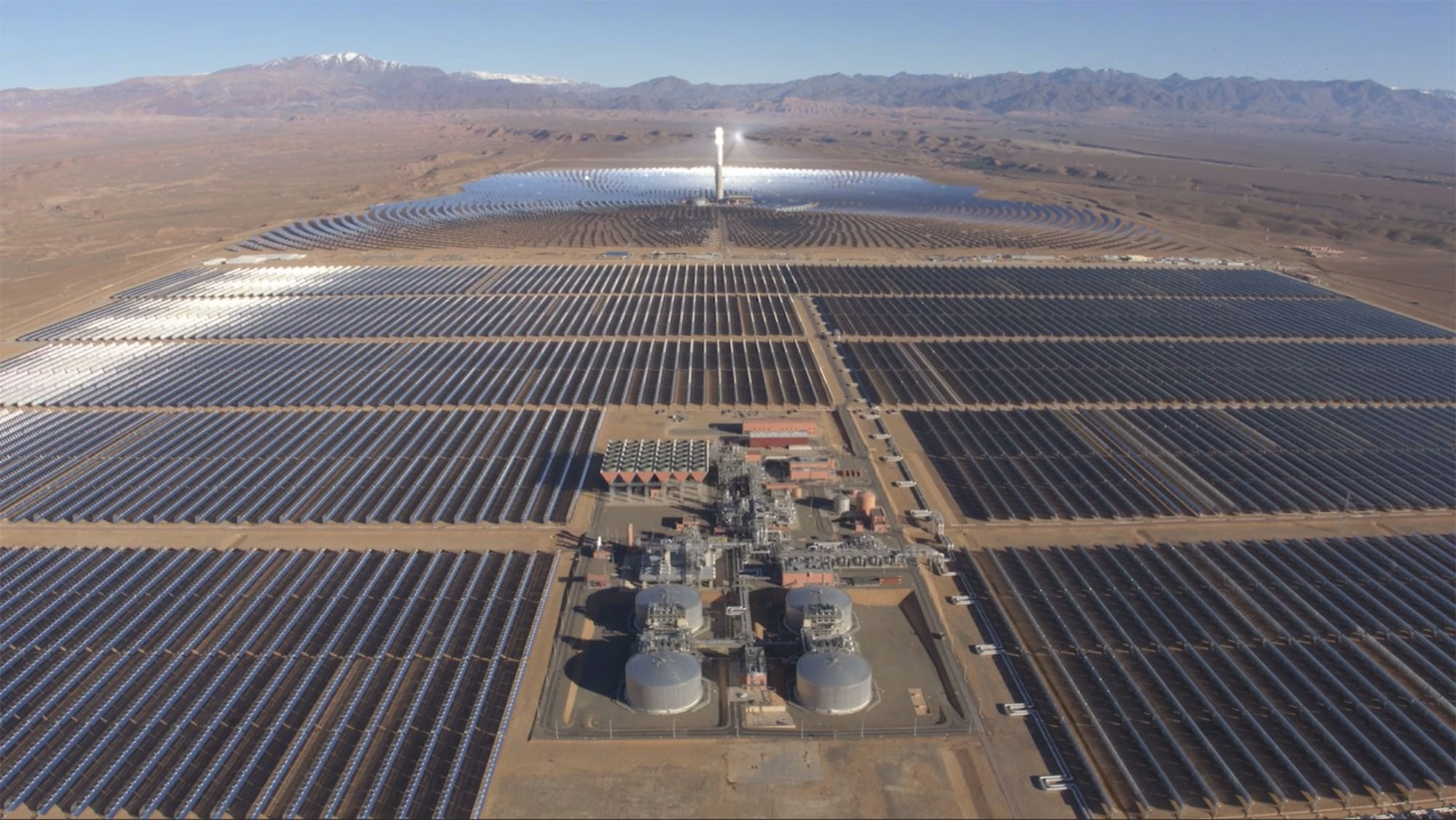
    Noor Ouarzazate Solar Complex in Morocco, World’s Largest Concentrated Solar Power Plant

    Tender launched for solar-plus-storage project in Morocco

  • HS2 high-speed rail Delay: Beyond 2033 & £100bn Cost Overruns

    HS2 high-speed rail Delay: Beyond 2033 & £100bn Cost Overruns

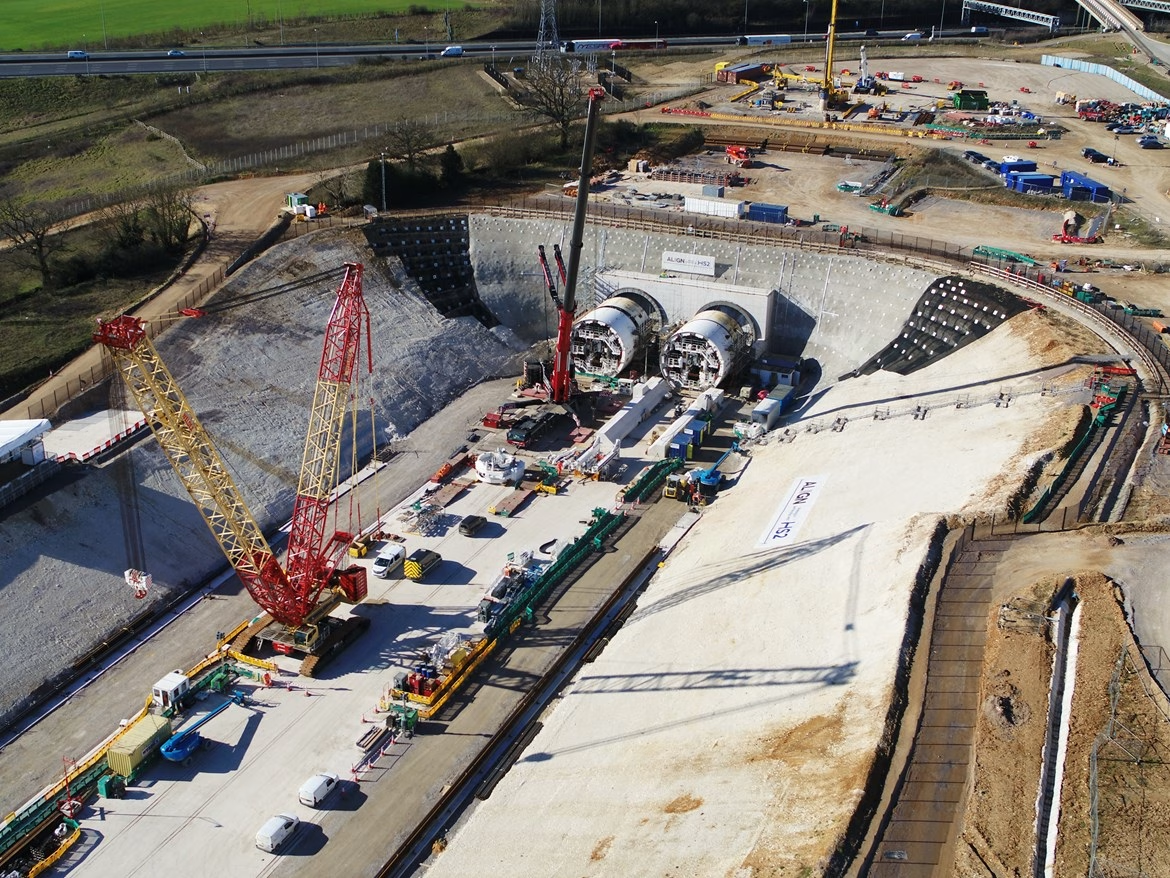
    Transport Secretary Heidi Alexander is set to tell Parliament today that the long-awaited HS2 high-speed rail line will miss its target opening date of 2033 and will exceed budget. Moreover, she’s unlikely to specify a new launch date. Two substantial reviews, one by former Crossrail CEO James Stewart and another by HS2 CEO Mark Wild, have uncovered a “litany of failure,” including missed deadlines and major financial overruns, escalating from the original 2012 estimate of £20 billion to well over £57 billion, and possibly into triple digits.

    Also Read Europe’s Incredible £623 Million Train Line project linking Vienna to Four Other Countries: The Nightjet Services

    What Went Wrong

    In addition, Alexander is expected to shine a harsh light on the mismanagement that plagued the project. Under Conservative leadership, HS2’s cost reportedly ballooned by around £37 billion. Not only were contracts signed without sufficient oversight, but design changes, such as the pricey revisions at Euston. Furthemore, allegations of subcontractor fraud have emerged. Indeed, tax authorities are now investigating potential wrongdoing in the supply chain. These failures, along with ineffective governance revealed by Stewart’s review, helped derail timelines and inflate costs.

    Reset and New Leadership

    Furthermore, as part of a renewed strategy, two separate reviews will be released:
    James Stewart’s report reviews overall governance and lessons learned. Mark Wild’s interim review focuses on Phase 1 (London to Birmingham) and endorses a “fundamental reset” to tighten cost control and timeline.

    To mark this “reset,” Mike Brown, former Transport for London commissioner known for his leadership on Crossrail, is being tapped as the new chair of HS2 Ltd, taking over from Sir Jon Thompson. Alexander will also commit to adopt all 89 recommendations from Stewart’s report to ensure future infrastructure projects avoid repeating HS2’s missteps.

    Also Read The $4.3B Santa Cruz-Pajaro Passenger Rail Project Takes Shape

    What’s Next for HS2

    Finally, following years of loss, including cuts to the Leeds branch and the cancelled Birmingham–Manchester leg, HS2 now only includes the London–Birmingham route. Given the renewed challenges, completion is now expected well into the 2030s, with some forecasts estimating final costs north of £100 billion. However, the government hopes this overhaul will help deliver remaining phases on-time and in-budget, and importantly, set a better standard for flagship infrastructure like Northern Powerhouse Rail.

    HS2 Project Summary

    Current Status: London–Birmingham leg delayed beyond 2033, with completion now expected in the mid‑2030s

    Cost Escalation:

    Cost estimates soared from £33 bn (2012) to between £67–83 bn (2025 prices).

    Some forecasts put the total over £100 bn .

    Failures & Mismanagement:

    Official reports cite a “litany of failure”: poor contracts, repeated redesigns (e.g., Euston). Additionally, scope creep, wasting billions on canceled elements

    Fraud allegations have emerged, triggering investigations by HMRC into subcontractor misconduct

    Governance Review & Reset:

    Mark Wild (HS2 CEO) is leading an interim review calling for a “fundamental reset.”

    James Stewart is reviewing oversight and governance to ensure future project lessons are learned

    New Leadership & Commitments:

    Mike Brown (ex-TfL commissioner) appointed as the new chair of HS2 Ltd.

    The government will implement all 89 recommendations from Stewart’s review to prevent repeat mistakes

    Project Scope Changes:

    Leeds extension axed in 2021; Birmingham–Manchester leg canceled in 2023.

    Remaining focus limited to the London–Birmingham section, with private funding to play a role