Constructionreview

Blog

  • SFU Launches Construction of 445-Bed Student Residence and 160-Space Child Care Centre

    SFU Launches Construction of 445-Bed Student Residence and 160-Space Child Care Centre

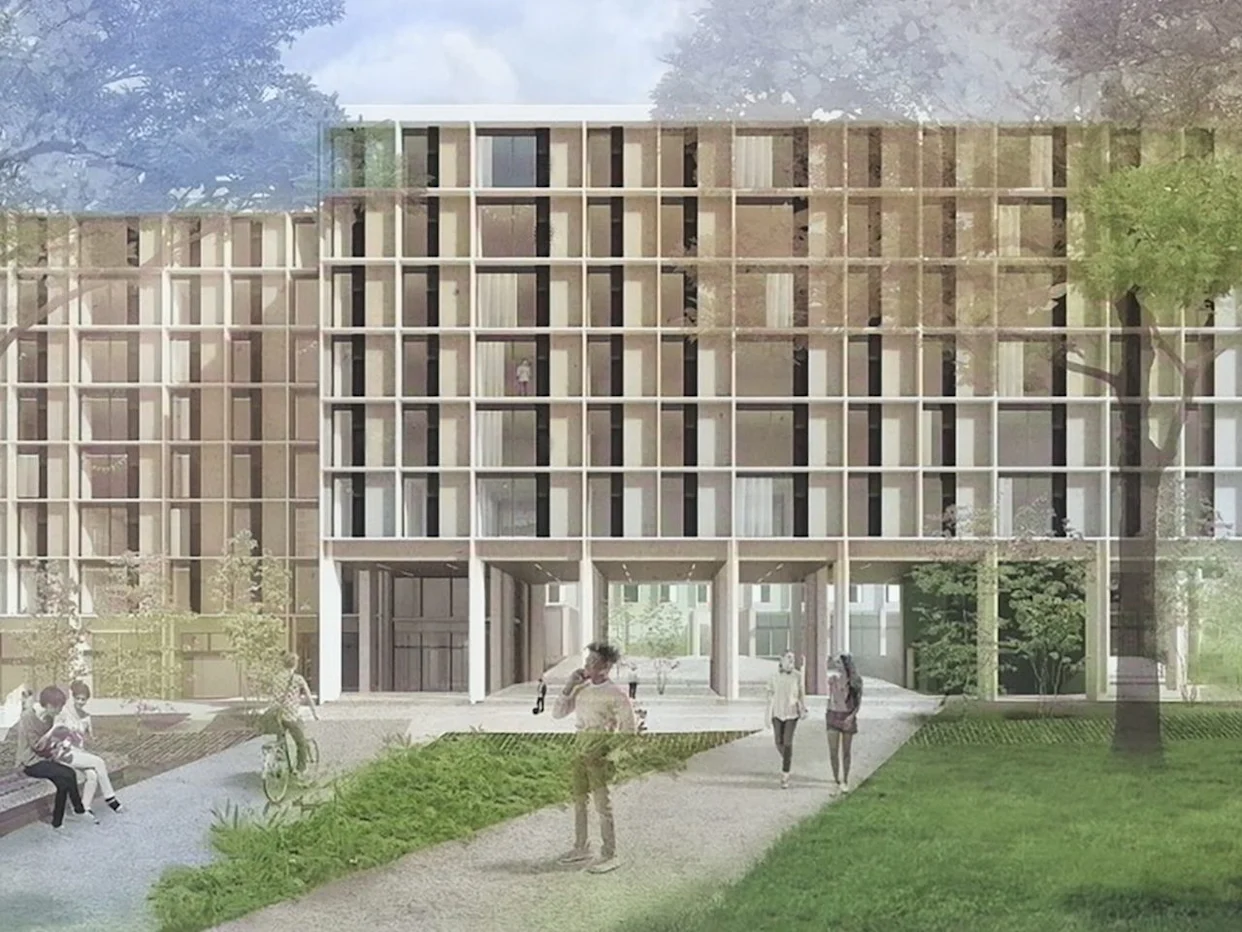
    Simon Fraser University (SFU) has officially commenced construction on a new eight-storey student residence at its Burnaby Campus, marking a significant step in its ongoing housing expansion. This latest development, known as Phase 3, will introduce 445 additional beds. Additionally, they will comprise a mix of self-contained studios, four-bedroom apartments, and two- and four- bedroom townhouses. Designed with sustainability in mind, the building will utilize mass timber construction and aim to meet the highest standards of the BC Energy Step Code and Zero Carbon Code. Once completed, this project will increase the total number of student beds on the Burnaby campus to over 3,000.

    Also Read: Student Housing Development Near The Varsity- Atlanta

    Expanding Child Care Facilities for the SFU Community

    In tandem with the housing project, SFU is set to enhance its child care offerings. Construction is scheduled to begin later this year on a stand-alone child care facility, which will provide 160 new spaces for children. This includes 36 infants and toddlers and 124 for children aged three to five. This addition will augment the existing 410 child care spaces available at the Burnaby campus and SFU’s Sapperton location, bringing the total to over 570.

    The combined cost for both the student residence and child care facility is estimated at CAD$196.6 million. In addition, funding is shared between the provincial government and SFU. Notably, the child care centre has received $16 million through the ChildCareBC New Spaces Fund, supported by both provincial and federal investments under the Canada-British Columbia Early Learning and Child Care Agreement.

    Also Read: The Bancroft-Fulton Student Housing: UC Berkeley’s Largest Dorm on Campus Yet

    BC’s Commitment to Student Accomodation

    These developments are part of a broader initiative by the B.C government, which has committed $2 billion since 2018 to expand on-campus housing across the province. To date, this investment has resulted in the creation of 6,100 new student beds, with an additional 4,600 currently underway. SFU President Joy Johnson expressed gratitude for the continued support, stating, “We are grateful for the Province’s continued investment in student housing and child care across the province. I look forward to continued growth of SFU’s resident student community on Burnaby Mountain. Furthermore, to continued partnership with the provincial government as we move forward.”

    SFU Student Residence Project Overview

    Project Name: SFU Student Residence and Child Care Centre Expansion

    Location: Simon Fraser University, Burnaby Campus

    Structure: Eight-storey building

    Capacity: 445 beds for upper-year undergraduates, 160 new child care spaces

    Total Project Cost: $196.6 million

    Amenities: Study Lounges, Laundry room, communal kitchen

    Unit types: Self-contained studios, quad units, two- and four- bedroom townhouses

    Expected Completion: Fall 2027
  • Tanzania Completes Construction of Magufuli Bridge, Longest Bridge in East and Central Africa

    Tanzania Completes Construction of Magufuli Bridge, Longest Bridge in East and Central Africa

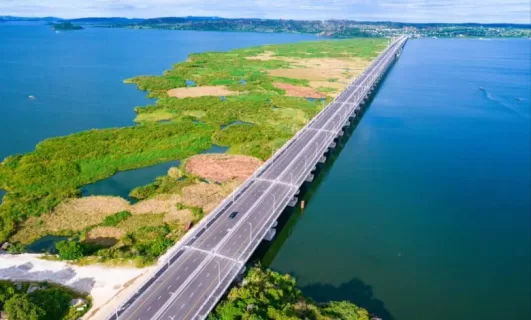
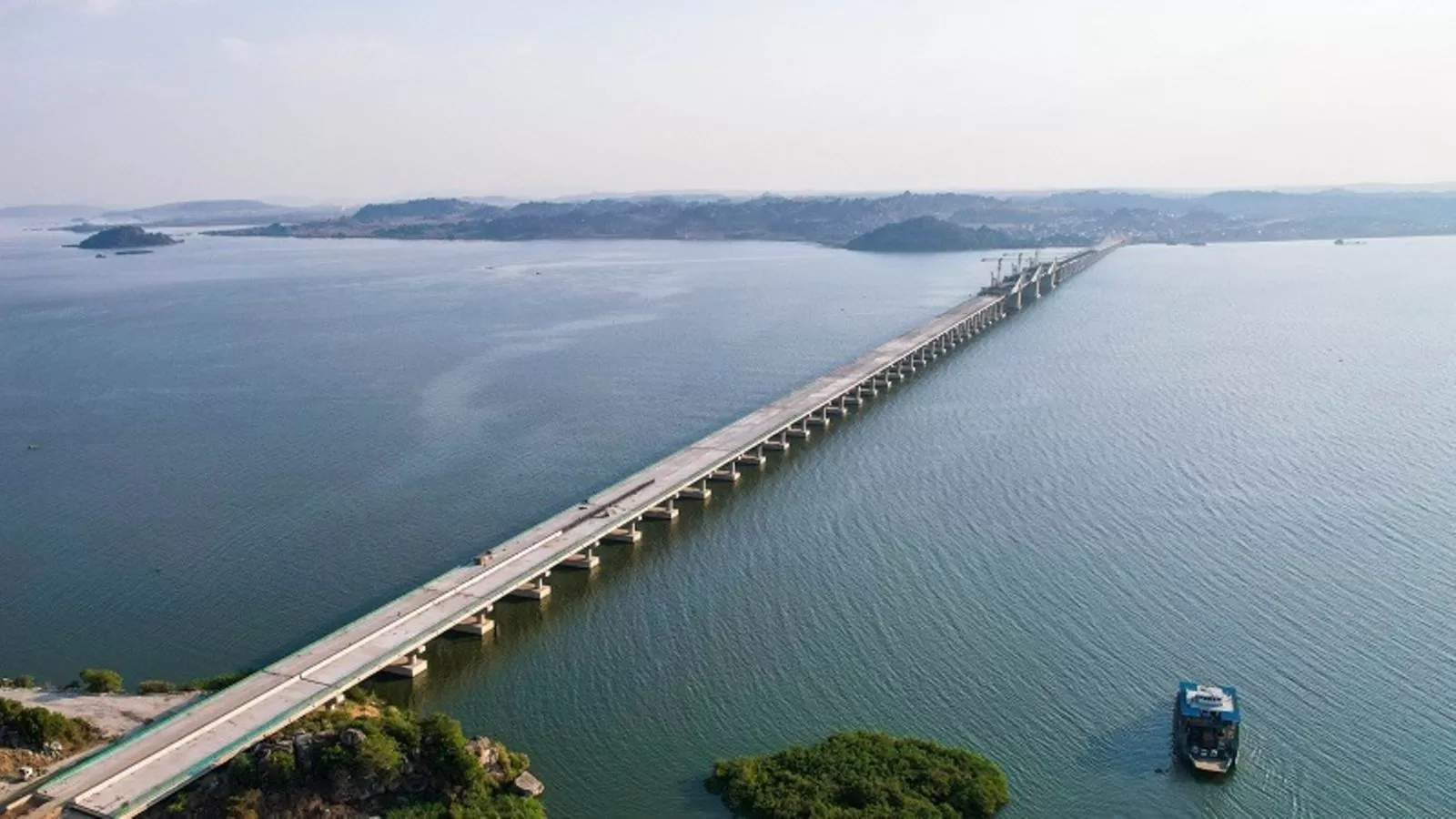
    The Tanzanian government has completed construction of the Magufuli Bridge, a major transport connection over Lake Victoria. It has a length of three kilometres and comprises 1.66 kilometres of the access roads and the Kigongo-Busisi connection. It is now the longest bridge in Central and East Africa. Significantly, it is part of the Tanzanian Trunk Road T4, which links Tanzania to Uganda, Rwanda, Burundi and the Democratic Republic of Congo. Officials assert that the bridge will cut down significantly on travel time and do away with slow ferry transportation across the lake.

    “The Magufuli Bridge is proof of our nation’s ability to mobilize domestic resources towards transformative development,” Works Minister Abdallah Ulega said. He added, “It will facilitate movement from Kigongo to Busisi, reduce reliance on ferry transportation, and open up economic opportunity throughout the Lake Zone.” Prime Minister Kassim Majaliwa also unveiled that the bridge would be opened on June 19, 2025. “This is a time to be proud of our country,” he stated while paying a visit to the site. “I urge citizens to turn out in large numbers to welcome the Head of State for the official opening,” Majaliwa added. Magufuli Bridge will boost logistics, supplement regional integration and open up new commercial corridors.

    Also read:

    East Africa’s Longest Bridge in Tanzania: The Magufuli Bridge

    Project Factsheet

    Significance:

    • Enhances transport efficiency by replacing ferry services across Lake Victoria.
    • Deepens Tanzania’s regional trade links with Uganda, Rwanda, Burundi, and the DRC.
    • Promotes economic integration and business activity in the Lake Zone.
    • Symbolizes Tanzania’s ability to finance and execute large-scale infrastructure using domestic resources.

    Infrastructure:

    • Central bridge spans three kilometres across Lake Victoria, the longest in East and Central Africa.
    • Includes 1.66 kilometres of feeder roads connecting to Kigongo and Busisi.
    • Part of Trunk Road T4 corridor, a national strategic transport corridor.
    • Complemented by two key roads: 54.5 km Sengerema–Nyehunge and 32 km Kamanga–Sengerema.

    Developer:

    • Driven and funded by the Government of Tanzania.
    • Directed by the Ministry of Works.
    • Senior leaders like Prime Minister Kassim Majaliwa and Minister Abdallah Ulega have inspected progress.
    • Built using in-house capability without foreign funding.

    Funding:

    • Project cost recorded at TZS 700 billion (approximately USD 270 million).
    • Fully funded by the Tanzanian government.
    • Demonstrates commitment to independent infrastructure development.

    Significance of the Magufuli Bridge in Tanzania

    Magufuli Bridge
    The Tanzanian government has completed construction of the Magufuli Bridge, a major transport connection over Lake Victoria.


    The Magufuli Bridge is a testament to Tanzanian engineering development and regional ambition. It provides unbroken, faster and more secure road transport across Lake Victoria by doing away with ferries. This increases efficiency, reduces the cost of transportation and encourages cross-border commerce. The bridge has also been supported by main feeder roads, such as the 54.5-kilometre Sengerema–Nyehunge and the 32-kilometre Kamanga–Sengerema. These are increasing the project’s impact in rural access, service delivery, and regional mobility. The bridge and these roads collectively form an essential transport network for the Lake Zone. The scope of implementation reflects a broad national effort to construct resilient infrastructure. The Magufuli Bridge is hence not merely a structure but an instrument of socio-economic transformation.

    Also read:

    Tanzania’s President to Inaugurate Magufuli Bridge Next Month, the Longest Bridge in East and Central Africa

    Multi-Billion Magufuli Bridge Expected to Open Next Month with Completion At 96.4%: East Africa’s Longest Bridge


  • Who Loses as Amazon Cancels Billion Dollar Data center Project in Becker, Minnesota?

    Who Loses as Amazon Cancels Billion Dollar Data center Project in Becker, Minnesota?

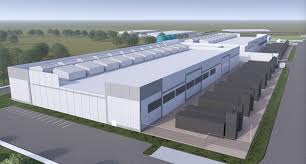
    Amazon cancels Becker Minnesota data center project in a surprising move that halts what would have been a multibillion-dollar investment. The decision deals a blow to local ambitions and raises questions about the future of tech infrastructure in the state.

    The announcement comes amid legislative changes in Minnesota that include rolling back tax incentives previously granted to data center developments. The move appears to have tipped the scales for Amazon, which cited growing uncertainty around permits and utility agreements as the key reason for its withdrawal. It joins a growing list of cancellations and delays plaguing data center construction projects.

    “We initially moved forward based on expected timelines for permits and utility coordination,” Amazon said in a statement. “With those timelines now unclear, we’re redirecting resources to projects that can deliver capacity to our customers more quickly.”


    picture
    Amazon Web Services (AWS) New $1B Data Center in Marysville

    Ripple Effects for Local Stakeholders

    When Amazon cancels Becker Minnesota data center project, the local economy feels the shock. The project was expected to create thousands of construction jobs and become one of Xcel Energy’s largest customers.

    Xcel Minnesota President Ryan Long declined to comment directly, citing confidentiality, but acknowledged the company is reviewing its obligations in response to Amazon’s decision.

    In Becker, city officials were left disappointed. “We are certainly disappointed in their decision not to proceed at this time,” said City Administrator Greg Lerud. “We hope Amazon reconsiders as it evaluates future development sites.”

    Tax Policy and Tech Tensions

    Minnesota lawmakers are currently reshaping how the state handles tax breaks for large data centers. A recent legislative proposal eliminates the sales tax exemption on electricity for such facilities — a change that may have influenced why Amazon cancels Becker Minnesota data center project.

    The company also recently lost a battle before the Minnesota Public Utilities Commission over installing 250 diesel backup generators — a conflict that highlighted growing tensions between tech infrastructure and environmental regulation.

    The Bigger Picture: A Shifting Data Center Landscape

    Amazon cancels Becker Minnesota data center project amid a national surge in data center development driven by artificial intelligence and cloud computing demand. However, many of these projects are increasingly clashing with state regulations and community concerns over challenges arising from power demands. Another massive project is the Project Blue in Tucson Arizona that has now been canceled due to a backlash from the community questioning the projects transparency.

    Other tech giants like Meta and Microsoft are still moving forward with Minnesota projects, but Amazon’s withdrawal may signal a shift in how aggressively companies pursue data center expansio

  • All to Know About $6.5 Billion Morocco’s Gotion Gigafactory Construction Project

    All to Know About $6.5 Billion Morocco’s Gotion Gigafactory Construction Project

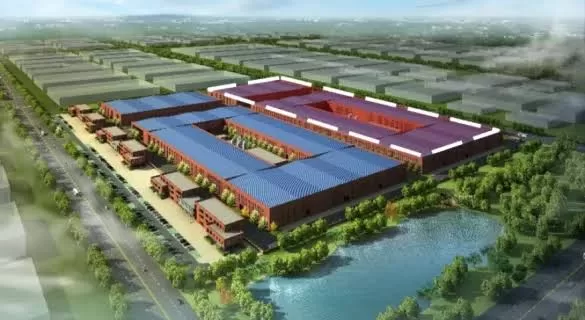
    The Gotion High-Tech Gigafactory in Morocco is a landmark project that will establish Africa’s first electric vehicle (EV) battery production facility, positioning Morocco as a key player in the global clean energy supply chain. Located in the industrial hub of Kenitra, the project is backed by a substantial total investment that could reach up to $6.5 billion across multiple phases.

    The initial phase is slated to have a production capacity of 20 Gigawatt-hours (GWh), which is expected to ramp up to a massive 100 GWh over time. Crucially, the facility, which aims to begin production in the third quarter of 2026, will achieve vertical integration by manufacturing not just battery packs, but also critical components like cathodes and anodes, with the majority of its output earmarked for export to the European automotive market. The gigafactory solidifies Morocco’s strategy to electrify its robust automotive sector and is powered by a dedicated renewable energy source, further aligning it with global sustainability goals. Ot will also join facilities such as the Tan-Tan polysilicon plant in making the country a major industrial hub in Africa.

    Gotion High-Tech Gigafactory in Morocco is a landmark project that will establish Africa's first electric vehicle (EV) battery production facilit
    Gotion High-Tech Gigafactory in Morocco is a landmark project that will establish Africa’s first electric vehicle (EV) battery production facilit

    Updated September 25, 2025- Morocco’s Gotion Gigafactory Construction Project is backed by an investment of US $6.5 billion. The battery gigafactory project will transform the North African kingdom into a major supplier of batteries for electric vehicles (EVs) and renewable energy storage. This facility will cement Morocco’s role as a bridge between Africa, Europe, and Asia in the fast-growing green economy.

    Asian companies are currently trying to tap into African market through Morocco. Recently joining the list of companies is Tata. Tata has set up the Tata Advanced Systems Maroc Facility in Morocco that will produce armored vehicles. With these projects, Morocco will emerge as a leading industrial hub in Africa in years to come.

    May 22, 2025

    Gotion Power Morocco which is a subsidiary of Sino-Europe electric vehicle battery maker Gotion High Tech, is expected to kick off Morocco’s Gotion Gigafactory Construction Project in the north African country “within days.” This was revealed by the company’s Morrocan head Khalid Qalam on Wednesday.

    Gotion High Tech had already signed an investment deal with the Moroccan government in June 2024. The company will set up the first gigafactory in Africa near Kenitra, northwestern Morocco. Additionally, the project is expected to cost a total investment of $6.5 billion.

    Morocco’s Gotion Gigafactory Construction Project Factsheet

    Project name: Gotion Power Morocco Gigafactory.

    Location: Kenitra, Morocco (northwestern Morocco).

    Investment:

    • Initial phase: $1.3 billion (€1.28 billion)
    • Total investment (across five phases): Up to $6.5 billion

    Capacity:

    • Initial phase: 20 GWh (gigawatt-hours) per year
    • Second phase (approved for expansion): 40 GWh
    • Total capacity (across five phases): 100 GWh

    Production focus:

    • Lithium-ion battery cells and packs
    • Energy Storage System (ESS) batteries
    • Cathode materials
    • Anode materials

    Production start date: Expected to begin production in the third quarter of 2026

    Power supply: The gigafactory will be powered by a dedicated 500MW wind power plant with a 2,000MWh energy storage facility, developed in partnership with Saudi energy giant ACWA Power. This $800 million project aligns with Morocco’s renewable energy targets.

    Also read: $1.3 Billion Gotion EV Battery Gigafactory Planned for Morocco

    The investment of the company is spurred by government incentives. Additionally, it is in line with Morocco’s aim that foresees the country to expand and adapt its automotive sector.

    Furthermore, Qalam told an industry conference in Rabat the groundwork for the factory project had been completed. The first production of the factory is expected in the third quarter of 2026.

    First Phase of the Project

    The first phase of the project is expected to cost of $1.3 billion. Also, as for the capacity, the plant would have 20 gigawatt capacity. He also added that the company had agreed with the Moroccan government to increase the capacity of the factory to 40GW in the second phase. However, he did not give a timeline.

    Other than batteries, the plant will also produce cathodes and anodes. According to Qalam, these will be exported in bulk to Europe.

    “In fact, we have already gotten orders from several European car manufacturers,” Qalam stated.

    Lastly, the geographic location of Morocco is close to Europe. This therefore and its makes it an attractive destination to Chinese EV battery makers.

    Also read: Morocco’s Gotion EV Gigafactory $800 Million Wind Power Project

  • Uganda’s SGR Project Inks $800 Million Financing Deal with Saudi Arabia

    Uganda’s SGR Project Inks $800 Million Financing Deal with Saudi Arabia

    In what will be a major boost in infrastructural development, the East African nation Uganda has just signed a $800 million financing agreement with Islamic Development Bank. The funding will be utilized in supporting projects which include Uganda’s SGR Project. The standard gauge railway is expected to boost general trade in the landlocked according to the finance ministry of Uganda.

    The upcoming SGR project will link to the neighboring country Kenya’s standard gauge railway and all the way to the Port of Mombasa in the Indian Ocean.

    Also read: China Back as Kenya-Uganda SGR Financier

    Uganda’s SGR Project $800 Million Finance Deal Factsheet

    Amount: US$800 million (approximately UGX 3 trillion).

    Financier: Islamic Development Bank (IsDB).

    • US$500 million directly from IsDB.
    • US$150 million each from the Islamic Corporation for the Development of the Private Sector (ICD) and the International Islamic Trade Finance Corporation (ITFC).
    • An additional US$400 million will be made available by the Islamic Corporation for the Insurance of Investment and Export Credit (ICIEC) to support insurance and reinsurance for the projects.

    Duration: Three-year agreement (part of the Country Engagement Framework (CEF) for 2025–2027).

    Signing date: May 20, 2025.

    Location of signing: IsDB’s 50th Annual Meetings in Algiers, Algeria.

    Projects to be financed:

    • Standard Gauge Railway (SGR) Development: A key component aimed at enhancing trade and connectivity. The railway will link to Kenya’s SGR and then to the Indian Ocean port at Mombasa, significantly reducing transport costs and transit times.
    • Health sector: Construction of regional cancer treatment centers (e.g., in Arua and Mbale), upgrading existing hospitals (e.g., Katakwi General Hospital), and establishing new general hospitals (e.g., in Lwengo).
    • Water and sanitation: Projects like the Bukedea Water Works Project and Water Supply and Sanitation Program III.
    • Energy infrastructure: Rural Electrification and Connectivity Projects.
    • Roads and transport: Road upgrades in Nakapiripirit, Isingiro, and cross-border routes to Tanzania.
    • Agriculture and food security: Drylands Development Project in Karamoja and investments in agricultural infrastructure.
    • Human capital development: Focus on skills training in agriculture, ICT, petroleum, hospitality, and healthcare, particularly for youth and women.

    Also read: Uganda’s SGR Project Allocated Shs2.175 Trillion ($595.5 million) in 2025/2026 National Budget

    Uganda’s SGR project details (Malaba-Kampala Section)

    The Turkish construction firm Yapı Merkezi has been contracted to build the 272 kilometer Malaba-Kampala section of Uganda’s SGR. It will be conducted at a cost of $3 billion. Additionally, the groundbreaking ceremony for this major infrastructure project was held in Tororo on November 21, 2024, and was officiated by President Yoweri Museveni.

    Also, construction is expected to take 48 months, with completion targeted for late 2028. Furthermore, funding for the broader SGR project will come from a mix of sources. These include Uganda’s own resources, export credit financing, and loans from international development partners. Standard Chartered Plc, a UK-based bank, has been identified as one of the potential financiers.

    Once completed, the Malaba-Kampala section will play a vital role in linking Uganda to Kenya’s SGR network. This will facilitate direct access to the Port of Mombasa and enhancing regional trade with neighboring countries.

    Also read: Uganda Inaugurates Tororo-Kampala SGR Construction Works

    Other Projects to be Funded under the Deal

    Lastly, other projects that will be funded under the three-year deal will be in health sector, transport, and lastly energy infrastructure.

    The agreement was signed by Ramathan Ggoobi of the finance ministry, and the vice president of the bank Rami Ahmed at the Saudi Arabia-headquartered development bank’s annual meeting that was held in Algiers. This was revealed by the Ministry on X on Wednesday.

    Also read:  $12.8 Billion Uganda SGR Project Commences

  • African Development Bank Approves $43.6M Funding for the Mozambique Transmission Line Project

    African Development Bank Approves $43.6M Funding for the Mozambique Transmission Line Project

    The Mozambique transmission line project has received $43.6 million of new financing from the African Development Bank. This funding is for the construction of the Namaacha–Boane Transmission Line and associated electricity infrastructure. The objective is to transmit clean wind energy from the future 120 MW Namaacha Wind Farm to local communities. $33.2 million comes from the African Development Fund, supplemented by $10.4 million from the Bank’s Climate Action Window. The Mozambican government is also contributing. According to Vice President for Power, Energy, Climate, and Green Growth Kevin Kariuki, “This project is an important step forward along Mozambique’s journey towards a low-carbon energy future.” The new infrastructure will carry up to 332 gigawatt-hours of power per year. The building will be done by Electricidade de Moçambique in partnership with Central Eléctrica da Namaacha. CEN is a private sector venture between Source Energia and Globeleq Africa Limited.

    Also read:

    Mozambique to receive US $420m grant for energy transmission upgrades

    Significance and Scope of Implementation on the Mozambique Transmission Line Project

    The Mozambique transmission line project is critical to the country’s clean energy revolution. It will enhance energy infrastructure and expand access to sustainable power. Also, the two 43-kilometre, 66-kilovolt transmission lines will ensure efficient power supply across rural and underdeveloped areas. The country needs a transition to renewable energy, and the project will reduce carbon emissions by over 71,000 tons annually. Notably, Wale Shonibare, the Bank’s Energy Financial Solutions Department’s Head, emphasized its importance.

    Mozambique transmission line project
    The Mozambique transmission line project has received $43.6 million of new financing from the African Development Bank.

    “This investment underpins the backbone of Mozambique’s power network while accelerating access to clean energy,” he added. The project aligns with the African Development Bank’s “Light Up and Power Africa” strategy. It also complements Mozambique’s Mission 300 2030 electrification plan. The Mozambique transmission line construction will not only enhance neighborhood power stability but also enable regional energy trade capacity. Strategic collaboration and timely execution with the building stage symbolize a groundbreaking era in Africa’s sustainable energy future.

    Also read:

    Mozambique’s $551 Million Maputo-Temane Powerline Construction Complete

    Mozambique Integrated Transmission Backbone System (STE) Project