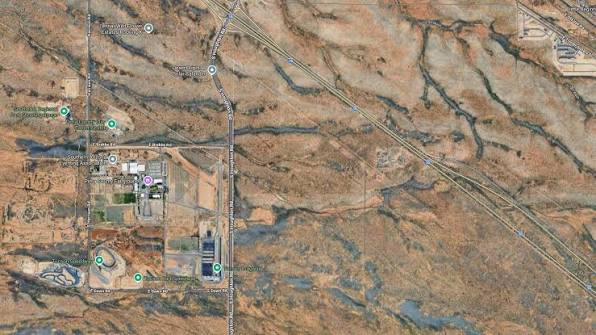
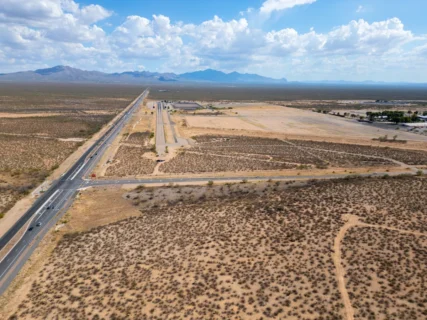
Pima County has released a comprehensive health impact study examining potential public health risks from the Project Blue data center, one year after approving the massive facility. The study shows how large-scale data centers such as Project Blue can further increase community vulnerabilities and stress water resources. The 300-acre Project Blue data center is located on unincorporated county land adjacent to the Pima County Fairgrounds. Meanwhile, the project easily moves through permitting despite Tucson officials unanimously rejecting a similar facility request from Beale Infrastructure last August.
The Project Blue data center will feature 10 data center buildings with a combination of Tucson Electric Power and diesel backup generators. In particular, the first phase will consume 286 megawatts of electricity, which is the power needed to power about 60,000 homes. The Project Blue data center, at full buildout, would use one gigawatt of power, equivalent to the energy use of a large city. Thus, the health study focuses on diesel emissions and operational effects on communities in Southern Arizona.
Other projects advancing is Project Sail, a cluster of data centers advancing in Coweta, Georgia. “Project Sail” is a proposed data center campus planned for development in Coweta County, Georgia. The project is intended to support large-scale digital infrastructure capacity through multiple high-density computing facilities.
Project Blue Data Center Study Identifies Air Quality and Heat Concerns
The Pima County Board of Health ordered its health department to evaluate the health impacts of Project Blue data center in collaboration with Johns Hopkins Bloomberg School of Public Health. In particular, diesel backup generators produce nitrogen oxides and fine particulate matter (PM2.5) that cause respiratory and heart diseases. In addition, thermal plumes from data center cooling systems and backup generators can extend up to 6 miles and increase the temperature by 4 to 16 degrees Fahrenheit.
Pima County already has high adult asthma rates, which are higher than the national average, said John Neatherlin, deputy director of the Pima County Health Department. In addition, the county is susceptible to extreme heat, which adds to the health concerns of Project Blue data center operations. The study cautions that other air quality stressors may cause Pima County to lose its EPA attainment status.
Project Blue Data Center Raises Water Contamination and Supply Concerns
The project will consume about 143 million gallons of reclaimed water per year for cooling systems. But recycled cooling water accumulates minerals that must be discharged and replaced periodically. Furthermore, the study states that this can lead to contamination of local groundwater resources from “forever chemicals” (PFAS) or refrigerant leakage. Pima County is rated extremely high risk for water stress according to the World Resources Institute’s Aqueduct Water Risk Atlas. Therefore, even the water recovered from Project Blue could need additional potable water for facility operations. The study notes Tucson Water delivers 30 billion gallons annually to 722,000 customers, making even one industrial user appreciably affecting demand patterns and sustainability.
Project Overview
- Project Name: Project Blue Data Center
- Estimated Project Value: $1 Billion
- Location: Unincorporated Pima County near Pima County Fairgrounds, Arizona
- Developer: Beale Infrastructure
- Status: Zoning approved August 2025, permitting ongoing
Scope
- 300-acre data center facility
- 10 data center buildings
- Phase 1: 286 megawatts power consumption
- Full buildout: 1 gigawatt capacity
- Diesel backup generator fleet
- 143 million gallons annual reclaimed water consumption
Project Highlights
- Phase 1 power equivalent to 60,000 homes
- Full buildout matching large city energy demands
- Powered by Tucson Electric Power
- Reclaimed water cooling system implemented
- Easily progressing through county permitting process
Key Developments
- County zoning approved August 2025
- Tucson city rejected competing Beale facility August 2025
- Health impact study completed September 2026
- Johns Hopkins partnership for assessment
- Study released one year after county approval
Key Challenges
- Diesel generator emissions raise air quality concerns
- Thermal plumes could extend 6 miles with 4-16°F temperature increase
- Pima County already exceeds national asthma rates
- Water contamination risk from mineral-concentrated discharge
- Potential PFAS “forever chemicals” groundwater contamination
- Pima County rated extremely high water stress risk
Outlook
- Project Blue continuing through permitting process
- Further site-specific studies possible per Board of Health direction
- Standardized health assessment framework for future data centers
- Phase 1 development timeline not yet announced
- Potential model for data center health impact evaluation statewide



Leave a Reply