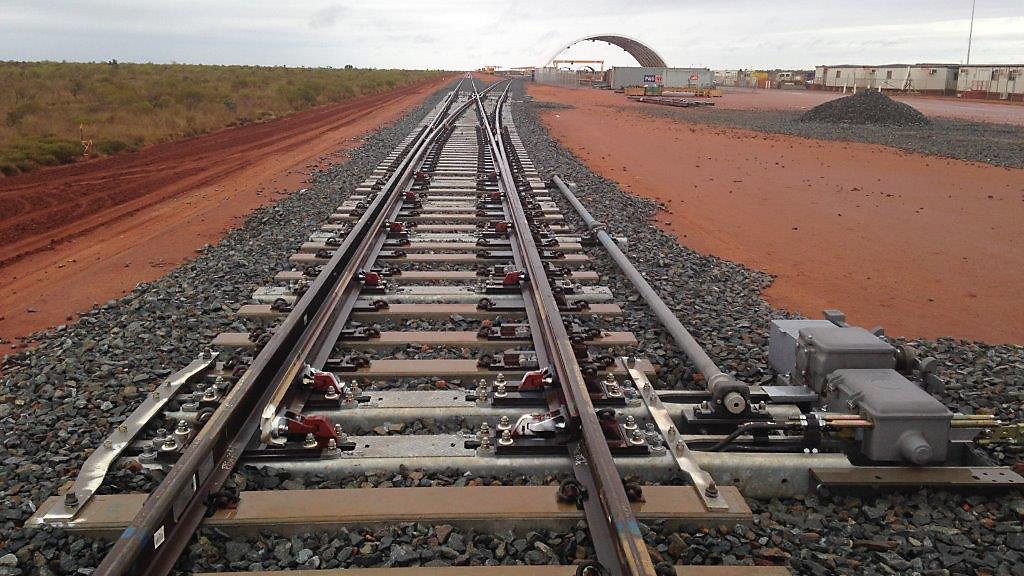
Saudi GCC Railway link is advancing towards a major engineering milestone as Saudi Arabia moves forward with consultancy procurement for its 672km section. The development marks an important step towards delivering a cross-border railway connecting all six Gulf Cooperation Council (GCC) member states.
MEED reported on October 12, 2026, that a frontrunner had emerged for the Saudi section’s design consultancy contract. However, the successful bidder’s identity and the contract value remain unconfirmed in accessible reporting. The wider GCC Railway Network carries an estimated initial investment of $15 billion, although this figure does not represent an approved budget for Saudi Arabia’s section.
The procurement could help move the long-delayed regional infrastructure program closer to construction. Furthermore, completing the engineering designs will establish the technical basis for subsequent construction tenders and railway systems installation.
Saudi GCC Railway Link advances through design procurement
Saudi Arabia Railways (SAR) issued the original design consultancy tender on May 7, 2026. Five bidding teams submitted proposals on July 14, covering the railway’s concept, preliminary and issued-for-construction design stages.
The bidding teams comprise Atkins with Khatib & Alami, Deutsche Bahn with ARX, Egis with Sener, Idom with Dar Al-Handasah, and Systra. SAR requires the selected consultant to review, update and complete existing preliminary designs.
Meanwhile, SAR launched a separate design management and review consultancy tender on September 9. The tender carries an October 18, 2026, submission deadline. Its successful consultant will audit, manage and verify the design consultant’s engineering deliverables.
These appointments serve different purposes. The design consultant will develop the engineering package, while the review consultant will oversee quality, coordination and compliance. SAR plans to procure construction separately after approving the designs.
Saudi GCC Railway Link targets a 672km corridor
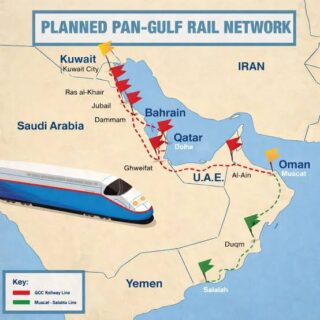
The Saudi railway section will run approximately 672km from Al-Khafji, near Kuwait, to Al-Batha, near the UAE border. The route will connect with Saudi Arabia’s existing railway infrastructure and neighboring national networks.
The planned railway will accommodate passenger and freight services. Design specifications envisage passenger trains travelling at up to 220km/h, while freight trains will operate at 80–120km/h. The railway will use a single-track, non-electrified configuration with passing loops supporting trains travelling in opposite directions.
The design program covers approximately 16 months across three stages. Concept design will take four months, followed by six months for preliminary design and six months for issued-for-construction design. Each stage includes four weeks of contingency.
Consequently, design completion will remain central to the project’s construction readiness. Engineers must coordinate route alignment, railway systems, operating requirements and interfaces with adjoining national networks before contractors can price construction packages.
Across the Gulf, governments are also exploring alternative infrastructure solutions to improve urban mobility and connectivity. In Abu Dhabi, the Abu Dhabi Projects and Infrastructure Centre has partnered with Elon Musk-backed The Boring Company to assess underground transport and utility tunnel opportunities. The initiative follows the company’s $3 billion funding round and forms part of its wider ambitions for underground infrastructure in the UAE. The proposed Abu Dhabi Tunnel Network remains at the exploratory stage, with project costs, routes and construction timelines yet to be confirmed.
Saudi GCC Railway Link supports regional rail integration
The wider GCC railway plan spans approximately 2,177km, according to International Railway Journal. Other published estimates place the network at approximately 2,186km. The planned corridor connects Kuwait, Saudi Arabia, Bahrain, Qatar, the UAE and Oman.
The regional route aims to strengthen passenger mobility, freight logistics and trade between Gulf economies. However, delivery depends on individual countries progressing their respective infrastructure and procurement programs.
The UAE-Oman connection provides a separate example of progress within the wider regional rail system. Hafeet Rail is developing a 303km railway connecting Abu Dhabi with Sohar in Oman.
The GCC railway targets full network operation by 2030. Nevertheless, Saudi Arabia’s design procurement does not establish a confirmed construction start date. Contractors will need to await approved designs and subsequent tender announcements.
Saudi Arabia is also advancing urban rail infrastructure ahead of Expo 2030 Riyadh. The Royal Commission for Riyadh City awarded the Riyadh Expo Metro Station construction contract, connecting the exhibition site to Riyadh Metro Line 4. The station forms part of the wider $7.8 billion Expo 2030 development. The project highlights the Kingdom’s parallel investment in regional railway connectivity and urban public transport infrastructure.
Project Fact Sheet
Name: Gulf Cooperation Council Railway Network.
Location: Saudi Arabia, connecting the Kuwait and UAE borders.
Saudi section length: Approximately 672km.
Overall network length: Approximately 2,177km, with some sources citing 2,186km.
Starting point: Al-Khafji, near Kuwait.
Ending point: Al-Batha, near the UAE.
Estimated regional investment: Approximately $15 billion initially; not a confirmed Saudi-section budget.
Railway configuration: Single-track, non-electrified railway.
Passenger design speed: Up to 220km/h.
Freight operating speed: 80–120km/h.
Design stages: Concept, preliminary and issued-for-construction design.
Design program: Approximately 16 months.
Construction procurement: Separate competitive tender following design approval.
Regional completion target: 2030.
Project Team
Owner: Saudi Arabia Railways (SAR).
Design consultancy bidders:
- Atkins, partnered with Khatib & Alami.
- Deutsche Bahn, partnered with ARX.
- Egis, partnered with Sener.
- Idom, partnered with Dar Al-Handasah.
- Systra
Design management and review consultant: Appointment pending in the cited procurement reporting.
Saudi construction contractor: Not yet confirmed.
Regional coordinating framework: Gulf Cooperation Council and its six member states.
Kuwait railway design consultant: Proyapi Muhendislik ve Musavirlik Anonim Sirketi, appointed for Kuwait’s railway section.
UAE-Oman railway developer: Hafeet Rail.
UAE national railway network interface: Etihad Rail

Leave a Reply