Constructionreview

Blog

  • Plans to fast-track the $20b California Delta Conveyance Project scuttled

    Plans to fast-track the $20b California Delta Conveyance Project scuttled

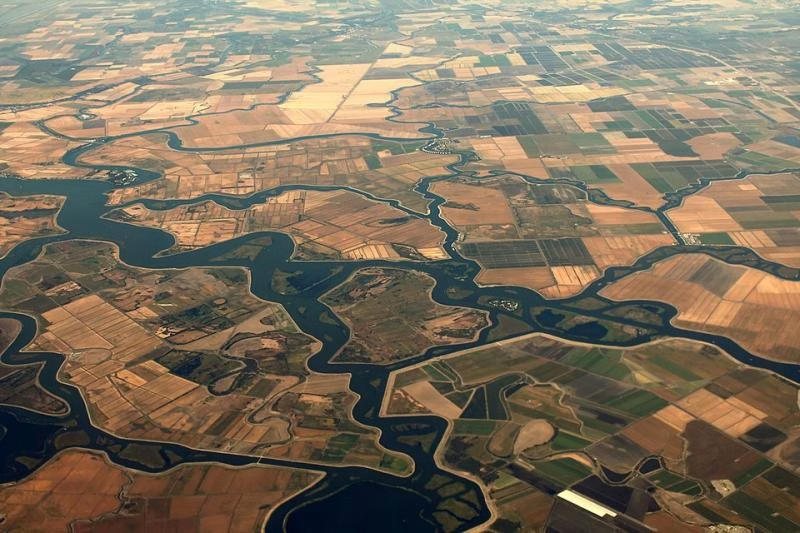
    A key California Senate subcommittee has rejected Governor Gavin Newsom’s proposal to fast-track the $20 billion Delta Conveyance Project via the state budget. Senators on Budget Subcommittee 2 voted against including the tunnel plan in the 2025–26 budget, following Senate and Assembly leadership’s decision to strip the proposal earlier.

    The proposed 45‑mile Delta Conveyance Project would divert water from the Sacramento–San Joaquin Delta southward, serving cities and farms. Rising inflation has driven estimated costs from $16 billion in 2020 to over $20 billion, though proponents say $1.2 billion is earmarked to offset environmental harm.

    Senator Jerry McNerney (D‑Pleasanton), a subcommittee member and Delta Caucus co‑chair, applauded the vote for preventing “significant harm” to the region and emphasized that sweeping initiatives shouldn’t bypass proper legislative scrutiny. Assembly member Lori Wilson (D‑Suisun City) echoed the sentiment, branding the Delta Conveyance Project “deeply flawed” and accusing the administration of scant justification and insufficient fiscal responsibility.

    Lack of clear rationale for urgency

    The Legislative Analyst’s Office has warned the governor’s fast‑track push lacks a clear rationale for urgency or fiscal prudence. Subcommittee approval (3‑0‑1) sent the project back to the standard legislative process, with the full Senate Budget Committee and both legislative chambers poised to vote on the budget this week — absent any fast‑track language.

    The Delta Conveyance Project faces widespread resistance from more than 100 legislators, local governments, environmental and tribal groups, and businesses. Critics advocate for less costly alternatives—such as levee restoration, water recycling, and groundwater storage—to bolster water security without disrupting Delta communities.

    Originally conceived over 60 years ago during the “water wars,” the Delta tunnel remains one of California’s most divisive infrastructure ideas. While supporters tout its role in climate resilience and seismic safety, opponents contend it would exacerbate ecological decay and water inequity in Northern California.

    [internal_link url=”https://constructionreviewonline.com/news/grand-prairie-water-commission-breaks-ground-on-1-5b-lake-michigan-pipeline-project/”]

    Timeline: Delta Conveyance Project (and predecessors)

    • 1957–1960s – Trans‑Delta/Peripheral Canal era: Initial proposals for diversions around the Delta (e.g., peripheral canal), political resistance halted progress

    • 2008–2014 – Bay Delta Conservation Plan (BDCP): Combined habitat restoration and twin‑tunnel water conveyance; stalled after EPA objections

    • 2015–2019 – California WaterFix: Rebranded twin‑tunnel project; withdrawn in 2019, but planning resumed for a single tunnel

    • 2019 – Newsom’s one‑tunnel plan: DWR formed a design authority and began planning a single tunnel

    • 2020–2022 – Environmental reviews: Public scoping began in January 2020; draft EIR/EIS released mid‑2022

    • Dec 8 & 21, 2023 – Final EIR & DWR approval: California approved the Delta Conveyance Project; formal adoption by DWR

    • Feb–Apr 2024 – Water rights petition & permit updates: DWR filed diversion changes; NEPA draft EIS underway; permitting set through 2026

    • May 2025 – Fast‑track budget push: Newsom urged fast‑tracking through budget trailer bill; swiftly rejected by subcommittee
  • Gurīn Energy selects BESS supplier for energy storage project in Fukushima

    Gurīn Energy selects BESS supplier for energy storage project in Fukushima

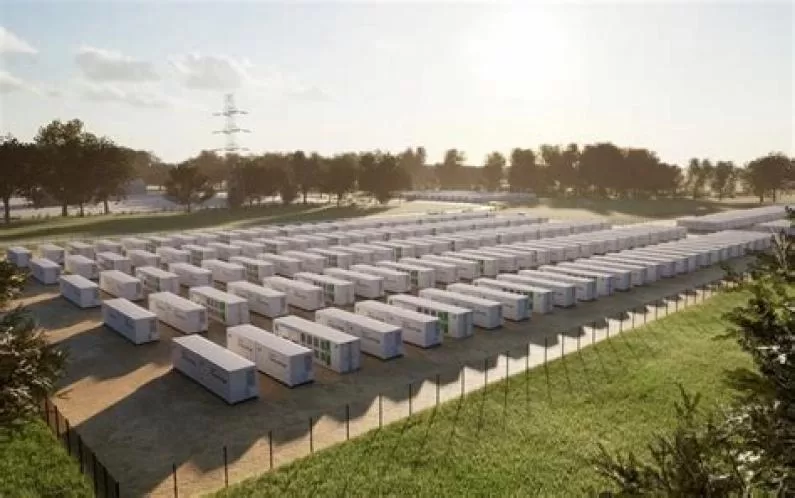
    Tokyo, June 12, 2025 – Gurīn Energy has appointed Saft, a subsidiary of TotalEnergies, as the supplier for its flagship 1-gigawatt-hour (GWh) energy storage project in Fukushima, Japan. The project is a milestone in Japan’s renewable energy transition and will significantly support the integration of clean power into the national grid.

    Major boost for Japan’s renewable energy strategy

    The Gurīn Energy energy storage project in Fukushima will be located in Soma City and is designed to deliver 240 megawatts (MW) of power for four hours. Construction is scheduled to begin in 2026. Saft’s lithium-ion BESS will play a vital role in storing excess electricity and releasing it when demand rises, thereby helping to balance the supply-demand equation in real time.

    “This project is a major step for Japan’s energy transition,” said Vincent Le Quintrec, Sales and Marketing Director, Saft. “Our proven expertise in battery systems, coupled with Gurīn Energy’s strong renewable development capabilities, will help accelerate Japan’s climate ambitions.”

    Also Read: World’s Largest BESS Project in Saudi Arabia Announces Prequalified Bidders: 8GWh Battery Storage

    Smart battery systems and AI-powered management

    The system will include Saft’s fully integrated lithium-ion battery technology, power conversion systems, and its advanced I-Sight cloud platform, which uses AI for predictive performance monitoring and energy optimization. Saft will also manage installation, commissioning, and maintenance, offering a complete energy storage solution.

    According to Gurīn Energy’s Japan Country Manager Ushio Okuyama, “Our energy storage project in Fukushima will enhance flexibility across Japan’s power grid. We are proud to partner with Saft and confident in our shared mission to accelerate Asia’s clean energy transition.”

    Strategic support for national energy goals

    The large-scale battery installation supports Japan’s goal of achieving 40–50% renewable energy in its generation mix by 2040 and carbon neutrality by 2050. With renewable energy currently accounting for 27% of national power, projects like Gurīn Energy’s energy storage project in Fukushima are essential for sustainable growth.

    FACTSHEET: Gurīn Energy BESS Project, Fukushima

    • Project name: Gurīn Energy energy storage project in Fukushima

    • Capacity: Over 1 GWh storage / 240 MW discharge for 4 hours

    • Location: Soma City, Fukushima Prefecture, Japan

    • Technology partner: Saft (TotalEnergies subsidiary)

    • Technology: Lithium-ion BESS with AI-powered management

    • Construction start: 2026

    • Purpose: Grid balancing, renewable integration, carbon neutrality support

    • Target impact: Help Japan reach 40–50% renewables by 2040

  • Micron Announces Plans for Second Semiconductor Fab in Boise, Idaho

    Micron Announces Plans for Second Semiconductor Fab in Boise, Idaho

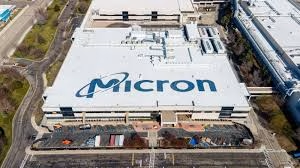
    Micron Technology’s second Leading-Edge Memory Manufacturing Fab in Boise, Idaho is a development project currently set to expand the company’s domestic semiconductor production capabilities as part of a broader U.S. investment initiative.

    The company has announced a $30 billion investment to strengthen its U.S. operations, which includes the construction of this new state-of-the-art memory fabrication plant in Boise, the modernization and expansion of its existing Manassas, Virginia facility, and the establishment of advanced packaging capabilities for High Bandwidth Memory (HBM)—a technology essential for supporting the growing demand driven by artificial intelligence.

    This $30 billion commitment is part of Micron’s larger $200 billion investment plan aimed at boosting American semiconductor production and R&D, enhancing technological leadership, and building a more resilient domestic supply chain. The Idaho expansion alone, featuring two leading-edge high-volume fabs, is projected to create over 17,000 new jobs.

    Co-located with Micron’s existing R&D center and first Boise fab, the new plant is designed to accelerate product development and reduce time-to-market for advanced technologies like HBM, which is critical for AI applications, by leveraging proximity to the company’s research operations.

    The plant will join several other semiconductor plants currently under development in the USA set to tranform the US technology industry.

    What’s Known So Far

    Although Micron confirmed that the second fab is going to Idaho, the company has not disclosed the real cost or construction timeline for this venture. The new factory, however, will come online earlier than the first New York fab, whose groundwork is expected to begin later this year.

    The second Boise fab is a follow-on to ongoing work on Micron’s first Idaho fab, where production of DRAM will commence in 2027.

    Part of a Larger U.S. Growth Strategy

    The second Boise fab is just a part of Micron’s larger U.S. strategy, which includes:

    Two flagship Idaho fabs

    Up to four New York fabs (environmental studies already in progress)

    Growing and updating the Virginia fab. Micron will transfer its state-of-the-art High Bandwidth Memory (HBM) packaging technology to the United States once the completion of its second Idaho fab. Micron has already received $275 million in direct CHIPS Act funds to support the upcoming expansion and modernization of its plant in Manassas, Virginia, with ground breaking set to begin this year.

    New American-next-generation based packaging of High Bandwidth Memory (HBM)

    $50 billion devoted to R&D in all locations

    Micron expects its entire portfolio of U.S. investments to be eligible for the Advanced Manufacturing Investment Credit (AMIC) and has already secured funds with local, state, and federal authoritiesIt has up to $6.4 billion in direct funding under the CHIPS Act for the support of building two stateof-the-art fabs in Idaho, up to two in New York, and to upgrade and expand the companys existing facility in Virginia.

    Together, the investments will place U.S. at the forefront of memory technology. With AI revolutionizing industries ranging from automotive and aerospace to healthcare and national defense. Further adding to these investments, Samsung recently announced that it will be resuming construction of the semiconductor plant in Taylor, Texas, after halting progress in 2024 due to a slowdown in global chip demand

    Read also: Ground breaking at Micron chip manufacturing facility, Idaho

    Job Creation and Economic Impact

    Micron estimates the entire $200 billion of investment will create about 90,000 direct and indirect jobs within the U.S. semiconductor supply chain. The jobs are in construction, engineering, manufacturing, and long-term operation. According to Micron, Idaho fabs alone are expected to generate over 17,000 new jobs.

    To support this kind of growth, Micron has invested over $325 million in workforce development initiatives. They include:

    Creation of semiconductor curriculum

    Apprenticeships through community colleges

    University research partnerships

    Expanded access to technical careers in Idaho, New York, and Virginia

    Strategic Importance for HBM and AI

    Micron’s investment is driven mainly by skyrocketing demand for High Bandwidth Memory (HBM) — a requirement for AI and high-performance computing. Although the company said it would bring HBM packaging in-house, it could not commit to how many plants would be built or where they would be situated. However, context suggests Idaho as the likely destination for this expansion due to its proximity to both fabs and R&D.

    Micron’s second plant in Boise symbolizes a growing sense of urgency to bring semiconductor manufacturing onshore and secure the memory supply chain. While details like cost and timeline are yet to be announced, the news is part of a national agenda with global implications — one that will upend where and how the most critical chips are made.

    Read also: New York teams up with IBM, Micron for $10B semiconductor facility at Albany University

    Micron’s Second Fab in Idaho- Project Factsheet

    Project Overview

    Location: Boise, Idaho

    Project Type: Leading-edge DRAM manufacturing facility

    Funding: Part of broader U.S. investment initiative

    Announcement Date: June 12, 2025

    Jobs: Expected to generate over 17,000 new jobs

    Facility Details

    Technology: Leading-edge DRAM production

    Site: Co-located with existing Micron R&D hub and first Boise fab

    Integration: Enables tighter coupling between research and manufacturing

    Market Focus: AI applications, defense systems, and data-intensive computing

    Micron’s Second Fab in Idaho: Timeline & Investment

    Construction Cost: Not disclosed

    Construction Timeline: Not disclosed

    Production Start: Will come online before New York fab operations begin

    Priority: Accelerated timeline compared to other facilities

    Current Status

    Phase: Planning and development

    Next Steps: Timeline and investment details to be announced

    Read also: Micron Technology has started expanding its Boise site with a $15 billion project

  • One of the largest Green Hydrogen Projects in Duqm, Oman Selects Solar Tracker Supplier

    One of the largest Green Hydrogen Projects in Duqm, Oman Selects Solar Tracker Supplier

    GameChange Solar, a global leader in solar tracking and fixed-tilt systems, has been selected to supply its Genius Tracker™ 1P Single Row technology for a 450 megawatt-peak (MWp) solar power project for the Green Hydrogen Projects in Duqm, Oman. The contract was signed with ACME Greentech Ventures FZCO, the developer of one of the world’s largest green hydrogen and ammonia production platforms.

    The solar power installation will energize the multi-phase green hydrogen and ammonia facility, playing a central role in Oman’s ambitious clean energy transition strategy. This development is aligned with the country’s national hydrogen framework and its drive to become a global clean fuel hub.

    Engineered for Extreme Conditions

    Located along Oman’s southeastern coast, the Green Hydrogen Projects in Duqm site poses harsh environmental challenges, including high winds, extreme heat, corrosive salt air, and uneven terrain. GameChange Solar’s Genius Tracker™ has been designed to excel under such demanding conditions, offering structural resilience, fast deployment, and superior energy output.

    “This landmark project places Oman at the forefront of green ammonia innovation,” said Vikas Bansal, President – International, GameChange Solar. “We’re proud to support ACME with our technology as they pursue world-scale clean fuel production.”

    Mega-Scale Green Ammonia Vision

    ACME’s Green Hydrogen Projects in Duqm spans 92 square kilometers and will be implemented in phases:

    • Phase 1, currently under construction, targets the production of 100,000 tonnes of green ammonia annually.

    • Phase 2 aims to produce 71,000 tonnes of green hydrogen and 400,000 tonnes of green ammonia per year.

    • When fully operational, the project is expected to reach 0.9 million tonnes per annum (MMTPA) of green ammonia capacity.

    With land agreements in place and construction of critical infrastructure underway, Phase 1 is expected to be commercially operational by Q1 2027.

    Also Read: Construction of the $8.4B World’s Largest Green Hydrogen Plant Commences in Saudi Arabia

    Trusted Collaboration for a Green Future

    ACME emphasized its confidence in GameChange Solar’s technology, citing its performance in high-wind and extreme weather conditions. “As we build one of the world’s largest green ammonia platforms, trusted partners like GameChange Solar are key to realizing our vision,” said Vipin Aggarwal, Vice President – Procurement, ACME Group.

    Oman’s strategic advantage lies in its abundant solar and wind resources, ample land, and existing infrastructure, making it well-positioned to lead the global green hydrogen revolution.

    FACTSHEET: Green Hydrogen and Ammonia Project in Duqm

    • Developer: ACME Greentech Ventures FZCO

    • Solar Tracker Supplier: GameChange Solar

    • Solar Capacity: 450 MWp using Genius Tracker™

    • Total Green Ammonia Capacity: 0.9 MMTPA

    • Site Area: 92 km² near Duqm port

    • Phase 1 Output: 0.1 MMTPA of green ammonia

    • Phase 1 COD Target: Q1 2027

    • Offtaker: YARA (Phase 1)

    • Green Certification: TUV Rheinland (EU RFNBO compliant)

    • Phase 2 Output: 0.8 MMTPA of green ammonia

    • Technology Highlights: Designed for extreme weather, high yield, rapid deployment

  • Darden Clean Energy Project: The World’s Largest Battery Energy Storage System Update

    Darden Clean Energy Project: The World’s Largest Battery Energy Storage System Update

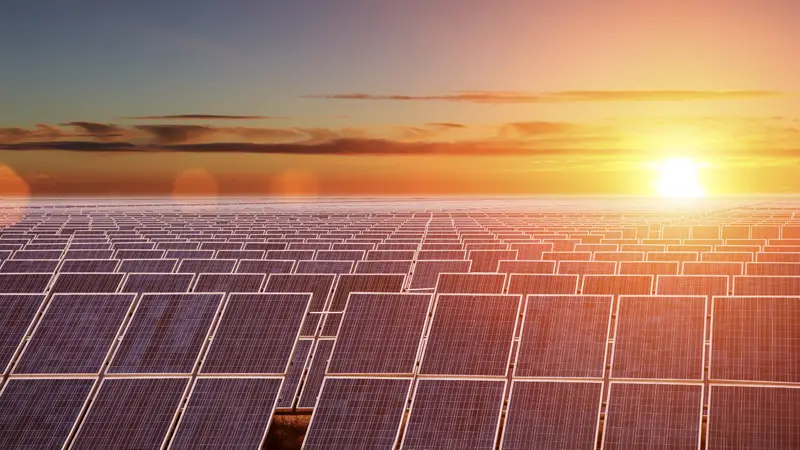
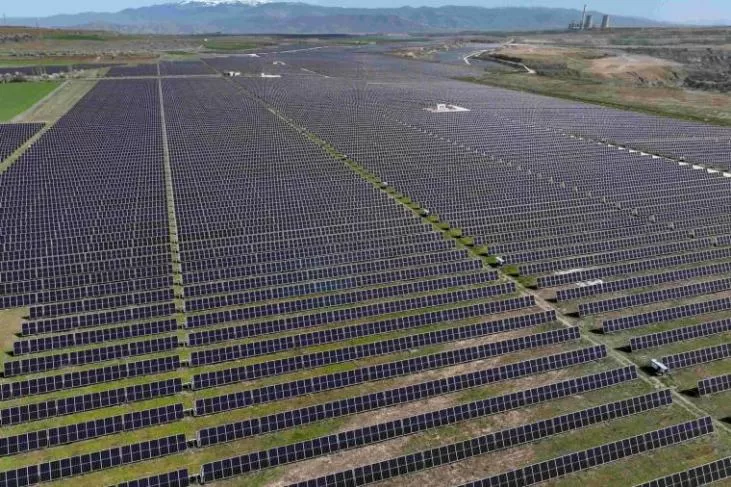
    The California Energy Commission (CEC) has given the green light to the Darden Clean Energy Project (DCEP), now officially the largest battery energy storage system in the world once completed joining a list of massive BESS projects being constructed around the world. This landmark project, situated on 9,500 acres of non-arable land in western Fresno County, marks a major milestone in the state’s push toward 100% clean electricity by 2045.

    Governor Gavin Newsom celebrated the approval, stating, “California is moving faster than ever before to build the clean energy we need – now with the world’s largest solar and battery project.” He emphasized the dual benefit of the project: advancing climate goals while boosting local job creation and economic growth.

    Project Details: Scope and Capacity

    Owned by IP Darden I, LLC, a subsidiary of Intersect Power, DCEP will integrate a 1,150-megawatt (MW) solar facility and a 4,600 megawatt-hour (MWh) battery system. The system will be capable of powering approximately 850,000 homes for four hours, making it a critical addition to California’s energy resilience strategy.

    With about 3.1 million solar panels, the project is designed for efficiency and scale, ensuring long-term impact on both emissions reduction and energy reliability.

    Economic and Community Benefits

    Beyond clean energy production, the Darden project is designed to create more than 2,000 prevailing-wage construction jobs, and generate an estimated $169 million in economic value over its 35-year lifespan.

    The project will also invest $2 million in community programs, beginning with a $320,000 contribution to Centro La Familia Advocacy Services, a nonprofit supporting crime victims and rural families.

    CEC Commissioner Noemí Gallardo stressed, “Today’s clean energy projects must do more than just deliver megawatts. They should create value in the communities where they’re built.”

    Also reads: California Welcomes 300 MW of Solar Power with Unveiling of Sandrini Projects

    A New Model for Energy Permitting and Safety

    The DCEP is the first to be permitted under California’s Opt-In Certification program, created under Assembly Bill 205, streamlining environmental reviews for eligible clean energy projects.

    Amid California’s rapid expansion of energy storage—over 15,700 MW from more than 200 utility-scale and 250,000 residential/commercial systems—Governor Newsom’s administration has prioritized battery safety, introducing state-level standards and updates to the fire code.

    FACTSHEET: Darden Clean Energy Project (DCEP)

    • Location: Western Fresno County, California

    • Land Area: 9,500 acres (non-agricultural)

    • Solar Capacity: 1,150 MW (3.1 million panels)

    • Battery Storage: 4,600 MWh

    • Homes Powered: 850,000 (for four hours)

    • Construction Jobs: 2,000+

    • Community Investment: $2 million (over 10 years)

    • Economic Impact: $169 million over 35 years

    • Owner: IP Darden I, LLC (Intersect Power)

    • Permitting Program: Opt-In Certification (AB 205)

    • Target Completion: TBD (Construction 18–36 months)

    This bold project exemplifies how clean energy infrastructure can align environmental innovation with meaningful community impact.

  • Massive Bellefield 1 Completed: 1 GW of Clean Power for Amazon and California

    Massive Bellefield 1 Completed: 1 GW of Clean Power for Amazon and California

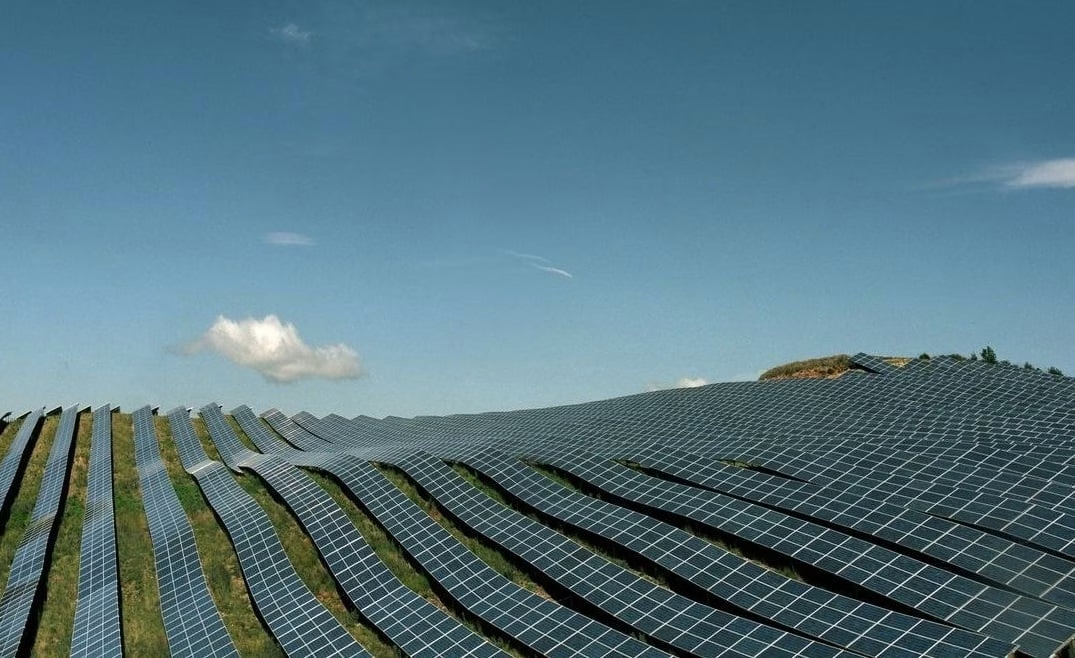
    AES has officially finished construction on Bellefield 1, what will be the largest solar + storage project in the United States. Located in Kern County, California, this initial phase includes 500 MW of solar generation paired with 500 MW of four-hour battery storage. What’s more, it will operate under a 15-year power purchase agreement with Amazon. With this milestone reached, AES demonstrates its ability to rapidly deploy large-scale renewable assets, underscoring its growing role in powering data centers and supporting the clean energy transition.

    Next Phase Aims to Make History in 2026

    AES is already moving forward with the second phase, Bellefield 2, which will mirror the first with an additional 500 MW solar and 500 MW storage. Timed for completion in 2026, Bellefield 2 will bring the total capacity to a monumental 2 GW, positioning Bellefield as the largest solar-plus-storage facility in the U.S. Once fully operational, the site will generate enough clean electricity for approximately 467,000 homes, while displacing over 1 million metric tonnes of CO₂ annually, an environmental boost equivalent to removing around 240,000 gasoline cars from roads. This scale highlights AES’s leadership in delivering impactful and sustainable energy infrastructure.

    Also Read 120MW Ross and 47.5MW Fayette Solar Projects Begin Operation in Ohio

    Jobs, Innovation, and Robotic Efficiency

    Beyond its scale, the California Bellefield 1 project has already bolstered local employment, creating more than 700 union construction jobs during Phase 1, and is expected to generate about 1,000 during the second phase. Additionally, AES integrated its proprietary Maximo AI-powered robotic assistant to enhance the installation of solar modules. This innovation has improved on-site safety, speed, and precision, demonstrating how robotic technology can streamline massive renewable deployments. CEO Andrés Gluski emphasized that such tools are critical to maintaining AES’s reputation for completing projects “on time and on budget”.

    Strengthened Ties with Hyperscalers and Clean Energy Clients

    Located in a clean energy hotspot, Bellefield firmly aligns with AES’s broader strategy of partnering with global hyperscale data center brands. Boasting over 10 GW of clean energy contracts, including deals with Amazon and Meta, AES continues to solidify its position as a key renewable provider. As Phase 1 begins revenue recognition in the second half of 2025 and Phase 2 wraps in 2026, Bellefield exemplifies how integrated solar-plus-storage projects can meet the demands of energy-hungry industries, while advancing decarbonization and enhancing grid resilience.

    Also Read $1.85 Billion North America’s Largest Hydrogen Plant Breaks Ground in Lancaster, California

    The Bellefield 1 California Project Overview

    Project Name: Bellefield Solar-Plus-Storage Project

    Location: Kern County, California, USA

    Developer: AES Corporation

    Total Planned Capacity: 2 GW (1 GW solar + 1 GW storage across two phases)

    Phase 1 (Bellefield 1):

    Capacity: 500 MW solar + 500 MW storage (4-hour duration)

    Status: Completed (2025)

    Offtake Agreement: 15-year PPA with Amazon

    Jobs Created: 700+ union construction jobs

    Phase 2 (Bellefield 2):

    Capacity: 500 MW solar + 500 MW storage

    Completion Target: 2026

    Expected Jobs: 1,000 at construction peak

    Technology & Tools:

    AI-powered robotic assistant “Maximo” used for module assembly

    Environmental Impact:

    Power for 467,000 homes (once both phases are online)

    Over 1 million metric tonnes of CO₂ avoided annually

    Key Customers: Amazon (Bellefield), Meta (separate 650 MW PPA with AES for other sites)

    Significance: Poised to be the largest solar-plus-storage facility in the U.S. when fully operational