Constructionreview

Blog

  • MTA Approves $65 Billion Plan to Revive New York City Transit System

    MTA Approves $65 Billion Plan to Revive New York City Transit System

    In a significant move for New York City’s future, the MTA board has officially approved a $65 billion, five-year capital plan aimed at overhauling the city’s aging mass transit system. The decision, made during a board meeting on Wednesday, comes after months of funding uncertainty and political negotiation. Fortunately, a key turning point arrived with the passage of Governor Kathy Hochul’s budget, which included an increase in the payroll mobility tax. This adjustment, targeted at large businesses, is projected to bring in $1.4 billion annually to support the ambitious upgrades.

    Also Read New York City lays out plans for the largest mass timber residential project on Staten Island

    Key Funding Sources Backing the MTA New York Transit System plan

    Beyond the state’s contribution, the plan also hinges on several other sources of funding. The City of New York is expected to contribute $3 billion, while the federal government is anticipated to cover 20% of the total costs. Although a lawsuit and political friction between local officials and the Trump administration loom in the background, MTA officials remain optimistic that federal funding will continue uninterrupted. However, it’s worth noting that there is still a $3 billion gap in the financial plan. To address this shortfall, MTA leaders are exploring multiple strategies, such as cutting costs on past construction projects and selling surplus agency-owned real estate.

    Modern Upgrades and Accessibility Improvements

    The capital plan itself includes several high-impact improvements. For example, it allocates funding to purchase 1,500 new subway cars and make 60 stations fully accessible for all riders. Additionally, new anti-fare-evasion turnstiles are planned to be installed across the system. This modernization effort is long overdue, especially considering recent reports from Gothamist that exposed the deteriorating and outdated technology currently in use throughout the subway network. Perhaps most notably, the plan designates $2.75 billion for advancing Governor Hochul’s Interborough Express project, a transit line connecting Brooklyn and Queens.

    Also Read 2 Solar Projects Totaling 450MW Coming to New York

    Final Approval and What’s Next

    Although this marks the second time the MTA board has approved the plan, the first attempt was rejected by top state lawmakers last December, the outlook is now far more favorable. With a clear state budget in place and major funding commitments secured, MTA officials are confident that the Capital Program Review Board will grant the final sign-off. Ultimately, this capital plan represents a crucial step toward delivering a safer, more efficient, and future-ready transit system for millions of New Yorkers.

    MTA New York City Transit System plan Overview

    Total Investment: $65 billion—the largest capital plan in MTA history

    Timeline: 2025 through 2029

    Primary Goals:

    Achieve a state of good repair across subways, buses, commuter rail, bridges, and tunnels

    Modernize infrastructure, including signaling systems and fare collection

    Expand accessibility with at least 60 new ADA-compliant subway stations

    Advance the Interborough Express project connecting Brooklyn and Queens

    Key Funding Sources:

    $15 billion from congestion pricing revenue, $1.4 billion annually from increased Payroll Mobility Tax on large businesses, $14 billion anticipated from federal funding, $3 billion from New York City, $3 billion from MTA self-funding, including cost savings and asset sales

    Major Projects:

    Procurement of 1,500 new subway cars and 2,500 buses (including 500 zero-emission models)

    Signal modernization on key subway lines

    $2.75 billion allocated for the Interborough Express

    $7.1 billion dedicated to accessibility improvements

    Economic Impact:

    Estimated to generate $106 billion in statewide economic output over five years

    Supports approximately 72,700 jobs annually during the plan’s duration
  • The Uinta Basin Railway Project in Utah: Update and Timeline

    The Uinta Basin Railway Project in Utah: Update and Timeline

    Update 11th June – The Seven County Infrastructure Coalition is reviving its effort to finance the long-delayed Uinta Basin Railway following a favorable U.S. Supreme Court ruling last month. The coalition has approved a plan to apply for $2.4 billion in private activity bonds from the U.S. Department of Transportation—$500 million more than it sought in 2023.

    The renewed funding effort comes after the Supreme Court overturned a federal appeals court decision that had blocked the Surface Transportation Board’s 2021 approval of the 88-mile rail project. The case now returns to the D.C. Court of Appeals for reconsideration under narrower environmental review requirements.

    The planned bond issuance would cover roughly 70% of the estimated $3.4 billion construction cost, which has more than doubled from the $1.4 billion projected in 2020. However, the bond request faces a hurdle: the Department of Transportation has already allocated $29.4 billion of its $30 billion cap for private activity bonds, with no new authorization expected until a new transportation bill—likely not before late 2026.

    A required public hearing on the bond resolution is set for June 12. The coalition hopes the project will finally move forward after years of legal and funding setbacks.

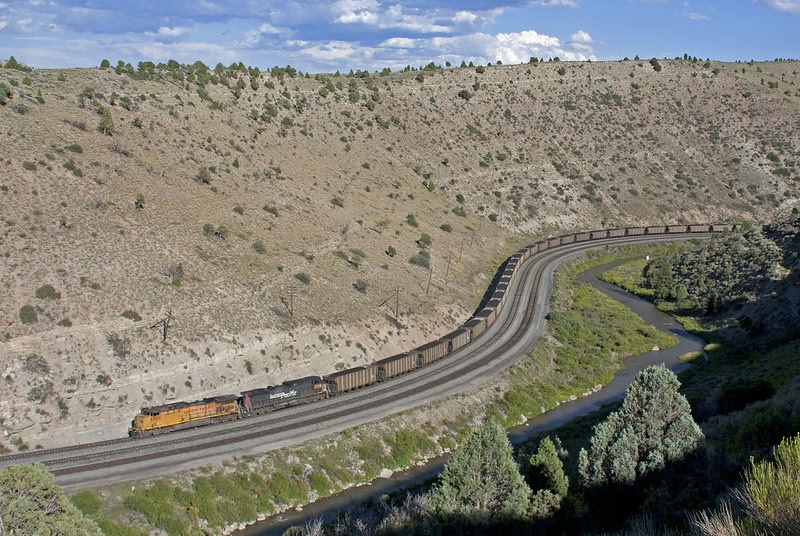
    The Uinta Basin Railway project—an 88-mile rail line connecting Utah’s remote oil fields to the national rail network—has cleared a major legal hurdle. On May 29, 2025, the U.S. Supreme Court unanimously overturned a previous federal appeals court ruling, allowing the project to advance after years of legal and environmental challenges.

    Background: What Is the Uinta Basin Railway Project?

    Initially approved by the Surface Transportation Board (STB) in 2021 following a 3,600-page Environmental Impact Statement (EIS), the Uinta Basin Railway project is a public-private partnership led by several rural Utah counties and a Texas-based rail company. The line is expected to transport up to 350,000 barrels of waxy crude oil daily from the Uinta Basin through Colorado and to refineries on the Gulf Coast.

    Economic Significance for Utah

    Supporters argue that the Uinta Basin Railway project will be a major economic boost for northeastern Utah, which saw record oil production in 2024—65.1 million barrels, a 13% increase from the previous year. They believe the railway will expand market access for Utah crude and reduce the environmental impact of heavy trucking.

    Environmental and Legal Opposition

    However, environmental groups and communities in Colorado, particularly in Eagle County and along Glenwood Canyon, have strongly opposed the project. The legal battle revolved around the National Environmental Policy Act (NEPA). In 2023, the D.C. Circuit Court determined that the STB had failed to fully evaluate broader environmental consequences, including oil spill risks, wildfires, and long-term climate effects.


    picture
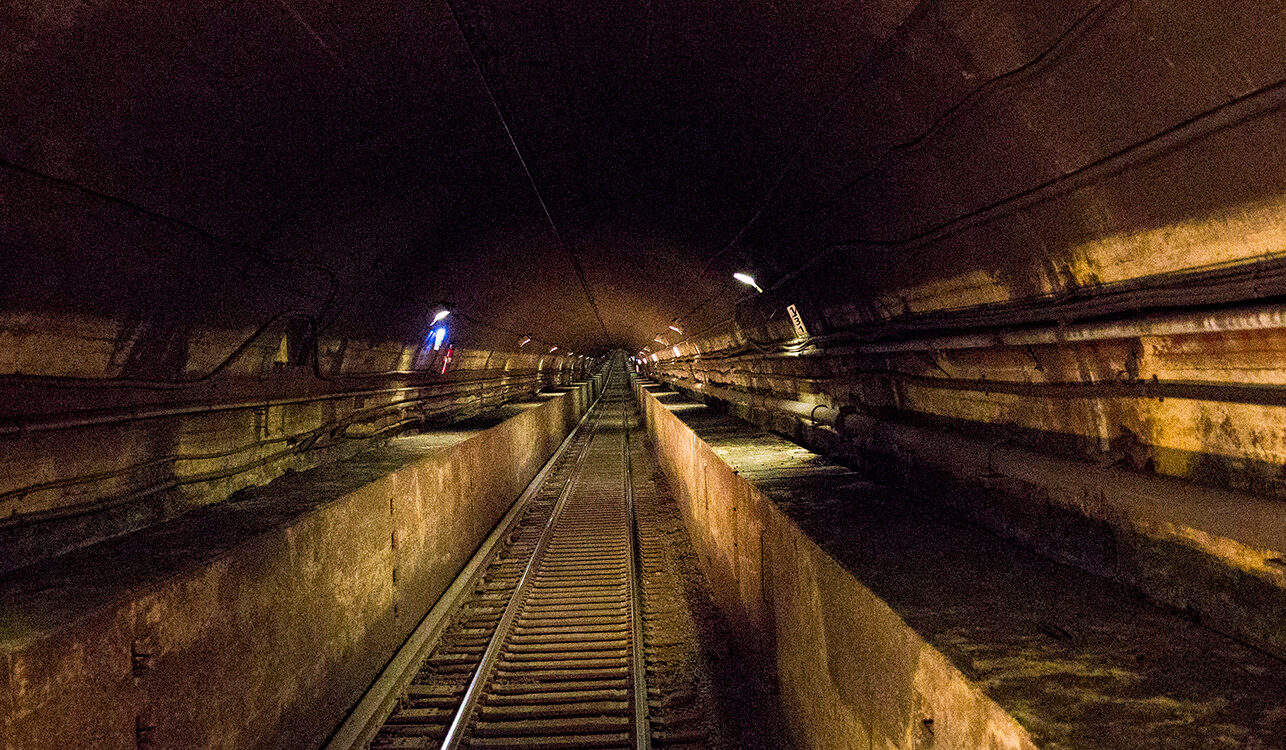
    Hudson River rail tunnel project in New York, USA

    Supreme Court Ruling on NEPA Interpretation

    The Supreme Court disagreed with the appeals court and ruled that NEPA requires federal agencies to assess only the “proximate effects” of a project—such as the railway’s construction and operation—not downstream impacts from drilling or refining. Justice Brett Kavanaugh, writing for the majority, emphasized that NEPA is “a procedural cross-check, not a substantive roadblock.”

    This interpretation limits the law’s reach and provides a clearer path forward for infrastructure projects like the Uinta Basin Railway project that face challenges related to extended environmental concerns.

    Ongoing Political and Environmental Resistance

    While environmental organizations like the Center for Biological Diversity condemned the decision as a “disastrous weakening” of environmental oversight, Colorado officials have also pushed back. State Attorney General Phil Weiser described the Uinta Basin Railway project as a “risky scheme,” and Representative Elizabeth Velasco labeled the ruling “catastrophic.” Velasco is sponsoring state legislation—currently awaiting the governor’s signature—to bolster rail safety oversight within Colorado.

    What’s Next for the Uinta Basin Railway Project?

    Despite the Supreme Court’s decision, the STB must still address remaining environmental concerns. Legal and political opposition continues, but for now, the Uinta Basin Railway project is back on track and represents a major development in the nation’s ongoing debate over energy infrastructure and environmental responsibility.

    Project Timeline

    • 2021 – Surface Transportation Board approves the project after releasing a 3,600-page EIS.
    • 2023 – D.C. Circuit Court strikes down STB approval, citing insufficient environmental review under NEPA.
    • 2024 – Utah’s Uinta Basin hits record oil production (65.1 million barrels).
    • May 29, 2025 – U.S. Supreme Court overturns D.C. Circuit decision, allowing the project to proceed.
    • Ongoing (Post-May 2025) – STB must resolve outstanding environmental concerns; state-level and activist opposition continues.
  • Construction Begins on the First Phase of the New Midtown Bus Terminal

    Construction Begins on the First Phase of the New Midtown Bus Terminal

    Construction has officially begun on the Dyer Avenue deck-overs, kicking off the long-awaited transformation of New York City’s Midtown Bus Terminal. This initial phase sets the stage for replacing the aging, 75-year-old facility with a modern, net-zero emissions transit hub built to meet the region’s future commuting demands.

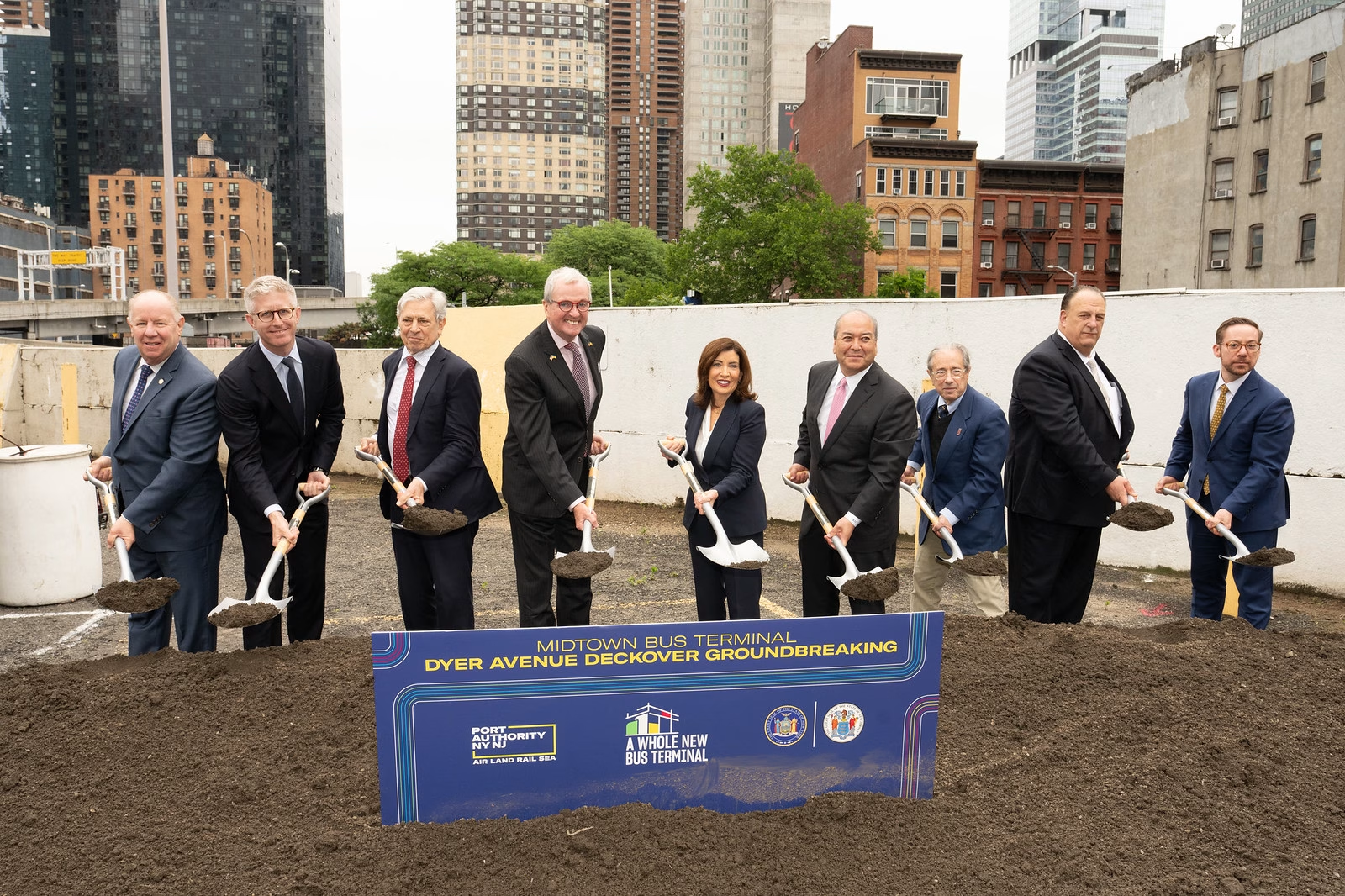
    New York Governor Kathy Hochul, New Jersey Governor Phil Murphy, and leaders from the Port Authority of New York and New Jersey today, May 29 gathered to break ground on the project, which is expected to generate roughly 6,000 union construction jobs and significantly enhance the commuter experience for hundreds of thousands of daily riders.

    The Dyer Avenue deck-overs are being constructed above below-grade sections of Dyer Avenue and the Lincoln Tunnel Expressway between West 37th and 39th Streets. Initially serving as staging areas for buses during construction, these decks will later be transformed into 3.5 acres of public green space.

    The broader redevelopment plan

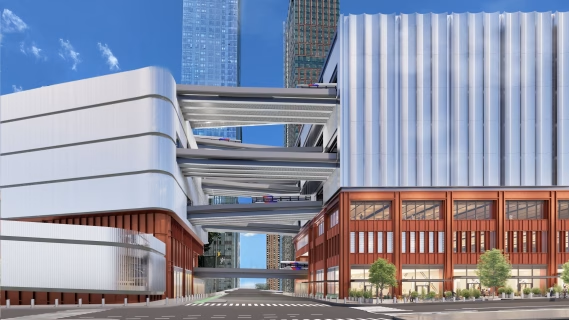
    The broader $10 billion redevelopment plan includes a new main terminal, a separate bus storage and staging facility, and direct ramps into the Lincoln Tunnel. Design elements feature a multi-story indoor atrium, expanded street-level retail, and a permanently pedestrianized section of 41st Street between Eighth and Ninth Avenues.

    “The new Midtown Bus Terminal will breathe new life into this neighborhood and serve as a proud gateway to our city for generations to come,” said Governor Hochul. “It’s a powerful example of what’s possible when government and community work together on modern infrastructure.”

    Governor Murphy echoed that sentiment, highlighting the project’s regional importance: “This new terminal will reduce congestion, support economic growth, and dramatically improve the daily commute for thousands in the tri-state area.”

    Read also: COTA Approves $18M to Finalize Design of West Broad Corridor BRT, First of Three in LinkUs Initiative

    Construction Begins on First Phase of New Midtown Bus Terminal with Dyer Avenue Deck-Overs
    Construction Begins on First Phase of New Midtown Bus Terminal with Dyer Avenue Deck-Overs

    Sustainability Features

    Once complete, the facility will be fully electric bus-ready and include smart infrastructure aimed at reducing street-level idling and congestion. The terminal will remain entirely on existing Port Authority property, avoiding the need to acquire private land.

    The project reflects extensive feedback from local officials, community boards, commuters, and city agencies. Its phased construction approach begins with the deck-overs, followed by the storage facility, which will also function as a temporary terminal during the main building’s demolition and reconstruction.

    “This project is a generational investment in mobility and community,” said NJ TRANSIT President & CEO Kris Kolluri. “It represents a new standard for regional transit — a modern gateway connecting New Jersey and New York.”

    Port Authority Chairman Kevin O’Toole called the groundbreaking “a milestone moment” for both states, emphasizing the terminal’s long-term benefits for commuters and the surrounding community.

    Read also: NASA Breaks Ground on New Causeway Bridge in Wallops Island, Virginia

    Construction Begins on First Phase of New Midtown Bus Terminal with Dyer Avenue Deck-Overs: Factsheet

    Project Overview

    Total Investment: $10 billion

    Current Phase: Dyer Avenue deck-overs construction

    Location: Above Dyer Avenue and Lincoln Tunnel Expressway (West 37th-39th Streets)

    Jobs Created: ~6,000 union construction positions

    Daily Riders Served: Hundreds of thousands

    Major Components

    Deck-Overs: Initial staging areas converting to 3.5 acres of public green space

    New Main Terminal: Modern facility with multi-story indoor atrium

    Bus Storage & Staging Facility: Separate facility with direct Lincoln Tunnel ramps

    Retail Enhancement: Expanded street-level commercial space

    Pedestrian Zone: Permanently pedestrianized 41st Street (8th-9th Avenues)

    Sustainability Features in Midtown Bus Terminal Construction

    Net-zero emissions design

    Full electric bus readiness

    Smart infrastructure to reduce street-level idling and congestion

    Construction Approach

    Phase 1: Dyer Avenue deck-overs (current)

    Phase 2: Storage facility construction

    And Phase 3: Main terminal demolition and reconstruction

    Regional Impact

    Reduced traffic congestion

    Enhanced economic growth

    Improved tri-state area connectivity

    Modern gateway between New Jersey and New York

    Neighborhood revitalization in Midtown Manhattan

    Read also: MTA Begins Construction on New Long Island Rail Road Station in Yaphank, NY

  • Wood Wins Contract on One of the World’s Largest Methanol Plant Project in Abu Dhabi

    Wood Wins Contract on One of the World’s Largest Methanol Plant Project in Abu Dhabi

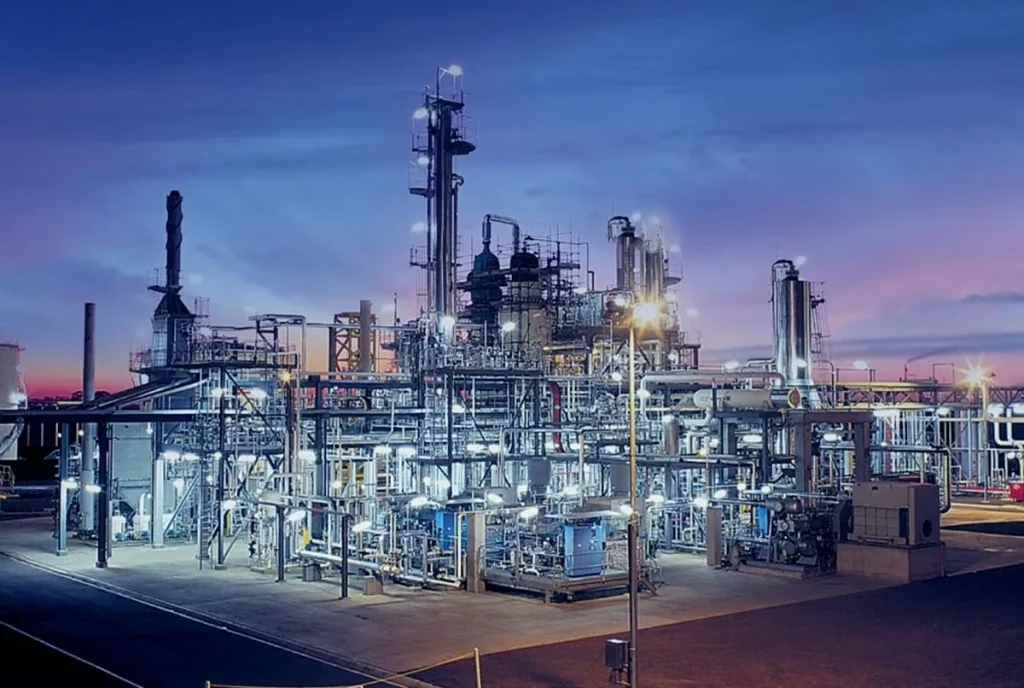
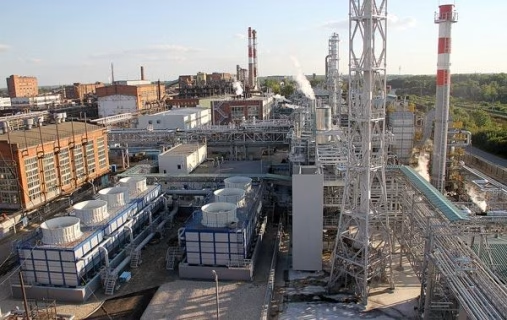
    The construction of one of the world’s largest methanol plant is progressing in Ruwais Industrial City, Abu Dhabi. Located in the Taziz Industrial Chemicals Zone, the plant is the UAE’s first methanol production facility. UK’s Wood Group is managing the project, with 40 consultants and experts from its regional energy hub being mobilized. Their team will collaborate with the plant’s main engineering, procurement, and construction (EPC) contractor.

    South Korea’s Samsung E&A secured the $1.7 billion EPC contract in February. The construction duration is 44 months. French Technip Energies and India’s Larsen & Toubro Energy Hydrocarbon had also submitted bids for the work earlier. Technip had already completed front-end engineering and design (FEED) operations in 2022. The methanol complex will produce 5,000 metric tonnes per day. Its supply will be 1.8 million tonnes annually. Taziz and Proman have a joint venture (JV) in the project. Proman signed its shareholder agreement early in 2023. EPC bidding commenced early in 2024.

    Also read:

    Tecnimont S.p.A awarded contract to build Ta’ziz low-carbon ammonia plant in Abu Dhabi

    Scope of Implementation on One of the World’s Largest Methanol Plant

    World’s Largest Methanol Plant
    The construction of one of the world’s largest methanol plant is progressing in Ruwais Industrial City, Abu Dhabi.

    The implementation on one of the world’s largest methanol plant will reduce the UAE’s import dependence significantly. Besides, it will support global demand from the emerging markets. The project implementation reflects the UAE’s aspiration to become a foremost industrial chemicals manufacturer. Implementation is underway in Ruwais, a major industrial hub with advanced infrastructure. Plant development involves intense planning, international cooperation, and sequential contractor engagement. Besides, it demonstrates the UAE’s commitment to diversifying its downstream energy portfolio. While current work entails physical construction, later stages will entail advanced process technologies. The plant, upon completion, will contribute to economic diversification and sustainability goals. The execution is now part of the Taziz zone scope. However, successful delivery may have an effect on similar developments across the region.

    Also read:

    Samsung E&A Secures $1.7 Billion Ta’ziz Contract for Largest Methanol Plant in UAE

    Tecnimont S.p.A awarded contract to build Ta’ziz low-carbon ammonia plant in Abu Dhabi

  • Massive $12.6B Data Center Project Gains Support in Wyandotte County, Kansas

    Massive $12.6B Data Center Project Gains Support in Wyandotte County, Kansas

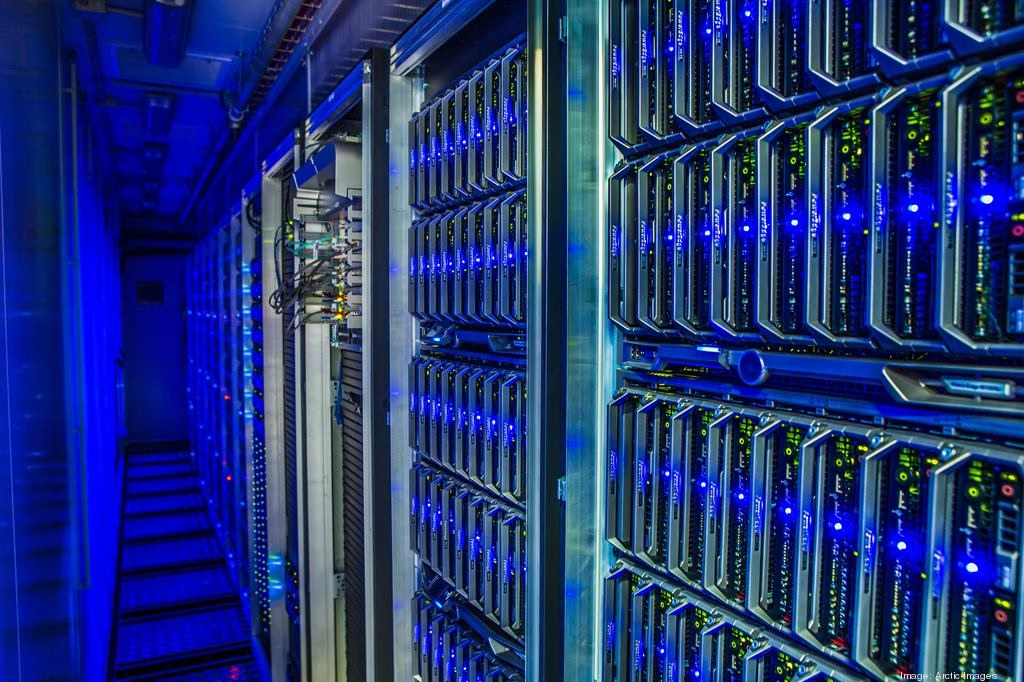
    A major step forward was taken this week as the Unified Government Planning Commission of Wyandotte County and Kansas City, Kansas, endorsed a plan for a massive 550-acre business park project housing a $12.6 billion data center, expected to become a key pillar of the internet’s infrastructure. With a 4-2 vote, the commission recommended the Unified Government Board of Commissioners adopt a package that includes rezoning, preliminary platting, and master plan amendments. These changes would pave the way for six hyperscale data buildings totaling 1.8 million square feet.

    Responsible Growth with Community in Mind

    The proposed location, currently zoned for residential and agricultural use, would be transformed into a high-tech campus west of the Kansas Speedway. Attorney Corb Maxwell, speaking on behalf of developer Red Wolf DCD Properties, emphasized the project’s thoughtful design. He explained that the center would appear more like a corporate campus than an industrial zone, complete with eight-foot earthen berms, over 3,000 trees, and extensive landscaping to reduce its visual impact on surrounding neighborhoods. Nearby homes would remain between 500 and 1,400 feet from the closest buildings.

    Also Read Crusoe Secures Additional $11.6B to Expand AI Data Center Campus in Abilene, Texas

    Massive Energy Needs and Infrastructure Investment

    This Kansas data center project will demand significant power. It’s expected to consume 600 megawatts of electricity, more than the current 500 MW capacity of the Board of Public Utilities (BPU). As part of their commitment, developers will fund utility upgrades, including the construction of two substations. Maxwell noted that tapping into the Southwest Power Pool will not only enhance power resilience but also generate additional revenue for BPU, creating long-term benefits for the community.

    Economic Impact and Statewide Incentives

    Importantly, this project could transform local finances. The data center is projected to generate $12.9 million annually in property taxes, a stark contrast to the current $43,000 from the site. Greg Kindle, president of the Wyandotte Economic Development Council, called the move “strategic and forward-thinking.” Additionally, the Kansas Legislature recently passed a 20-year state sales tax exemption for data centers exceeding $250 million. While companies that use this tax break cannot access reduced utility rates, they must commit to purchasing electricity locally for at least 10 years.

    Also Read Google Plans $10 Billion Data Center Campus in West Memphis, Arkansas

    The Kansas Data Center Project Overview

    Developer: Red Wolf DCD Properties

    Estimated Investment: $12.6 billion

    Location: 550-acre site bisected by Parallel Parkway, west of Kansas Speedway

    Land Use Change: Rezoning from residential/agricultural to business park

    Site Layout:

    Six buildings totaling 1.8 million square feet

    Buildings designed to resemble office spaces, not industrial complexes

    Power Requirements:

    600 megawatts of electricity demand

    Two new substations funded by developer

    Power sourced from the Southwest Power Pool due to load exceeding BPU’s current 500 MW capacity

    Buffer & Design Features:

    8-foot earth berms around the perimeter

    Planting of 3,000+ trees for visual and environmental buffering

    Residential properties set back 500–1,400 feet from buildings

  • $160M 215 Beltway Widening Project Breaks Ground in Henderson, Nevada

    $160M 215 Beltway Widening Project Breaks Ground in Henderson, Nevada

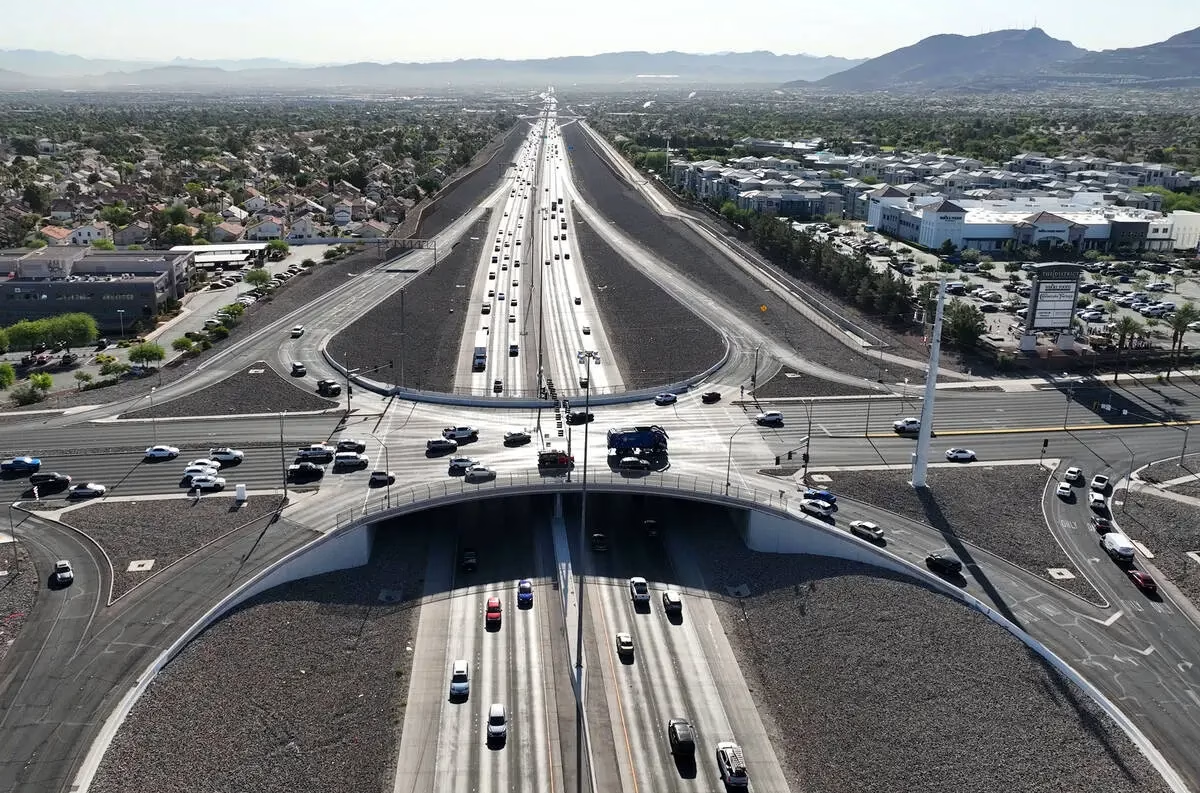
    A $160 million construction project to widen a three-mile section of the 215 Beltway in Henderson officially broke ground on May 28, 2025. The infrastructure upgrade aims to increase capacity and ease traffic congestion between Pecos Road and Stephanie Street.

    The project will expand the freeway from three lanes and an auxiliary lane in each direction to five lanes and an auxiliary lane. The Nevada Department of Transportation, the City of Henderson, and Clark County are collaborating on the initiative, which also includes upgrades to on- and off-ramps at Pecos Road, Green Valley Parkway, Valle Verde Drive, and Stephanie Street. These upgrades will involve adding new turn lanes at each interchange to improve traffic flow.

    City officials noted that this section of the Beltway is one of the most congested, due in part to the area’s rapid growth. Between 2010 and 2020, Henderson’s population grew by 60,000 residents, an increase of 25 percent. Mayor Michelle Romero described the widening project as an essential investment to support the city’s long-term mobility. “This section currently experiences congestion due to the rapid population growth of the entire region, which has increased current traffic volume to exceed the roadway’s capacity,” Romero said during the groundbreaking.

    215 Beltway Widening Project in Henderson: Construction Scope and Phasing

    Construction will begin with the installation of barrier rails along the route, after which crews will begin earthwork and utility relocations. According to City Engineer Steven Conner, early stages will involve removing roadside slopes and installing retaining walls, along with underground utility work.

    Las Vegas Paving is the project’s lead contractor. The construction bid came in at $145 million, with an additional $15 million set aside for labor costs and contingencies, bringing the total to $160 million. Funding comes from Clark County’s Master Transportation Improvement Fund.

    Work is expected to last two years and nine months, with most construction taking place behind the barriers to limit disruptions to daytime traffic. Nighttime work may require temporary lane reductions to two lanes in each direction, according to the City.

    Read also: Kiewit Hired as Construction Manager for $800M I-55 Bridge Replacement

    Green Valley Parkway Interchange and Pedestrian Bridge

    The project includes major changes to the Green Valley Parkway interchange with the 215. Plans call for the intersection to be reconfigured into a diverging diamond interchange, a traffic design that allows vehicles to turn left onto freeway on-ramps without crossing opposing lanes. This design improves traffic efficiency and safety while avoiding demolition of the existing bridge.

    Construction Start

    Construction on the interchange can begin any time after January 1, 2026, and must be completed within the overall project timeline. Henderson previously implemented a similar diverging diamond design at Horizon Drive and Horizon Ridge Parkway over Interstate 11/U.S. 95 in 2015.

    In addition to the interchange, the project includes a new pedestrian and cyclist bridge over Green Valley Parkway at Village Walk Drive, just south of the 215. The bridge will allow pedestrians and cyclists to safely cross between the two sides of The District at Green Valley Ranch, while also providing a dedicated crossing for the 215 Beltway Trail.

    Conner said the bridge will eliminate the need for pedestrian signals at that location, which currently extend traffic light cycles even when no pedestrians are present. “With the bridge, we won’t have to time the walker,” he said. “So, you’ll get a green [light] longer at Village Park Drive.”

    Part of an Ongoing Corridor Expansion

    This project is the latest in a series of improvements along the 215 Beltway. Other sections have been widened in recent years, including from Pecos Road to Windmill Avenue, and from Interstate 15 in the south valley to Charleston Boulevard in Summerlin.

    Officials say the Pecos-to-Stephanie segment will address a key bottleneck and improve daily travel for residents and businesses throughout the Henderson area.

    Read also: Balfour Beatty Wins $889M Contract to Rebuild Stretch of I-30 Through Dallas

    215 Beltway Widening Project Factsheet

    Project Overview

    Location: 215 Beltway between Pecos Road and Stephanie Street, Henderson, Nevada

    Length: 3-mile section

    Total Cost: $160 million

    Groundbreaking: May 28, 2025

    Duration: 2 years, 9 months

    Project Scope

    Roadway Expansion

    Current Configuration: 3 lanes + 1 auxiliary lane (each direction)

    Future Configuration: 5 lanes + 1 auxiliary lane (each direction)

    Capacity Increase: Expands from 4 to 6 total lanes per direction

    Infrastructure Improvements

    Upgrades to four major interchanges:

    Pecos Road

    Green Valley Parkway

    Valle Verde Drive

    Stephanie Street

    Addition of new turn lanes at each interchange

    Installation of retaining walls and barrier systems

    Underground utility relocations

    215 Beltway Widening Project: Key Features

    Green Valley Parkway Diverging Diamond Interchange

    Design: Allows left turns onto freeway on-ramps without crossing opposing traffic

    Benefits: Improved traffic efficiency and safety

    Construction Window: January 1, 2026 or later

    Precedent: Similar design implemented at Horizon Drive/Horizon Ridge Parkway (2015)

    Pedestrian and Cyclist Bridge

    Location: Over Green Valley Parkway at Village Walk Drive

    Purpose: Safe crossing between sides of The District at Green Valley Ranch

    Additional Benefit: Dedicated crossing for 215 Beltway Trail

    Traffic Impact: Eliminates pedestrian signals, extending green light cycles

    Funding and Contracting

    Total Budget: $160 million

    Construction Contract: $145 million

    Labor and Contingencies: $15 million

    Funding Source: Clark County Master Transportation Improvement Fund

    Lead Contractor: Las Vegas Paving

    Construction Timeline and Impact

    Phase 1: Preparation

    Barrier rail installation

    Earthwork and slope removal

    Utility relocations

    Read also: MTA Begins Construction on New Long Island Rail Road Station in Yaphank, NY