Constructionreview

Blog

  • UK-Based Penspen to Complete Feasibility Study for the $13 Billion+ Trans-Saharan Gas Pipeline Project

    UK-Based Penspen to Complete Feasibility Study for the $13 Billion+ Trans-Saharan Gas Pipeline Project

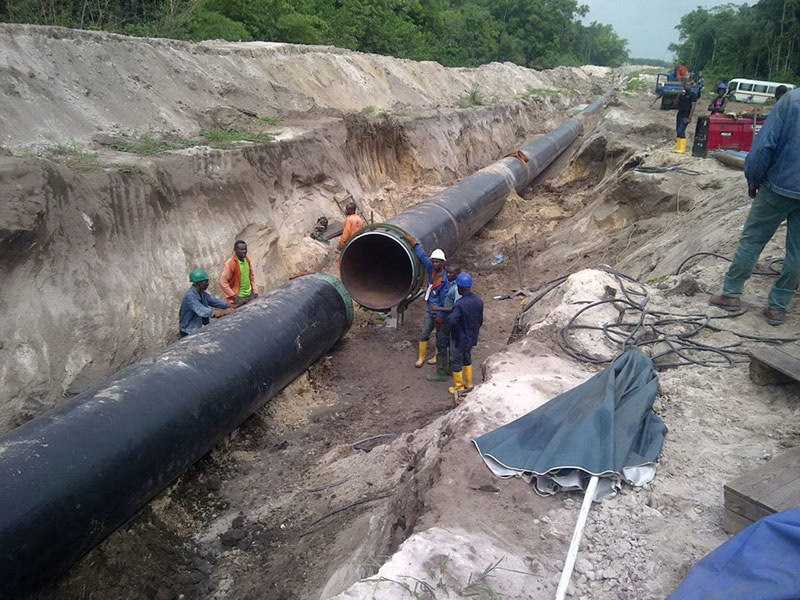
    Feasibility study update for the Trans-Saharan gas pipeline project is progressing and will be finished by September. Engineering firm Penspen based in the UK was hired in March to get it done in six months. Establishing technical and economic viability for this giant of a $13bn–$25bn project is what the study seeks to accomplish. With a stretch of over 4,000 kilometres from Nigeria to Algeria, the pipeline will carry up to 30 billion cubic metres of natural gas a year.

    Penspen performed the initial study in 2006 and is now looking to update past findings and routing alternatives. The company operates from its UK and Middle East headquarters with some assistance from Sidara brand Dar, which works in Nigeria, Niger, and Algeria. Route analysis, market research, and environmental and social appraisal are also included in construction planning. Moreover, the team is assessing legislative requirements and developing front-end engineering design scope. The Trans-Saharan Gas Pipeline will transform regional energy transport infrastructure.

    Also read:

    The longest natural gas pipelines in the world

    Significance of the Trans-Saharan Gas Pipeline Project

    Trans-Saharan gas pipeline project has enormous strategic importance for Africa and the rest of the world. It aims to provide a safe method of transporting natural gas from sub-Saharan Africa to Europe. This is important in reducing Europe’s dependence on finite energy sources and enhancing global energy security. Furthermore, the project has the capacity to drive industrialization, infrastructure, and employment levels in transit countries. Above all, it consolidates regional cooperation among Nigeria, Niger, and Algeria. Such cooperation is expected to promote political stability as well as investor confidence.

    Trans-Saharan Gas Pipeline
    Feasibility study update for the Trans-Saharan gas pipeline project is progressing and will be finished by September.

    With the growing energy needs of Africa, the pipeline will be critical to meeting regional consumption needs and enabling exports. The feasibility update currently available also ensures that modern standards are applied in building the project. It is composed of very rigorous research on environmental, legislative, and economic considerations. This means there is a clear scope for potential future engineering and designing work. Moreover, successful completion of the study will impact the follow-on project implementation steps and investment planning in the long term.

    Also read:

    Latest Developments on Trans-Saharan Gas Pipeline Project (TSGP)

    Trans-Saharan road construction to be completed in June this year
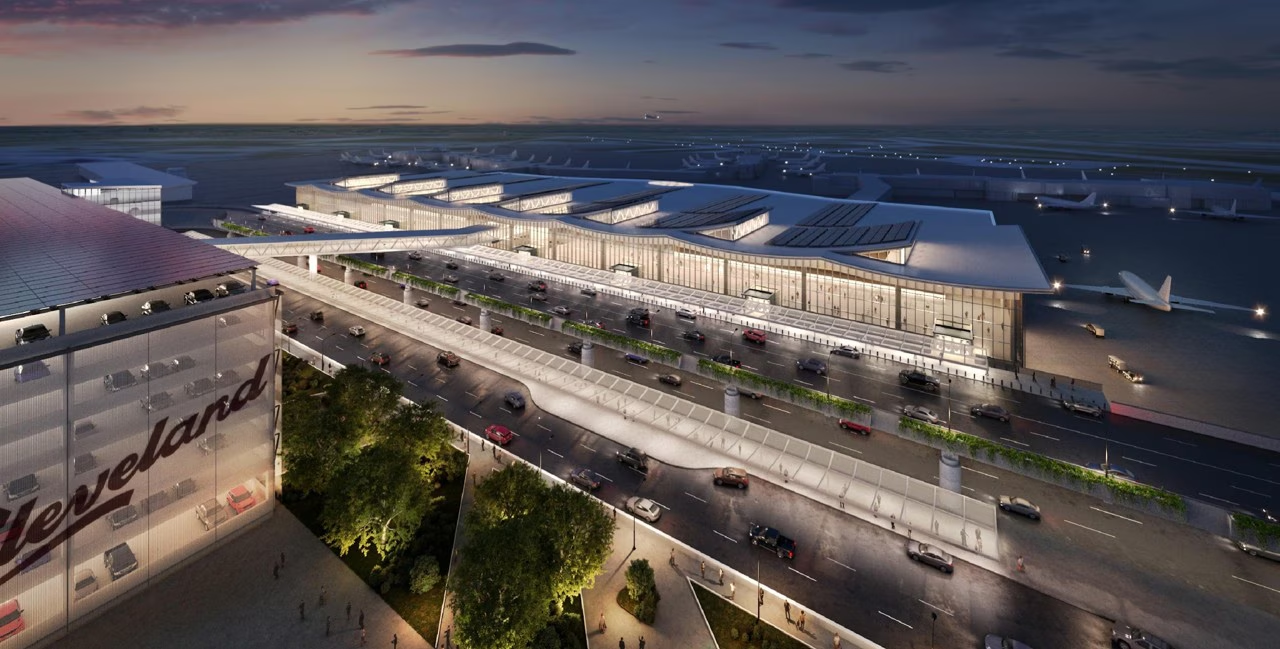
  • Cleveland Council Approves $1.6 Billion Airport Terminal Overhaul Legislation

    Cleveland Council Approves $1.6 Billion Airport Terminal Overhaul Legislation

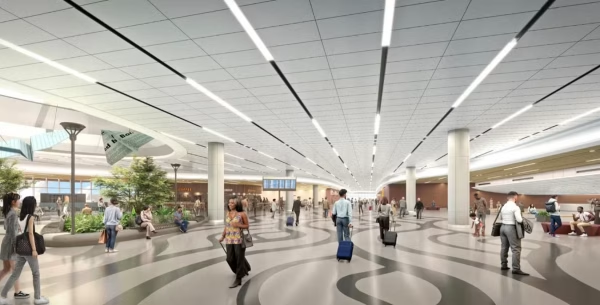
    Cleveland City Council took a major step forward this week by approving new legislation that will launch construction of a brand-new $1.6 billion terminal at Cleveland Hopkins International Airport. Slated to open by 2032, this transformative project is designed to meet future travel demands while celebrating Cleveland’s heritage. New renderings reveal a terminal inspired by nearby Lake Erie and the city’s industrial past. With bright, spacious interiors, this modern facility will dramatically improve the experience compared to today’s aging and cramped terminal. It joins the major US airports undertaking massive terminal upgrades to meet demand for air travel.

    Also Read Firms Prepare Runway Bids for the World’s Largest Airport Project, King Salman International Airport

    New Infrastructure to Support Expansion

    Before terminal construction begins, the airport plans to build a multi-level parking garage at the current Orange Lot site, offering space for more than 6,000 vehicles. Additionally, a brand-new Ground Transportation Center and a rapid transit station will be constructed at an estimated cost of $300 million. These projects are expected to be operational by 2029, significantly enhancing public access to the airport. Alongside these upgrades, a new parking lot, known as the Gold Lot, will be developed adjacent to Concourse D, adding 1,600 more parking spaces and set to open in 2026.

    Renderings of the Cleveland Hopkins International Airport
    Renderings of the Cleveland Hopkins International Airport

    Shifting the Terminal for a Smoother Experience

    One of the most notable changes in this project is the decision to relocate the terminal rather than build on the existing footprint. Unlike previous proposals, the new plan focuses heavily on improving pre-security or “landside” areas, such as check-in counters, lounges, and security checkpoints, before tackling upgrades to passenger gates and concourses. According to airport officials, this approach will not only reduce disruptions for current travelers but also provide a more intuitive and comfortable experience from the moment passengers enter the facility.

    Also Read Redmond City Council, Oregon, Approves $117M for Major Airport Terminal Expansion

    A Long-Term Vision for Growth

    Mayor Justin Bibb and Director of Port Control Bryant Francis officially unveiled the airport project, emphasizing the importance of world-class infrastructure to support economic development. “Improving our airport is key to supporting Cleveland’s growth,” Bibb said. Francis also stressed that the primary operational challenges lie in the front-of-house experience, making the redesign essential for improving guest satisfaction. Fortunately, by building just a few hundred feet from the current terminal, airport operations can continue with minimal inconvenience. In the long run, this ambitious overhaul ensures that Cleveland stays competitive in both travel and business.

    Cleveland Hopkins Airport terminal Overview

    Project Name: CLEvolution – Terminal Modernization Development Program (TMDP)

    Total Estimated Investment: $1.6 billion

    Project Duration: 2025–2032

    Location: Cleveland Hopkins International Airport (CLE), Cleveland, Ohio

    Project Team and Stakeholders

    Lead Consultant: Paslay Group

    Design and Architecture:

    Corgan (Lead Design Firm)

    Connico

    DVA Architecture, LLC

    Robert P. Madison International, Inc.

    McGuiness Unlimited, Inc.

    Regency Construction Services, Inc.

    Funding Partners:

    Signatory airline partners

    City of Cleveland

    Additional funding approvals pending for future phases

  • From Waste to Wealth: Transforming a Landfill into a $200M Utah Inland Port Project

    From Waste to Wealth: Transforming a Landfill into a $200M Utah Inland Port Project

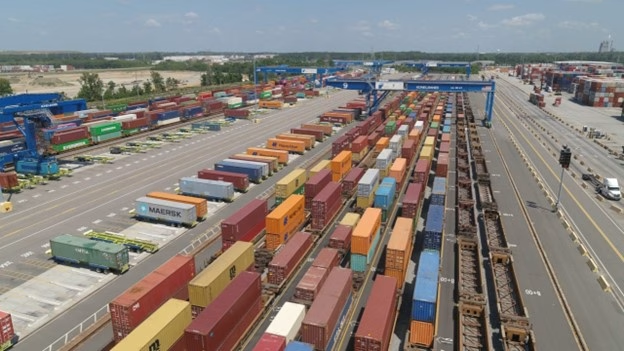
    In the dusty plains near I-80 and 7200 West, excavators are pulling up more than just soil—they’re digging into layers of decades-old trash at the former Salt Lake Valley landfill as the Utah Inland Port Project firges ahead. This site is now at the center of the ambitious Utah Inland Port project, one of the largest economic development efforts in the state’s history. The goal: turn a former dumpsite into a $200 million transportation and logistics hub that will move goods by road, rail, and air—bypassing coastal ports and accelerating regional trade.

    A Hazardous Cleanup Begins

    On Wednesday, crews broke ground on the Utah Inland Port project, launching a remediation effort expected to span seven years. The process is fraught with environmental risks. Decomposing waste emits gases, some of which could pose health hazards if they seep into future buildings. “You don’t want those gases to migrate into structures,” explained Gary McEntee of Ninigret Management, the firm leading the landfill cleanup. Layers of waste from different decades—especially the plastic-heavy 1970s—make the job more difficult as they dig deeper west.


    picture
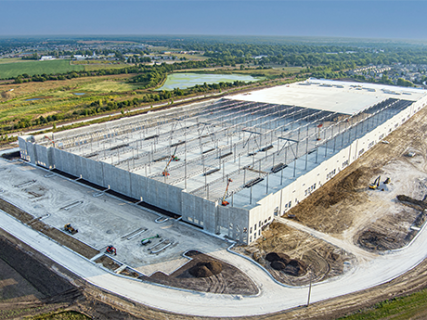
    1 million square-foot Inland Port distribution centre begins construction, Kansas

    Balancing Economic Promise and Environmental Risk

    Despite its promise of thousands of new jobs and hundreds of millions in economic gains, the Utah Inland Port project has sparked significant controversy. Since it was proposed in 2018, it has faced protests, lawsuits, and pushback from environmental groups concerned about the shrinking Great Salt Lake and worsening air quality. Deeda Seed of the Stop the Polluting Port Coalition expressed concern about the true intent of the project. “Remediating the landfill isn’t bad. But using it to fast-track industrial development is the issue,” she said.

    Officials argue that the project will ultimately help protect the lake by preventing unregulated sprawl and investing in sustainable infrastructure. “If we continued to do nothing, that’s when the lake suffers,” said Abby Osborne, chair of the Utah Inland Port Authority. “The best way to protect it is to manage this development carefully.”

    Communities Caught in the Middle

    Salt Lake City Council member Victoria Petro, who represents nearby neighborhoods, says the community is split. “My constituents are concerned about both air quality and job opportunities,” she said. The Utah Inland Port project could offer new economic mobility for blue-collar workers—if it’s done responsibly.

    As backhoes dig and plans take shape, one thing is clear: Utah’s inland future is being built on the remains of its past.

  • Initial Work on the $3.6B Brent Spence Bridge Corridor Project Begins This Summer

    Initial Work on the $3.6B Brent Spence Bridge Corridor Project Begins This Summer

    Initial construction activity tied to the Brent Spence Bridge Corridor Project is set to begin this summer in Covington, city officials confirmed Tuesday, May 27. One of the first visible signs of progress will be the removal of two residential structures on West 11th and West 12th Streets, scheduled for demolition by August 10.

    Covington’s Goebel Park will also undergo significant transformation. The city is currently seeking contractors to dismantle a radio tower within the park’s grounds. Large segments of the infrastructure project will encroach upon the existing park, prompting community efforts to reimagine the space.

    Mayor Ron Washington emphasized the city’s commitment to preserving and restoring the park. “We’ve stood up for our community to ensure Goebel Park remains a valuable green space,” he stated. “The state has committed funding to redesign the park’s gateway, helping us move toward a revitalized vision.”

    In addition to park changes, traffic improvements are in the pipeline. A roundabout is planned for installation at West 3rd Street and Crescent Avenue, with completion targeted by autumn 2026. During this period, the Riverfront Commons Trail will also be temporarily rerouted, with normal routes expected to resume by summer of the same year.

    Utility upgrades are part of the plan as well. Work on critical systems—such as water, sewer, and other utilities—is slated to begin before year’s end.

    The broader Brent Spence Bridge Corridor Project

    The broader Brent Spence Bridge Corridor Project, priced at $3.6 billion, received the green light to proceed following federal environmental clearance granted earlier this month. On May 10, Governors Mike DeWine of Ohio and Andy Beshear of Kentucky announced that the Federal Highway Administration had concluded its environmental review, allowing the project to transition into the design and construction phases.

    “This milestone is essential for improving our nation’s freight logistics,” Gov. DeWine remarked. “The corridor currently ranks among the country’s most problematic bottlenecks for truck traffic. This project will enhance safety and reliability on a route that moves more than $400 billion in goods annually. It’s also a long-overdue fix for daily drivers who’ve endured decades of congestion.”

    The project required an updated environmental assessment due to changes in conditions and regulations since the original evaluation received approval in 2012. The supplementary review addressed new environmental standards and site updates.

    The Brent Spence Bridge, built in the 1960s, was originally designed for 80,000 vehicles per day. Today, it sees traffic volumes double that number, with around 160,000 vehicles using the corridor daily. I-75, one of the nation’s primary freight routes stretching from Canada to Florida, is central to this strain, affecting both commercial logistics and everyday commutes.

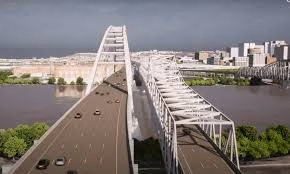
    The comprehensive project spans approximately eight miles from the Western Hills Viaduct in Ohio to Dixie Highway in Kentucky. A major highlight is the construction of a new bridge adjacent to the existing Brent Spence Bridge, intended to ease congestion. Notably, the entire project will be completed without implementing tolls.

    Project Team

    The progressive design–build contract is held by the joint venture of Walsh Construction and Kokosing Construction, while AECOM is lead design firm, overseeing all major bridge and corridor design work supported by Jacobs and Parsons.

    Read also: ALDOT Moves Forward with Mobile River Bridge and Bayway Project Under New Construction Team

    The Brent Spence Bridge Corridor Project: Factsheet

    Project Overview

    Total Cost: $3.6 billion

    Scope: 8-mile corridor from Western Hills Viaduct (Ohio) to Dixie Highway (Kentucky)

    Status: Federal environmental clearance approved May 10, 2025

    Funding: No tolls will be implemented

    Key Infrastructure Components

    New Bridge Construction: Adjacent to existing Brent Spence Bridge

    Traffic Improvements: Roundabout at West 3rd Street and Crescent Avenue (completion by autumn 2026)

    Utility Upgrades: Water, sewer, and critical systems (work begins by end of 2025)

    Current Bridge

    Built: 1960s

    Original Design Capacity: 80,000 vehicles per day

    Current Daily Traffic: 160,000 vehicles (double design capacity)

    Economic Impact: Handles $400+ billion in goods annually via I-75 freight corridor

    Covington Impacts & Timeline

    Summer 2025

    Initial construction activities commence

    Demolition of two residential structures on West 11th and 12th Streets (by August 10)

    Radio tower removal in Goebel Park

    2026: Roundabout completion (autumn)

    Riverfront Commons Trail rerouting (normal routes resume by summer)

    Read also: Historic East Haddam Swing Bridge Reopens After $88.8M Rehabilitation


  • Saudi Arabia Prepares for This Year’s Pilgrimage as it Expands the White Road Project in Makkah

    Saudi Arabia Prepares for This Year’s Pilgrimage as it Expands the White Road Project in Makkah

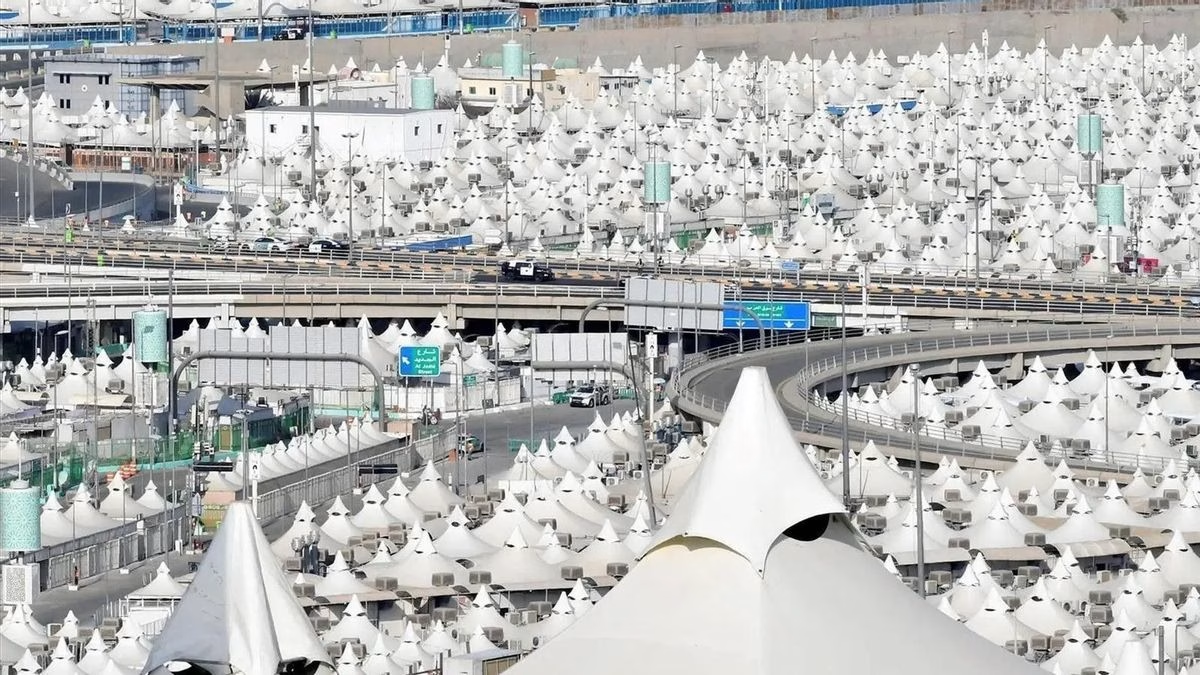
    Saudi Arabia’s Roads General Authority (RGA) White Road Project continues to transform pedestrian infrastructure in Makkah. Having grown by 82% since its inception in 2023, the project is a tremendous leap forward in urban road technology. Moreover, over 84,000 square meters of Arafat roads have already been rebuilt using recycled, domestically manufactured materials. These road surfaces are made to reflect 30–40% more sunlight, lowering surface temperatures by nearly 12°C.

    The hope is to counteract urban heat islands and make pilgrims more comfortable. Further, the newly asphalted roads help lower energy use and air pollution. As a complement to this success, a 1,200-meter green belt of tree-lined road now runs between Namira Mosque and the railway station. Besides, products such as asphalt has been extended to 16,000 square meters, enhancing comfort for elderly walkers. The cooling technology is backed by a study from the Road Research Centre, which guaranteed its safety and functionality.

    Also read:

    Jabal Omar Development Project in Makkah, Saudi Arabia

    Significance and Scope of Implementation of the White Road Project

    Saudi Arabia’s White Road Project is notably an indication of Saudi Arabia’s general push towards accessible and sustainable living. It is in line with the nation’s vision for ranking sixth globally for road quality by 2030. The project is expansive, starting with high-traffic areas like Arafat. Furthermore, a 4,000-meter access to Mount Arafat is being constructed using vibration-dampening materials to enhance the mobility of the disabled.

    White Road Project
    Saudi Arabia’s White Road Project is notably an indication of Saudi Arabia’s general push towards accessible and sustainable living.

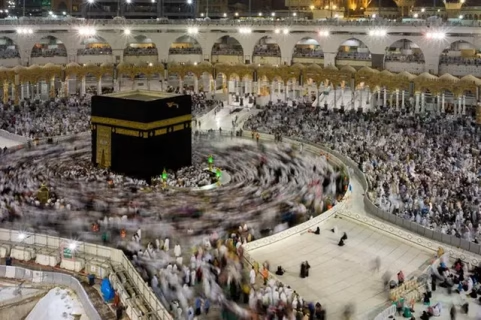
    Besides, air-cooling misting systems and water features have also been fitted in conjunction with the Abdulrahman Fakieh Charitable Foundation. These facilities aim further to improve pedestrian comfort, especially with regards to peak pilgrimage season. The project is one that includes innovation, accessibility, and sustainability to reshape the future of Saudi Arabian urban mobility. It also aims to bring comfort and ease to those who make annual pilgrimages to Makkah from around the world.

    Also read:

    Bids invited for Makkah city’s transit-oriented development project in KSA

    Thakher Makkah Project Phase 1 Implementation Almost Complete, Saudi Arabia

  • Ravens Launch $450M Phase Two Renovation at M&T Bank Stadium

    Ravens Launch $450M Phase Two Renovation at M&T Bank Stadium

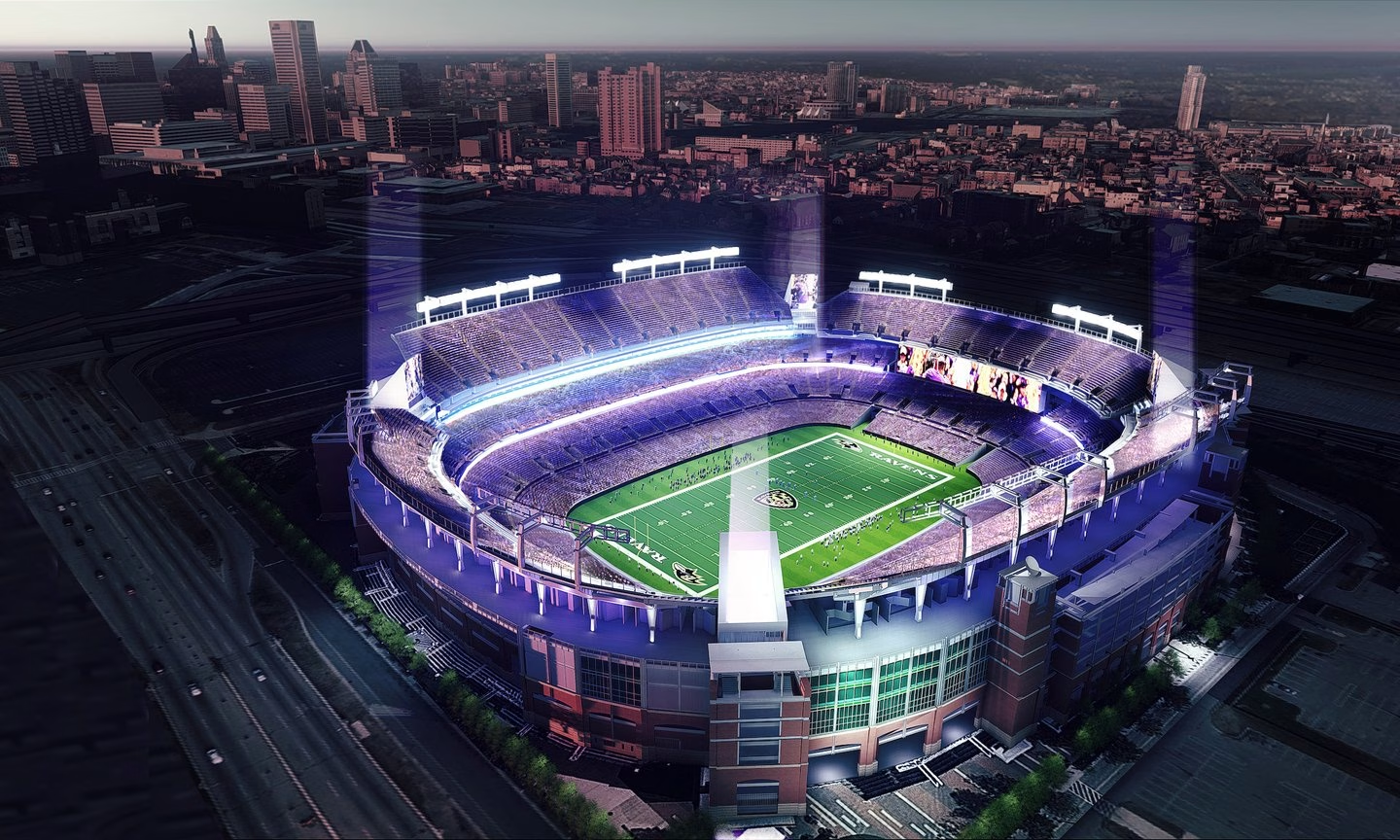
    The Baltimore Ravens have officially announced the second phase of their ambitious renovation initiative, known as The Next Evolution, at M&T Bank Stadium. Originally introduced in December 2023, the overall project is scheduled for completion by 2026. With an estimated cost of $450 million, this stadium overhaul aims to significantly elevate the fan experience while modernizing core facilities. Phase two is a major step forward, incorporating new technology, expanded retail options, and reimagined fan zones.

    High-Tech Upgrades Throughout the Stadium

    One of the most exciting elements of this phase is the technology overhaul. The stadium will soon feature 29 new video displays strategically placed throughout the venue. Notably, a massive 216-foot screen at Gate A will replace the existing RavensVision scoreboard. Additionally, more than 100 televisions across the stadium will be upgraded to larger, high-definition screens by 2026. The former ticket office on the west side will be transformed into a 4,900-square-foot retail store complete with RFID self-checkout, video panels, and a unique LED player-jersey display.

    Also Read USC Advances $350M Reimagining of the Iconic Williams-Brice Stadium

    North Plaza and Food Service Enhancements

    M&T Bank Stadium renovations aren’t limited to technology alone. The North Plaza, which will become the stadium’s primary entrance, is also getting a dramatic facelift. Two new structures will flank the gates. On the east side, fans will find a 6,600-square-foot retail store with Nike displays, a jersey customization shop, and a second-floor hospitality lounge. Meanwhile, the west side will feature a three-level open-air tailgate and concert venue, complete with a sports bar on the ground level. As for dining, a former retail space at Gate A will be replaced by a new Raveneous Chicken location, offering self-serve food and drink options to reduce wait times.

    New Club Memberships for the 2025 Season

    To complement the stadium’s physical upgrades, the Ravens are introducing three new exclusive club memberships for the 2025 football season. The Champions Club, located behind the west end zone, celebrates the team’s Super Bowl victories and offers members all-inclusive food, drinks, and private restrooms. The Trust, an ultra-premium space presented by M&T Bank, provides access to the player tunnel and post-game press room. Finally, the new Legends Suites offer field-level seating, a members-only lounge, and even a sushi bar, delivering an elite game-day experience like never before.

    Also Read USTA Launches $800M Overhaul of US Open Campus, Centered on Arthur Ashe Stadium

    Project Overview

    Total Estimated Cost: Approximately $450 million

    Timeline: 2024–2026

    Project Scope:

    Installation of 29 new video displays throughout the stadium

    Replacement of the RavensVision scoreboard with a 216-foot display at Gate A

    Upgrade of over 100 televisions to larger screens

    Conversion of the original ticket office into a 4,900-square-foot retail store with RFID self-checkout and LED player-jersey display

    Transformation of a former retail space at Gate A into a walk-through Raveneous Chicken location with self-serve food slides and reach-in beverage coolers

    Revitalization of the North Plaza as the main entrance, featuring two large structures:

    East Structure: 6,600-square-foot retail space with a second-floor hospitality area, RFID self-checkout, Nike displays, and a jersey customization shop

    West Structure: Open-air tailgate and concert venue with three levels of viewing, a main stage, and an indoor sports bar on the main level

    Relocation and upgrade of the Kevin Byrne Press Box to the southeast corner

    Primary Contractor: Gilbane Building Company

    Design and Engineering Partners:

    Gensler (Lead Design Firm)

    Populous (Design Consultant)