Constructionreview

Blog

  • West Haven’s 70-Year-Old I-95 Bridges Being Replaced in $136M Project

    West Haven’s 70-Year-Old I-95 Bridges Being Replaced in $136M Project

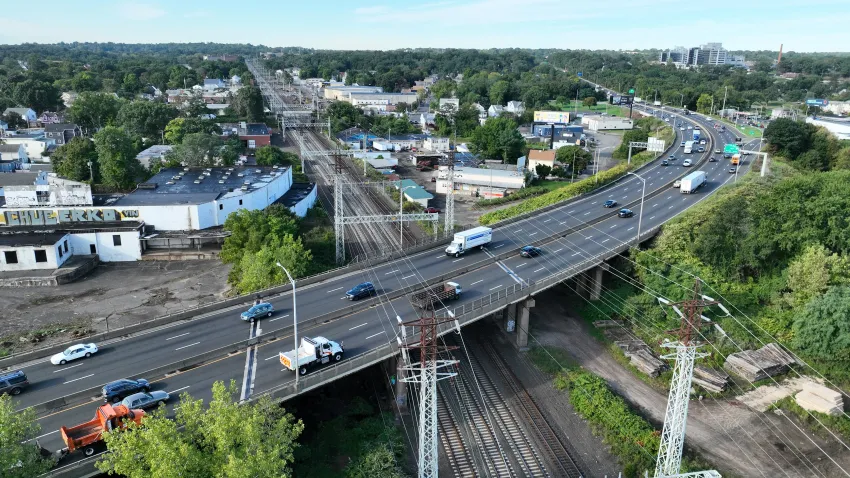
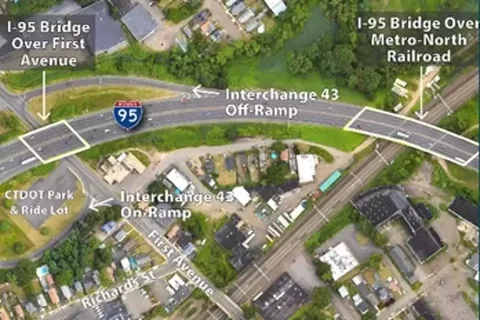
    West Haven has launched a $136 million infrastructure replacement project focused on rebuilding two aging I-95 bridges, with completion expected by the end of 2027.

    The bridges, spanning 1st Avenue and the Metro-North Railroad tracks for I-95 traffic, have existed for more than 70 years. They’ve reached the end of their lifespan and are being replaced with new ones that are state-of-the-art and will last at least 75 years, Governor Ned Lamont said.

    “This is a long-term investment in safety and mobility,” Lamont said. “These bridges have served their time, and now we’re making sure the next generation of infrastructure is built to last — not just for West Haven, but for the entire region.”

    Project Funding

    Federal funding will cover 90% of the project cost and the remaining 10% will be funded by the state, the governor’s office and U.S. Senator Richard Blumenthal said. Approximately 100 laborers are employed on the construction project.

    The project is not just a replacement issue — it’s also to improve traffic movement on one of Connecticut’s busiest highways. Around 145,000 vehicles pass over the bridges daily, and rush hour brings traffic to a complete halt.

    “Anyone who’s ever been stuck southbound around 4 and 6:30 is going to want this project,” said West Haven Mayor Dorinda Borer. “That weekday slowdown is not just infuriating — it’s a real safety issue.”.

    One of the problems, Deputy Commissioner of the Department of Transportation Laoise King explains, is that the merge lanes near the bridges are too short, so motorists struggle to get on and off the highway quickly.

    Traffic disruptions

    In an effort to limit disruptions I-95 Bridges Replacement Project, phase one of the construction will involve building the foundations of the new bridges at grade level, underneath existing overpasses. As such, significant traffic reconfigurations aren’t projected until mid-year 2025, when the northbound Exit 43 ramp closes and the detours occur on nearby state roads.

    The project will progress in stages to 2027, maintaining three travel lanes open in both directions during the day to provide traffic flow. In addition to the bridges being replaced, the workers will also be expanding the southbound lane from Exit 44, eventually creating an exit-only lane at Exit 43 to reduce congestion.

    Lamont also praised the broader effect of the project, stating that aside from safer roads, it also has economic returns. “This is about putting people to work, keeping families in their homes, and building Connecticut’s workforce,” he said. “And it all begins with getting these bridges built.”

    Read also: Kiewit Hired as Construction Manager for $800M I-55 Bridge Replacement
    West Haven’s 70-Year-Old I-95 Bridges Being Replaced in $136M Project
    West Haven’s 70-Year-Old I-95 Bridges Being Replaced in $136M Project

    West Haven’s I-95 Bridge Replacement Project Factsheet

    Project Overview

    Replacement of two 70-year-old bridges on Interstate 95 in West Haven, CT

    Budget: $136 million (90% federal funds, 10% state funds)

    Timeline: Completion expected by end of 2027

    Scope:

    Replacing bridges over 1st Avenue and Metro-North Railroad tracks

    New structures designed with 75+ year lifespan

    Extending southbound lane from Exit 44

    Creating exit-only lane at Exit 43

    Improving merge lanes to enhance traffic flow

    I-95 Bridges Replacement Project: Traffic Impact

    145,000 vehicles use bridges daily

    Major traffic changes expected late 2025

    Three travel lanes will be maintained during daytime construction

    Northbound Exit 43 on-ramp closure planned with detours

    Read also: NASA Breaks Ground on New Causeway Bridge in Wallops Island, Virginia

    Read also: Updates on the new Howard Frankland Bridge construction
  • Baltic’s Largest Onshore Wind Energy Project, Kelme Wind Farm, Now Complete

    Baltic’s Largest Onshore Wind Energy Project, Kelme Wind Farm, Now Complete

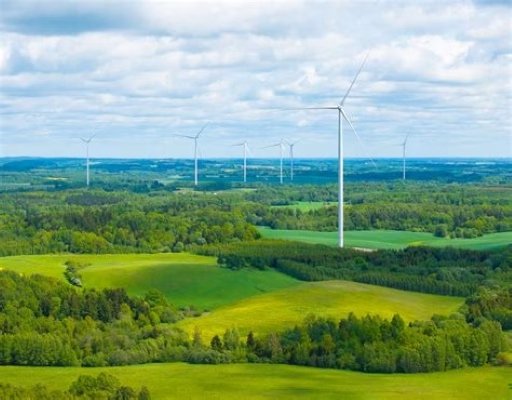
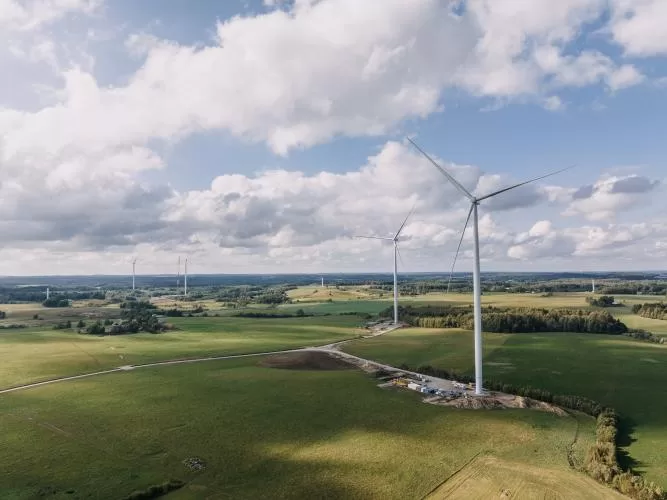
    Kelme wind farm in Lithuania is a 314 MW onshore wind energy project in the Baltics that reached full operational date in June 4th 2025. It was constructed in two phases, with 114 MW Kelme wind farm 1 being completed in April 2025. The second phase – 200 MW Kelme wind farm 2, with 28 turbines was subsequently completed in June.

    Also finding footing in the Baltic region is the 200 MW Utilitas Eleja -Jonišķis onshore wind project. It is now eligible for CEF Energy Programme funding. This is after it was added to the European Commission’s list of cross-border renewable energy projects in September 1st 2025. The project expects to start operations by 2028 and will also be strategically connected to the 330 kV Viskaļi – Mūša grid line.

    Lithuania also just cancelled its relaunched second 700 MW offshore wind tender. This is after only one developer, Ignitis, submitted its bid. The winner of the bid would have been announced by end of 2025 if it would have been successful.

    Kelme Wind Project Factsheet

    Location: Kelmė district municipality, Lithuania

    Developer: Ignitis Renewables

    Construction phases: Two

    Cost: EUR 550 million (USD 625.5 million)

    Total turbine units: 44

    Total capacity: 314 MW

    Kelme Wind Farm Phase 1

    Capacity: 114 MW

    Turbine units: 16 Nordex N163/6.X wind turbines

    Turbine height: 240 meters

    Blade rotation diameter: 163 meters

    Installation capacity: 7 MW

    Operational date: April 2025

    Baltic's Largest Onshore Wind Energy Project, Kelme Wind Farm, Now Complete
    Kelme has the capacity to supply clean renewable energy to approx. a quarter million homes.

    Kelme Wind Farm Phase 2

    Capacity: 200 MW

    Turbine units: 28 Nordex N163/6.X wind turbines

    Turbine height: 240 meters

    Blade rotation diameter: 163 meters

    Installation capacity: 7 MW

    Operational date: June 4th 2025

    More on the project

    Being the largest onshore wind project in Lithuania and the Baltics, Ignitis Renewable’s Kelme wind farm will now supply up to 250,000 homes with clean renewable energy.

    Baltics Largest Onshore Wind Energy Project, Kelme Wind Farm, Celebrates Phase 1 Completion
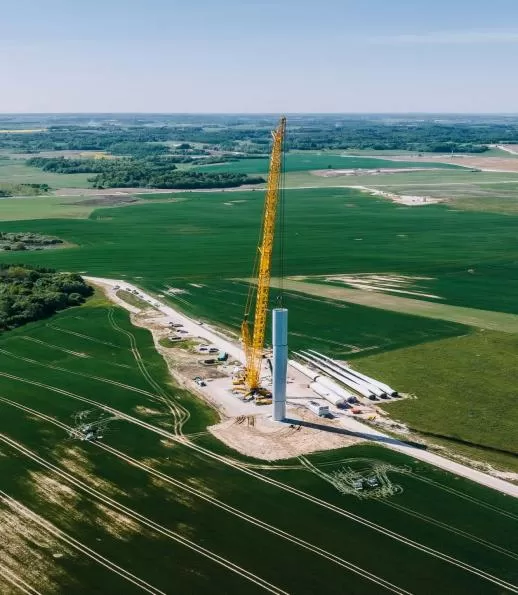
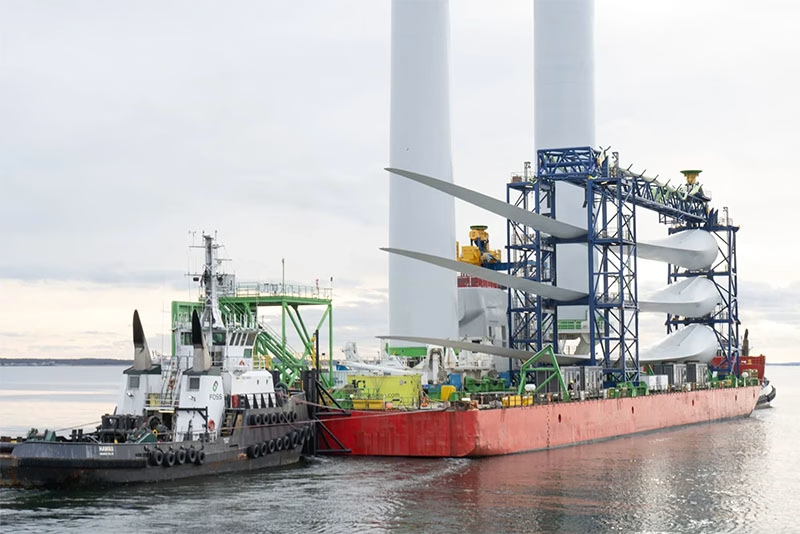
    Pictured is the installation of a wind turbine. Kelme wind farm had its first in May 29 2024

    Sourcing the entire wind farm’s 44 turbine from Nordex, the international green company had earlier on said “installations will continue until end of year with commissioning taking place at the same time”. Turbine installation for the Kelme wind farm 1 started in early 2024, and in just about a year both construction phases reached their commercial operational dates.

    Also emphasized by the renewable energy company is their commitment to maintaining the “highest environmental, health and safety standards” throughout the development of the largest onshore wind project in the Baltics.

    Iberdrola’s 315 MW Windanker offshore wind farm project in the German Baltic Sea gets final federal approval

    Outlook on Ignitis Renewables Green Future

    Other than pushing for renewable energy generation in Lithuania and the Baltics, Kelme wind farm also helps Ignitis achieve one of its most important goal. Its goal of reaching 4 to 5 GW of installed renewable energy generation capacity by 2030 also aims for 2.4 – 2.6 GW of installed capacity by 2027.

    In a 2024 executive summary announcement on the company’s strategic plan, it was also revealed that a maximum of EUR 2.4 billion (USD 2.7 billion) had been invested in the renewable energy generation. This investment also covered related “green” technologies, and was additionally aimed at doubling their renewable energy portfolio.

    Ignitis Renewables also completed the EUR 240 million 137 MW Silesia wind farm 2 in 25 August 2025. It is one of the largest wind farms in Poland with 38, 3.6 MW turbines. Now in operation, the farm will supply close to 200 homes with clean renewable energy.

    Also read: Monsoon Wind Project in Laos: Largest wind farm in ASEAN, Completes Construction

  • Dubai’s Mall of the Emirates Sets Trend with $1.4 Billion Expansion Revamp

    Dubai’s Mall of the Emirates Sets Trend with $1.4 Billion Expansion Revamp

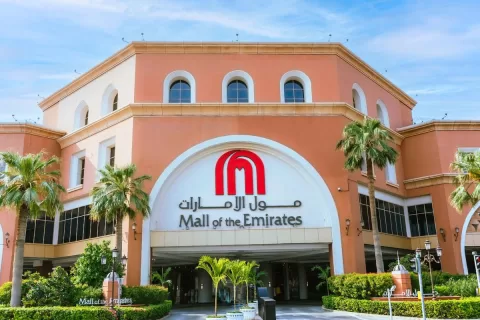
    Majid Al-Futtaim (MAF), a leading UAE-based firm, has announced a major AED5bn ($1.4bn) investment to upgrade Dubai’s Mall of the Emirates. The project will include new retail, dining, wellness, and entertainment facilities. The development spans 20,000 square metres and will introduce 100 new stores. Over AED1.1bn has already been allocated, with enhancements currently underway. These include a wellness club, cultural hub, new dining area, and key infrastructure upgrades. The wellness club, Seven, will be located at Kempinski Hotel Mall of the Emirates. Furthermore, New Covent Garden, the cultural hub, will feature a 600-seat theatre and is being developed in partnership with Dubai Performing Arts Academy. The facility is scheduled to open this year. In addition, a new dining precinct will open in 2027. Four entertainment concepts will be new, including renovated Vox cinemas by 2026. The west end of the mall is also being entirely refurbished, ensuring a complete transformation.

    Also read:

    Mall of the Emirates achieves LEED sustainability certification

    Project Factsheet

    Significance:

    • Enhances the mall’s position as a leading regional retail and leisure destination.
    • Introduces cultural, wellness, dining, and entertainment experiences under one roof.
    • Supports Dubai’s vision for integrated lifestyle, tourism, and infrastructure development.

    Infrastructure:

    • 20,000-square-metre expansion with 100 new retail outlets.
    • Wellness club ‘Seven’ at Kempinski Hotel Mall of the Emirates.
    • Cultural hub ‘New Covent Garden’ with a 600-seat theatre.
    • New eating precinct also to open by 2027.
    • Four new entertainment options, including improved Vox cinemas by 2026.
    • Full redevelopment of the west end of the mall.

    Developer:

    • Development spearheaded by UAE-headquartered company Majid Al-Futtaim (MAF).
    • Cultural center developed in collaboration with Dubai Performing Arts Academy.
    • Works on infrastructure funded by Dubai Roads & Transport Authority (RTA).
    • Construction undertaken by China Civil Engineering Construction Corporation (CCECC).

    Financing:

    • Overall investment announced: AED5bn ($1.4bn).
    • More than AED1.1bn already spent on current upgrades.

    Scope of Implementation on Dubai’s Mall of the Emirates

    Dubai’s Mall of the Emirates
    Majid Al-Futtaim (MAF), a leading UAE-based firm, has announced a major AED5bn ($1.4bn) investment to upgrade Dubai’s Mall of the Emirates.

    Dubai’s Mall of the Emirates will also see major infrastructure improvements. China Civil Engineering Construction Corporation (CCECC) began bridge construction in October. Once completed, the bridge will offer direct car park access from Jebel Ali via Sheikh Zayed Road. The scope also includes a 300-metre-long bridge and widening the Umm Suqeim intersection ramp. Furthermore, 2.5 kilometres of surrounding roads will be upgraded. Three intersections and the Mall of the Emirates metro station bus terminal will also be redesigned. The road adjacent to the Kempinski Hotel is to be converted into a two-way street to improve traffic flow. Pedestrian and cycle paths are also expected to be improved. Dubai-based RTA is undertaking this part of the project. All these changes are likely to enhance access and convenience. Once done, Dubai’s Mall of the Emirates is poised for a world-class transformation, blending culture, wellness, shopping, and mobility.

    Also read:

    The Iconic Dubai Mall is Set for a $408M Expansion. What’s Coming?

    Oman Avenues Mall Expansion Project Almost Complete

  • Empire Wind Project a symbol of the turmoil in the US wind energy transition

    Empire Wind Project a symbol of the turmoil in the US wind energy transition

    The Empire Wind Project is emerging as one of the most consequential offshore wind developments in the United States, symbolizing both the promise and the political volatility surrounding America’s clean energy transition. Developed by Norway’s Equinor off the coast of New York, the $5 billion, 810-megawatt project narrowly survived a month-long federal stop-work order before construction was allowed to resume in May 2025. That reversal offered rare relief to an industry shaken by regulatory uncertainty and an increasingly hostile policy environment under the Trump administration. The Vinyard Wind project on the other hand has faced a less volatile environment and this week received federal approval for passage of its turbine parts through the hurricane barrier at New Bedford. Most probably because it has advanced further and has also started supplying power to the grid and would have been a tough nut to crack for the Trump administration.

    In December the Trump administration ordered work to be paused on this project as one of five  wind farms located of the Atlantic coast another of which is the Dominion Energy’s Virginia WInd Farm firther escalating the war against wind farms in the USA.

    turbine transportation

    The Atlantic Shores Projects 1 and 2: New Jersey’s first offshore wind project has not been as lucky as the Empire Wind Power project which resumed after a month’s break, and on August 2025 the Atlantic project was officially cancelled because of the relentless war on wind power projects by the Trump administration.

    Reported May 2025 – The Trump administration lifts a stop-work order on Equinor’s Empire Wind project, which is among the top 10 largest offshore wind farms in the U.S., allowing construction to resume after a month-long suspension that cost the developer an estimated $50 million per week. The decision marks a critical reversal in U.S. offshore wind policy and a reprieve for an industry rattled by regulatory uncertainty.

    The project, located 15 to 30 miles southeast of Long Island, is being developed by Norwegian energy company Equinor. Once completed, it is expected to deliver 810 megawatts of clean electricity – enough to power approximately 500,000 New York homes. With a total price tag of $5 billion, Empire Wind 1 will be the first offshore wind facility to directly supply power to New York City.

    A Sudden Halt – And A Rapid Turnaround

    On April 16, U.S. Interior Secretary, Doug Burgum, ordered Equinor to halt all work on the Empire Wind project, citing insufficient environmental analysis in the Biden administration’s 2023 approval. “The previous administration pushed through the project without adequate analysis or consultation,” Burgum stated in a memo obtained by the Washington Free Beacon. He echoed the criticism in a post on X, saying the suspension would remain “until further review.”

    The unexpected pause sent shockwaves through the offshore wind sector, raising concerns about the security of fully permitted, multi-billion-dollar developments. Equinor warned that delays could result in billions in losses.

    After pressure from both U.S. and foreign officials, the order was reversed.

    Burgum, now in the Dept. of Interior, and as Trump’s “energy czar”, is a champion for “energy dominance”, expansion of America’s fossil fuel production, and carbon neutrality. He has asserted this since his days as North Dakota’s Governor. The state he represented, and where he pushed for fossil fuels, is now on track to get into the nuclear energy market. This is after a recent announcement on its intent to design a nuclear power plan roadmap.

    Following the reversal of the halt, Equinor’s CEO, Anders Opedal, said, “I would like to thank President Trump for finding a solution that saves thousands of American jobs and provides for continued investments in energy infrastructure in the U.S.”

    He also credited Norway’s Prime Minister, Jonas Gahr Stoere, and Finance Minister, Jens Stoltenberg, who raised the issue during recent meetings with U.S. leadership. According to Opedal, New York Governor, Kathy Hochul, also played a key role in helping to restart the project.

    Read also: Greenbacker Begins Construction on New York’s Largest Solar Farm

    Financial and Political Context

    Equinor originally acquired the offshore lease for Empire Wind during Trump’s first term in 2017. The project was formally approved by the Biden administration in 2023, and the company secured over $3 billion in financing in 2024. A 25-year Purchase and Sale Agreement was signed with the New York State Energy Research and Development Authority (NYSERDA) in June 2024.

    The brief suspension came just months after President Trump, upon returning to office, issued a day-one executive order calling for a sweeping review of all offshore wind activity on the

    U.S. Outer Continental Shelf. While the order didn’t cancel existing leases, it opened the door for delays, amendments, or even terminations.

    Critics of the Empire Wind project welcomed the pause. “This order directly results from officials rushing the project through the approval process without proper analysis or coordination with the affected agencies,” said Rep. Jeff Van Drew (R-NJ), who had raised concerns about the project’s environmental review.

    Next Steps for Empire Wind

    Equinor said the project is currently about 30% complete. Offshore installation is now expected to begin in 2025, with commercial operations targeted for 2027. This is consistent with earlier plans, despite the delay. The company will conduct an updated economic assessment in the second quarter. And continue working with suppliers and regulators to mitigate the effects of the month-long suspension.

    Empire Wind will use turbines manufactured by Vestas. It remains one of the most significant offshore wind initiatives in U.S. history. This is both in scale and symbolic value.

    Read also: Infinium Begins Construction on World’s Largest eFuels Facility in West Texas

    Empire Wind Resumes Construction: Project Factsheet

    Project Overview

    Name: Empire Wind 1

    Developer: Equinor (Norwegian energy company)

    Capacity: 810 megawatts

    Total Investment: $5 billion

    Recent Developments

    Trump administration lifted month-long suspension on May 2025

    Work stoppage had cost Equinor ~$50M weekly

    Project now approximately 30% complete

    Offshore installation expected to begin 2025

    Commercial operations targeted for 2027

    Empire Wind Project History

    Lease acquired by Equinor in 2017 (during Trump’s first term)

    Formally approved by Biden administration in 2023

    $3B+ in financing secured in 2024

    25-year Purchase Agreement signed with NYSERDA in June 2024

    Temporary suspension ordered April 16, 2025

    Read also: Latest Update Red Rock Wind Energy Farm Iowa: Approval for scaled back version received

  • Tanzania’s President to Inaugurate Magufuli Bridge Next Month, the Longest Bridge in East and Central Africa

    Tanzania’s President to Inaugurate Magufuli Bridge Next Month, the Longest Bridge in East and Central Africa

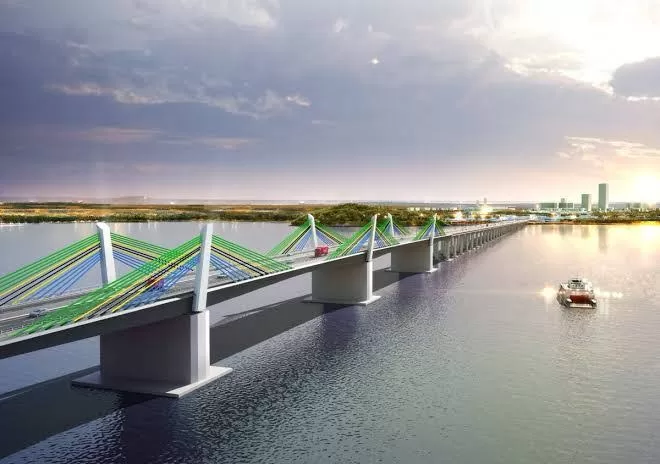
    The President of Tanzania Samia Suluhu is expected to inaugurate the Magufuli Bridge that runs from Kigongo to Busisi this May. This will be marking a key milestone in the implementation of one of the largest infrastructure projects in Africa.

    The bridge extends up to 3 kilometres and was renamed JPM Bridge to honour the country’s late President John Pombe Magufuli. It kicked off construction on 25 February 2020 and was initially scheduled for completion by December 2024.

    Project Factsheet

    Name: Magufuli Bridge (formerly known as Kigongo-Busisi Bridge)

    Location: Spans the Gulf of Mwanza on Lake Victoria, connecting Kigongo in the Mwanza Region and Busisi in the Geita Region, northwestern Tanzania.

    Purpose:

    • To provide a direct road link between Kigongo and Busisi, replacing the unreliable and time-consuming ferry service.
    • Facilitate faster movement of goods, services, and people.

    Key features:

    Length: 3.2 kilometers (approximately 2 miles). Some sources mention a total project length of 4.66 kilometers, including connecting roads.

    Width: 28.45 meters (93.3 feet).

    Carriageways: Two, each 7.0 meters wide for vehicles.

    Emergency lanes: 2.5 meters wide on each side.

    Walkways: 2.5 meters wide on both sides for pedestrians.

    Capacity: Expected to allow 12,000 vehicles to pass daily.

    Type: Extra-dosed cable-stayed bridge, the only one of its kind in the Lake Victoria region. It features three main pylons, each 40 meters high and spaced 160 meters apart.

    Contractors: China Civil Engineering Construction Corporation (CCECC) in collaboration with China Railway 15 Bureau Group Corporation (CR15G JV).

    Funding: Government of Tanzania.

    Start date: December 7, 2019.

    Construction completion: Construction was completed on October 6, 2024, with the pouring of the final cement tank.

    Cost: Initially reported at TSh 699 billion, later estimated at around $300 million (approximately TSh 716.3 billion).

    Green construction: Innovative eco-friendly building techniques were employed, including a proprietary underwater flexible cofferdam for pile cap construction, minimizing environmental impact on Lake Victoria’s water quality.

    Significance:

    • The bridge is a flagship project for Tanzania and a symbol of national pride.
    • It is a key infrastructure project under Tanzania’s development vision and aligns with the Belt and Road Initiative.
    • It is expected to significantly boost trade and economic activities in the Lake Victoria zone and with neighboring countries.

    Also read: East Africa’s Longest Bridge in Tanzania: The Magufuli Bridge

    The Sixth Longest in Africa

    Once it will be inaugurated, the bridge will become the sixth longest in Africa.

    These inauguration plans were revealed by Minister of Works, Mr Abdallah Ulega during his contributions to the 2025/26 budget debate for the Prime Minister’s office and affiliated institutions, presented in Parliament on 15 April 2025.

    Mr Ulega revealed that the bridge was only 20% complete when Samia Suluhu assumed office. However, great progress has been seen on the project under her administration.

    “This is a landmark project. It is a three-kilometer bridge that is not like any other in East and Central Africa. On the inauguration day, members of parliament and citizens will be invited to witness this major national achievement.” He stated.

    Significance of Magufuli Bridge

    The bridge was constructed to improve connectivity between Mwanza and surrounding regions. Additionally, it was constructed at a cost of Sh716.33 billion.

    Lastly, Mr Ulega dismissed the circulating rumours on social media that Somanga Bridge had collapsed.

    “That information is not true. The bridge remains intact. However, as a result of heavy rains and increased water flow into the Indian Ocean, water has been passing over the surface of the bridge,” he clarified.

    Also read: Mombasa Gateway Bridge Funding Secured; the Bridge Set to Become the Longest in Africa Upon Completion

    He noted that as a precaution, they have temporarily suspended access to the bridge. This is in line with standard safety protocols. Also,  measures have also been taken in other locations like Jangwani Bridge with the aim of safeguards public safety during harsh weather conditions.

    Also read: Updates on Multimillion Magufuli Bridge: Longest Bridge in East Africa


  • Technip joins Jet Zero’s Project Ulysses for Renewable Diesel, Bioethanol Aviation Fuel, after Latest FEED Award

    Technip joins Jet Zero’s Project Ulysses for Renewable Diesel, Bioethanol Aviation Fuel, after Latest FEED Award

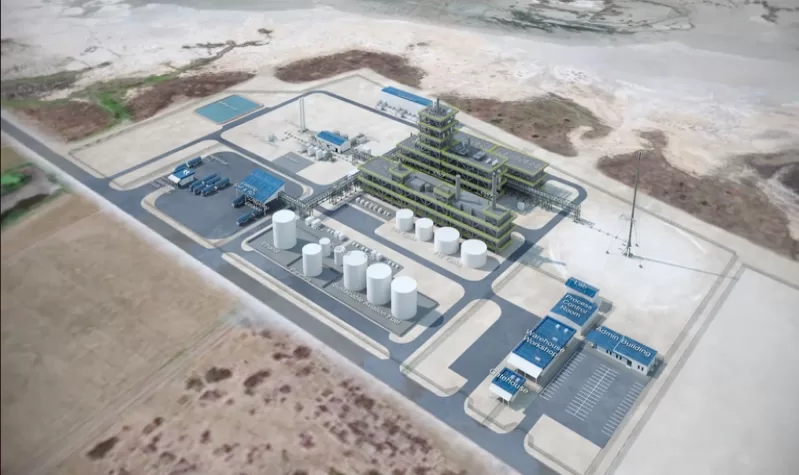
    Technip Energies joins Jet Zero’s bioethanol to Sustainable Aviation Fuel (SAF) project, Ulysses, located in North Queensland, Australia, after latest Front-End Engineering Design (FEED) contract award. The FEED contract entails engineering works, and general planning for the project. Technip will also oversee Project Ulysses’ cost estimation and the stipulation of project timelines.

    Project Ulysses factsheet

    • Project Ulysses utility: Bioethanol to Sustainable Aviation Fuel (SAF), and Renewable Diesel (RD) production
    • Location: Townsville, North Queensland, Australia
    • Cost: $36.81 million
    • Developer: Ulysses Bioenergy Pty Ltd, Jet Zero Australia Pty Ltd
    • Other key Investors: Airbus, Idemitsu, Qantas, Australian Renewable Energy Agency (ARENA)
    • Project management and owner engineering services: Long Energy & Resources (LERA)
    • Current project phase: FEED Study
    • Project Ulysses FEED contractors: Technip Energies, LanzaJet
    • FEED study cost: $36.8 million
    • Upcoming phase: Engineering, Procurement and Construction (EPC) contract awards
    • Estimated SAF production: 102 million liters annually
    • Estimated renewable diesel production: 11 million liters annually
    • Project Ulysses inception date: 1 September 2024
    • Project commissioning date: 2028

    Latest insights and contractors at Project Ulysses

    Currently, Project Ulysses has completed feasibility studies, and has also secured a good line-up of financiers. It is now in the FEED study phase. This is overseen by global fuels technology player, Lazajet, and construction contractor, Technip, after the latest press release on Project Ulysses. Technip and Lanzajet join LERA who serves as a project manager, as contractors for Project Ulysses.

    Named after North Queensland butterfly, Papilio ulysses, the project in Australia’s Townsville State Development Area seeks to produce renewable diesel and SAF from bioethanol. The two renewable fuels to be pumped into the aviation market are sourced from agricultural by-products. Set to deliver 11 million liters of renewable diesel and 102 million liters of SAF annually, Project Ulysses will utilize Lanzajet’s Alcohol-to-Jet (AtJ) technology.

    Jet Zero’s Project Ulysses targets completion and commissioning by 2028. This will set precedence for the achievement of sustainability goals. At its core is the reduction of jet aircraft CO2 emissions. This is an estimated reduction of around 65% when compared to traditional fossil fuel, like jet kerosene, used in the aviation industry.

    Janelle Poole MP, an Assistant Minister in Queensland termed Project Ulysses as a means for the exploration of “new industries across Queensland, particularly focusing on economic growth in the regions.”

    Also read: SAF Industry Australia: Major Sustainable Aviation Fuel Project

    Sustainability at Forefront of Jet Zero’s Project Ulysses

    According to the International Energy Association (IEA), aviation accounts for up to 2.5% of global CO2 emissions. The number stood at 940.6 metric tons (Mt) of CO2 as of 2023. According to IEA, this number will surpass 1000 Mt of CO2 by 2030 if the aviation industry lags in change. This also sets the aviation industry’s emission growth rate in the two previous decades, higher than other means of transport like road and rail.

    To achieve the global, and International Civil Aviation Organization’s, Net Zero by 2050 goal, several mechanisms have been put in place in the aviation sector. These include use of low carbon fuel like SAF and renewable diesel from bioethanol from Jet Zero’s Project Ulysses. These are also coupled by engineering and design changes to aircraft, like improving airframe and engine designs. Also proposed are technologies like electric or hydrogen-powered aircraft in place of kerosene-powered aircraft.

    Also read: Murchison Green Hydrogen project in Australia advances after securing AUD 814M in CIP energy transition fund

    Jet Zero’s Project Ulysses and the local economy’s long-term outlook

    Also in Project Ulysses’ long term development goals is the expansion Townsville economy. Jet Zero’s SAF and renewable diesel project in Townsville will create more than 100 operational jobs at the facility once its commissioned. This will also be superposed by the 1,000 construction jobs to be delivered once Project Ulysses starts construction. The project will also supply renewable diesel to the local Australian energy market, ramping up renewable energy use in sectors like mining, transport, and tourism.

    In the rather, grand scheme of things, Project Ulysses also aims to make Townsville in Australia’s Northern Queensland a renewable energy hub. Also in Jet Zero’s Project Ulysses mission is to make Queensland a global leader in the low-emissions biofuels industry.

    Other SAF project in Australia include Project Mandala. A partnership project steered by Jet Zero and Apeiron Bioenergy. It is currently advancing feasibility studies after grant funding award by the Australian Department of Foreign Affairs and Trade (DFAT) and Enterprise Singapore.

    Also read: Octopus Australia begins construction on Fulham Solar Farm and Battery project