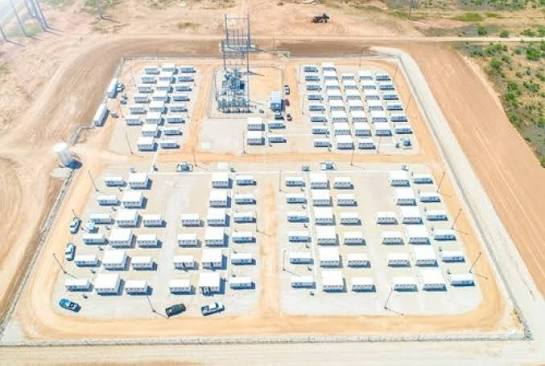
The Summerfield Battery project has entered commissioning in South Australia, marking a major construction milestone for the state’s large-scale energy storage infrastructure. The 240-megawatt (MW) facility will provide 960 megawatt-hours (MWh) of storage, positioning it to become South Australia’s largest battery once it enters full operation.
However, its lead could prove temporary as larger competing developments advance across the state. Construction began in early 2025, and commissioning started in October 2026, less than two years later. The project sits approximately 55 kilometers east of Adelaide and will help shift electricity across periods of changing demand.
The project’s total construction cost has not been disclosed in the cited reports. Nevertheless, its 960 MWh storage capacity places Summerfield among South Australia’s significant utility-scale battery developments. The project also reflects growing investment in infrastructure that can support a power system increasingly reliant on renewable electricity.
Summerfield Battery Storage Project advances towards grid operation
The commissioning phase follows the completion of major construction works and the energization of the project’s substation and transformers in May 2026. According to the project’s official update, testing and commissioning activities will continue alongside rehabilitation of temporary construction areas. The latest milestone brings the facility closer to delivering electricity to the grid.
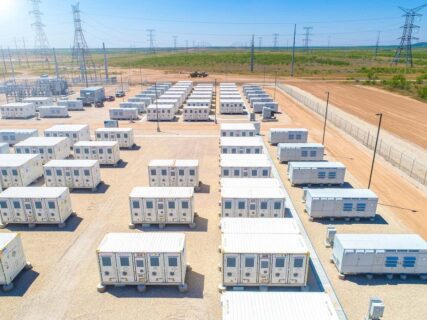
The installation comprises more than 200 battery containers supplied by Canadian Solar’s energy storage subsidiary, e-Storage. The system uses SolBank 3.0 battery technology, designed to store electricity and release it when demand increases.
Once operational, the facility could supply enough stored electricity to power approximately 70,000 homes for four hours. It will store surplus renewable generation and discharge electricity during periods of higher demand. Consequently, the project should strengthen grid flexibility as South Australia expands wind and solar generation.
Summerfield Battery Storage Project faces larger rivals
Summerfield’s anticipated position as South Australia’s largest battery will face competition from projects already advancing through construction. Alinta Energy is building the Reeves Plains battery, which will deliver 250 MW of power and 1,000 MWh of storage in its first stage. The developer is also assessing a second stage that could double capacity to 500 MW and 2,000 MWh.
Meanwhile, the proposed expansion would make Reeves Plains substantially larger than Summerfield in both power output and storage capacity. The Limestone Coast Energy Park also represents another potential competitor, with plans for a 500 MW battery offering 1,500 MWh of storage. These developments demonstrate the accelerating scale of South Australia’s battery construction pipeline.
Summerfield’s significance therefore extends beyond its temporary state-level ranking. Its commissioning will add substantial storage capacity to a grid that increasingly needs to balance variable renewable generation. Furthermore, its four-hour configuration supports the transfer of daytime electricity into evening demand periods.
Ownership change keeps Summerfield Battery Storage Project moving
Copenhagen Infrastructure Partners originally developed Summerfield and began construction in February 2025. However, Palisade Investment Partners agreed to acquire the project in April 2026 through its Australian renewable energy platform, Intera Renewables. The transaction transferred full ownership while construction was approaching completion.
Blue Power Partners will oversee construction through commercial operations. After commissioning, Palisade Integrated Management Services will manage the operational asset. Meanwhile, e-Storage will provide long-term technical support under its service arrangements.
The project also has a long-term electricity offtake arrangement with Origin Energy, supporting its commercial framework. Its commissioning progress highlights how infrastructure investors, battery manufacturers and renewable energy developers are bringing large storage assets closer to operation.
As larger batteries approach delivery, Summerfield’s competitive position may change quickly. Nevertheless, the facility will contribute meaningful storage capacity and support South Australia’s renewable energy transition.
Summerfield Battery Project’s commissioning highlights Australia’s expanding investment in large-scale energy storage, while the Snowy 2.0 hydro project faces a contractor crisis as construction costs soar past $8 billion. The two developments illustrate different construction challenges in Australia’s energy transition, from delivering grid-scale battery storage to managing the cost and contractor pressures associated with complex pumped-hydro infrastructure.
Also read: Blackstone Battery Project: Octopus Gains Federal Clearance for 2GWh Construction in Queensland
Project Fact Sheet
Name: Summerfield Battery Energy Storage System (BESS).
Type: Utility-scale battery energy storage infrastructure.
Location: Near Mannum, in the Murraylands region of South Australia, approximately 55 kilometers east of Adelaide.
Capacity: 240 MW.
Energy storage capacity: 960 MWh.
Storage duration: Four hours at rated output.
Battery technology: SolBank 3.0 lithium-ion battery energy storage system.
Battery equipment: More than 200 battery containers; the official project information lists 222 containers.
Construction commencement: February 2025.
Construction status: Major construction completed; commissioning underway as of October 2026.
Expected commercial operations: Early 2027, according to the latest commissioning report.
Project cost: Not publicly disclosed in the cited sources; a verified USD construction cost is unavailable.
Original developer: Copenhagen Infrastructure Partners (CIP).
Current ownership: Intera Renewables, Palisade Investment Partners’ Australian renewable energy platform.
Electricity offtaker: Origin Energy, under a long-term tolling arrangement.
Primary purpose: Store electricity and discharge it during periods of higher demand.
Expected household supply equivalent: Approximately 70,000 homes for four hours.
Grid connection infrastructure: Project substation and transformers, with associated transmission infrastructure.
Key competing development: Reeves Plains battery, planned at 250 MW/1,000 MWh for its first stage, with a potential expansion to 500 MW/2,000 MWh.
Project Team
Original project developer: Copenhagen Infrastructure Partners (CIP)
Current project owner and investment platform: Intera Renewables
Infrastructure investor and asset owner: Palisade Investment Partners
Battery engineering, procurement and construction contractor: e-Storage, a subsidiary of Canadian Solar
Battery technology supplier: Canadian Solar’s e-Storage division
Construction management contractor: Blue Power Partners
Future asset manager: Palisade Integrated Management Services (PIMS)
Electricity offtaker: Origin Energy
Regulatory authority: Essential Services Commission of South Australia (ESCOSA)

Leave a Reply