
Uganda South Sudan Railway ambitions are gaining momentum as Uganda advances financing arrangements for its $3.2 billion Standard Gauge Railway (SGR) investment. However, the immediate priority remains the 272-kilometre Malaba–Kampala railway, which will connect Uganda to Kenya’s rail network and the Port of Mombasa.
The government has pushed the project’s financial close target from November 2026 to January 2027. Meanwhile, contractor Yapi Merkezi continues preliminary construction activities while Uganda mobilizes the outstanding funding.
Uganda South Sudan Railway Financing Advances
Uganda is assembling approximately €2.7 billion ($3 billion) to finance the Malaba–Kampala railway. The government appointed Citibank as lead financing arranger to coordinate funding from export credit agencies and development finance institutions.
In June 2026, the Islamic Development Bank approved €650.75 million for the railway. The financing will support the construction of the Jinja Nile Bridge, a tunnel between Mbuya and Kampala, six railway stations and three workshops.
Additionally, the OPEC Fund for International Development is considering a €150 million financing contribution. Its appraisal team visited Uganda in October 2026 to assess the project’s designs, implementation arrangements and environmental and social safeguards.
Kemi Afun-Ogidan, the OPEC Fund’s Senior Country Manager, said the institution was targeting board approval by November 30, 2026. Nevertheless, the proposed financing remains subject to approval.
According to recent financing reports, Uganda has secured approximately $1.4 billion towards the first phase. The government is also considering a €405 million Sukuk bond to mobilize its contribution.
The Uganda South Sudan Railway also fits into East Africa’s wider railway infrastructure programme, which seeks to improve cross-border freight movement and reduce logistics expenses. By connecting national railway networks, the region aims to lower transportation costs, improve access to seaports and strengthen trade competitiveness for landlocked economies. These objectives align with the broader $3.8 billion East Africa Railway Construction Project, which examines regional railway investments, corridor connectivity and efforts to reduce the cost of doing business across East Africa.
Uganda South Sudan Railway Construction Status
Uganda signed a €2.7 billion engineering, procurement and construction contract with Turkish contractor Yapi Merkezi on October 14, 2024. President Yoweri Museveni launched the project in Tororo on November 21, 2024.
Since then, the contractor has undertaken preliminary works under a Limited Notice to Proceed arrangement. The government committed €75 million to support these activities.
At the Iganga construction camp, Yapi Merkezi has established several facilities. These include a railway sleeper factory, concrete batching plant, materials laboratory and workers’ accommodation.
The contractor has also undertaken geotechnical investigations to support subsequent construction activities. However, the main railway construction phase remains dependent on financial closure.
Land acquisition has also progressed along the railway corridor. By October 2026, approximately 70% of the required land had been acquired. Compensation and acquisition activities remain ongoing in Mukono, Wakiso and Kampala.
Once financial closure is achieved, the project will enter its planned 48-month implementation period. The railway will connect Malaba, on the Kenyan border, with Kampala.
The electric railway is designed to carry up to 25 million tones of cargo annually. It also aims to reduce freight costs and shorten cargo transit between Mombasa and Kampala.
Uganda’s railway financing strategy has undergone significant changes following the country’s unsuccessful attempts to secure Chinese funding. The government subsequently appointed Citibank to mobilise alternative financing, with the United States and multilateral institutions emerging as potential funding partners. These developments are detailed in the $3.19 billion Uganda Standard Gauge Railway Project financing shift following China’s exit, which examines the project’s revised funding strategy and implications for construction.
Uganda South Sudan Railway and Regional Connectivity
The Uganda South Sudan Railway forms part of a wider regional railway development ambition under the Northern Corridor Integration Projects framework.
Uganda’s broader railway master plan covers approximately 1,724 kilometers. It includes proposed connections towards South Sudan, Rwanda and the Democratic Republic of Congo.
At an August 2026 regional coordination meeting, Richard Kabonero, Uganda’s National Coordinator for Northern Corridor Integration Projects, emphasized the importance of treating the railway as a shared regional investment.
Uganda, Kenya, Rwanda and South Sudan are coordinating railway development plans and technical standards. The partner states have also discussed mobilizing financing jointly for cross-border railway connections.
However, the Malaba–Kampala section remains the immediate implementation priority. Its completion will provide Uganda with a direct railway connection to Kenya’s existing SGR network.
The proposed extensions towards South Sudan and other neighboring countries will require additional financing, technical planning and agreements between participating governments. Consequently, the regional railway ambitions should not be confused with confirmed construction progress on the South Sudan extension.
The January 2027 financial close target will therefore remain an important milestone. It will determine when Uganda can move the Malaba–Kampala railway from preparatory activities into its principal construction phase.
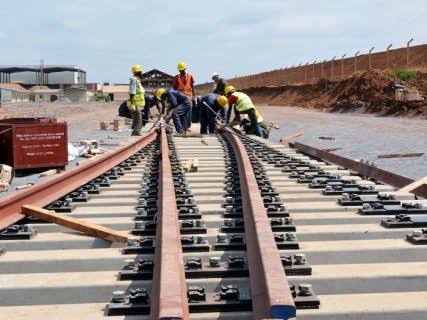
China Communication Company is undertaking construction of the part of the Standard Gauge Railway in Kenya, in a project that will see 40 percent of work sub-contracted to local companies.
Project Fact Sheet
Name: Uganda South Sudan Railway (regional railway proposal)
Initial construction phase: Malaba–Kampala Standard Gauge Railway
Cost: Approximately US$3.2 billion
Location: Uganda, connecting Malaba to Kampala
Railway length: 272 kilometers
Railway type: Electric Standard Gauge Railway
Developer: Government of Uganda
EPC contractor: Yapi Merkezi
Financing arranger: Citibank
Approved financier: Islamic Development Bank
Prospective financier: OPEC Fund for International Development
Construction status: Preliminary works underway; full construction awaits financial closure
Financial close target: January 2027
Implementation period: 48 months after financial closure
Project Team
Owner: Government of Uganda
Implementing authority: Ministry of Works and Transport
Project coordination: Uganda SGR Project Management Unit
EPC contractor: Yapi Merkezi
Lead financing arranger: Citibank
Development finance partner: Islamic Development Bank
Prospective development finance partner: OPEC Fund for International Development




Leave a Reply